

Written by a Caring Mom at Parenting Stories
What will suddenly wake you at night is the sound of your child crying, just like that. One moment, you’re sleeping soundly and, the next thing you know, you are by your toddler’s side and wondering why they woke up crying. As a mother, I know just how fast that sleepy mood can turn to a worrying moment what causes my toddler to wake up crying?
The reasons may be basic at times. Your child might have been dreaming badly, feeling uncomfortable, wanting to be near you, or simply finding it hard to get back to sleep. Other causes might be separation anxiety, sickness, tiredness, or even any change in the child’s routine.
Instead of worrying after the first bad night of sleep, look out for the small signs. Find out when they wake up, how they cry, and what calms them. With a few days of observation, you might be able to get an idea of what they need during those times at night.
Why Does My Toddler Wake Up Crying?
Toddlers can wake up crying for many reasons. Sometimes it’s a bad dream, separation anxiety, discomfort, or simply waking between sleep cycles and finding it hard to settle again.
Changes in their day can affect sleep too. A missed nap, late bedtime, illness, or even starting daycare may lead to more nighttime waking and crying.
Before changing your toddler’s sleep routine, watch for patterns. Notice when they wake, how they behave, and what helps them calm down. These small clues can help you understand what your little one may need.
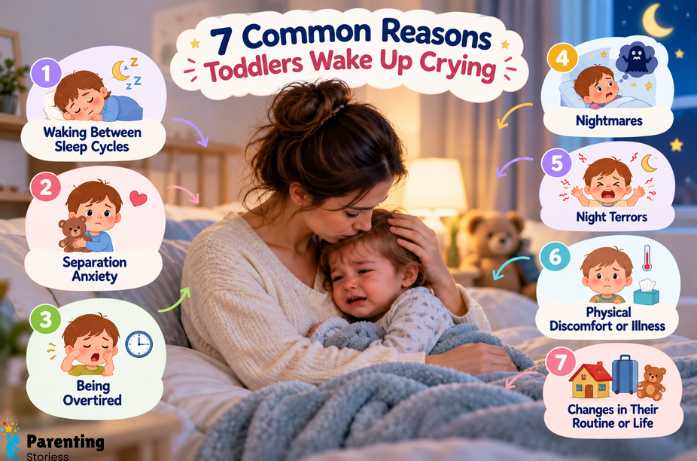
7 Common Reasons Toddlers Wake Up Crying
1. Waking Between Sleep Cycles
Toddlers naturally move through different stages of sleep during the night, and sometimes they briefly wake between them. Some children settle back to sleep easily, while others need a little help.
If your toddler usually falls asleep while being rocked, cuddled, or with you beside them, they may look for that same comfort when they wake. A calm and familiar response can help them settle again.
2. Separation Anxiety
Your toddler may happily explore on their own all day but still want Mom or Dad close by at night. Separation anxiety can make bedtime harder and may also cause your child to wake crying for you.
If they calm down soon after you enter the room, they may simply be looking for reassurance. A predictable bedtime routine, a cuddle, and a gentle goodnight can help them feel safe and secure.
3. Being Overtired
You might expect an exhausted toddler to sleep better, but sometimes the opposite happens. A missed nap, busy day, or bedtime that is later than usual can make it harder for some toddlers to settle and sleep comfortably.
If nighttime crying happens more often after skipped naps or late nights, try getting back to a consistent nap and bedtime routine for a few days and see if it helps.
4. Nightmares
As your toddler’s imagination grows, scary dreams can sometimes disturb their sleep. After a nightmare, your child will usually be awake, recognize you, and may reach for you or tell you they are scared.
Keep things calm and comforting. A cuddle and a simple, “You’re safe, I’m right here,” may be enough to reassure them and help them return to sleep.
5. Night Terrors
If your toddler wakes up screaming but doesn’t seem fully awake, it could be a night terror. According to Cleveland Clinic, children experiencing sleep terrors may scream, appear frightened, sweat, or move around while still asleep. They are usually difficult to wake during the episode.
Unlike a nightmare, your toddler may not recognize or respond to you normally during a night terror. Stay nearby and make sure they’re safe rather than trying hard to wake them. If these episodes happen often or concern you, talk with your pediatrician.
6. Physical Discomfort or Illness
Sometimes the reason for nighttime crying is something simple. Your toddler might be too warm or cold, have a wet diaper, need the toilet, feel thirsty, or be uncomfortable in their clothes.
A stuffy nose, cough, fever, constipation, ear pain, or another illness can also disturb sleep. If the waking starts suddenly, check whether your child seems uncomfortable or is acting differently during the day too.
7. Changes in Their Routine or Life
Toddlers may not be able to explain their feelings, but they can be sensitive to changes around them. Starting daycare, traveling, moving to a new home, potty training, or welcoming a new sibling may temporarily affect their sleep.
During these changes, try to keep bedtime as familiar as possible. The usual bath, pajamas, favorite story, cuddle, and goodnight can give your toddler a comforting sense of routine when other things feel new.
Quick Clues to Understand the Crying
Instead of guessing in the middle of the night, look for these patterns:
- Fully awake and reaching for you: Your toddler may have had a nightmare, feel uncomfortable, or simply need reassurance.
- Screaming but appearing confused: A night terror or partial sleep arousal may be possible.
- Immediately settles when you enter: Separation anxiety or needing familiar reassurance could be contributing.
- Sudden waking plus fever, coughing, congestion, or unusual fussiness: Check for illness or discomfort.
- Crying after missed naps or very late bedtime: Overtiredness may be worth considering.
- Wakes and always needs the same help used at bedtime: Pay attention to how your toddler initially falls asleep.
You don’t need to diagnose your toddler from these clues. They simply help you know what to watch.
Toddler Wakes Up Crying Every Night: What Should You Do?
If your toddler wakes up crying every night, try not to change their whole sleep routine right away. First, spend a few nights looking for a pattern. Sometimes the reason becomes much clearer when you look at what happened during the day.
Keep a simple note of bedtime, naps, when your toddler wakes, and what helps them settle again. You can also note anything different that day, such as a missed nap, illness, travel, a late bedtime, or a change at daycare.
You may notice that the crying happens more after busy days or when naps are shorter than usual. Once you spot a pattern, it becomes easier to decide what small change might help your toddler sleep more comfortably
Why Does My Toddler Wake Up Multiple Times a Night Crying?
When a toddler wakes up multiple times a night crying, it can be exhausting for everyone. First, consider whether the frequent waking is new.
If it suddenly started, think about recent changes such as illness, teething, travel, separation anxiety, a new sleeping environment, or schedule changes.
Then look at the overall sleep routine.
The American Academy of Sleep Medicine recommends about 11–14 hours of total sleep per 24 hours for children ages 1–2 and 10–13 hours for children ages 3–5, including naps.
Individual needs vary, so you don’t need to chase an exact number every day. It simply gives you a useful reference point.
During nighttime wake-ups, keep lights low and your response calm. Comfort your child when they need you, but try not to accidentally turn nighttime into playtime.
Why Does My Toddler Wake Up Crying From Naps?
It can be confusing when your toddler goes down for a peaceful nap but wakes up upset and in tears. Sometimes they may have woken before they were fully rested, or they simply need a little time to adjust from sleep to being awake.
It also helps to check the simple things. They may be hungry, have a wet diaper, feel too warm, or have been woken suddenly by a noise.
Give your toddler a gentle start after their nap. Offer a cuddle, open the curtains slowly, or give them a little water and a few quiet minutes. Some toddlers simply need extra time to fully wake up and feel like themselves again.

What to Do When Your Toddler Wakes Up Crying
When your toddler wakes up crying in the middle of the night, you don’t need to follow a complicated sleep plan. Start by checking what your little one needs, offer comfort, and keep everything as calm as possible.
1. Check for Discomfort
First, make sure your toddler isn’t sick, in pain, too hot or cold, thirsty, or dealing with a wet diaper. If the crying feels different from usual, take a moment to check for signs of illness or discomfort.
2. Keep Things Quiet and Calm
Use a soft voice and keep the lights low. Try to avoid screens, toys, or too much talking, as these can make your toddler more awake. A simple “I’m here, you’re safe” can be reassuring.
3. Offer Gentle Comfort
Think about what may have caused the waking. A toddler who had a bad dream may need a cuddle, while a child dealing with separation anxiety may simply need to know you’re nearby. Give them the comfort they need without making nighttime feel like playtime.
4. Help Them Settle Back to Sleep
Once your toddler is calm and comfortable, gently encourage them back to sleep. Keep the response familiar and simple. Following roughly the same approach each time can make nighttime feel more predictable and secure for your little one.
Don’t Forget to Look at the Daytime Routine
Nighttime sleep doesn’t exist separately from the rest of your toddler’s day.
Look at naps, meals, physical activity, emotional connection, and what happens during the hour before bedtime. If evenings are filled with exciting play or screens right until bed, try creating a calmer transition.
A simple bedtime routine might be:
bath → pajamas → brush teeth → story → cuddle → bed
It doesn’t need to be elaborate. Doing roughly the same things in the same order can help your toddler understand that the day is ending.
When Should You Talk to Your Pediatrician?
Occasional waking and crying doesn’t necessarily mean something is wrong.
But talk with your child’s healthcare provider if sleep problems are persistent, suddenly become much worse, your toddler appears to be in pain, or poor sleep is noticeably affecting their daytime behavior.
Pay particular attention to breathing during sleep. The AAP recommends discussing frequent snoring or nighttime breathing problems with your child’s doctor. Loud snoring accompanied by breathing difficulty or pauses can be associated with sleep apnea.
Also seek medical advice if nighttime episodes involve unusual movements, repeated breathing pauses, significant illness symptoms, severe pain, or anything else that genuinely concerns you.
You know what is normal for your child. A major unexplained change is worth asking about. Pay particular attention to your toddler’s breathing during sleep. MedlinePlus explains that sleep apnea can involve repeated pauses in breathing during sleep, and symptoms in children may include snoring. If you notice frequent snoring, breathing difficulty, or pauses in breathing, talk with your child’s healthcare provider.
Frequently Asked Questions
1. Why Does My Toddler Wake Up Crying Every Night?
Nightmares, separation anxiety, discomfort, illness, or being overtired may cause repeated waking. Look for patterns in naps, bedtime, and nighttime behavior.
2. Why Does My Toddler Wake Up Multiple Times a Night Crying?
Your toddler may be uncomfortable, overtired, going through a routine change, or having trouble settling back to sleep between wake-ups.
3. Why Does My Toddler Wake Up Screaming at Night?
Nightmares can cause sudden crying or screaming. If your toddler seems confused and isn’t fully awake, a night terror may be another possibility.
4. Why Does My Toddler Wake Up Crying From Naps?
They may still be tired, hungry, uncomfortable, or simply need a few quiet minutes to fully wake up after their nap.
Final Thoughts
If you’re still wondering why does my toddler wake up crying, remember that there isn’t always one clear reason. Nightmares, separation anxiety, discomfort, overtiredness, or small changes in your toddler’s day can all affect how they sleep.
Try to notice patterns, keep bedtime calm and familiar, and offer comfort when your little one needs it. Small, consistent changes are often more helpful than trying to fix everything after one difficult night.
And on those extra-tiring nights, remember that toddler sleep isn’t always predictable. Sometimes your child simply needs a little reassurance that you’re close by before they feel safe enough to drift back to sleep.
Every stage of toddlerhood brings new questions. Explore more practical sleep, toddler, and parenting tips on Parenting Stories to make everyday parenting feel a little easier.
Disclaimer
This article is for general informational purposes only and is not a substitute for professional medical advice. If you are concerned about your toddler’s sleep, health, breathing, or behavior, please speak with your pediatrician or healthcare provider.