Written with care by a mom at Parenting Stories
For new parents, every day holds new learning opportunities. Parents experience two distinct stages of joy for their newborn baby: first seeing their baby smile, then learning about baby food introduction techniques. Parents experience two distinct emotional states as each achievement brings them joy and also worries about the challenges ahead.
Parents take time to themselves as they quietly contemplate their children’s food allergy condition. Peanut allergy is one of the most feared food allergies. Parents often worry about introducing peanuts to their children for the first time because allergic reactions can appear within a short time.
Understanding the signs of peanut allergy in baby can help parents feel more prepared and confident. The good news is that most babies tolerate new foods without any problems. But being aware of possible symptoms allows you to act quickly and calmly if something unusual happens.
Understanding the Signs of Peanut Allergy in Baby
Food allergies occur when the body’s immune system mistakenly believes that a certain food is harmful. Instead of treating the food as something normal, the immune system reacts as if it needs to defend the body.
When a baby with a peanut allergy eats peanuts or peanut-containing foods, the immune system releases chemicals that cause allergic symptoms. These reactions can appear very quickly, sometimes within minutes, but they may also show up within a couple of hours after eating.
Some babies may only develop mild symptoms, such as a rash around the mouth or a few hives on the skin. Others may experience digestive discomfort, swelling, or breathing changes.
Every baby reacts differently, which is why parents should watch for changes in their baby’s skin, breathing, or behavior after introducing peanuts. Learning the signs of peanut allergy in baby helps parents notice these changes early and seek help if needed.
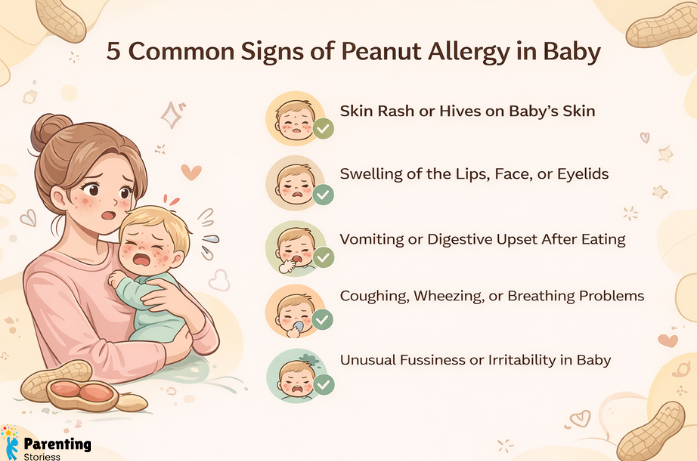
5 Common Signs of Peanut Allergy in Baby
Recognizing early symptoms can help parents respond quickly and keep their baby safe. While allergic reactions may look different from one baby to another, these are some of the most common signs parents may notice.
1. Skin Rash or Hives
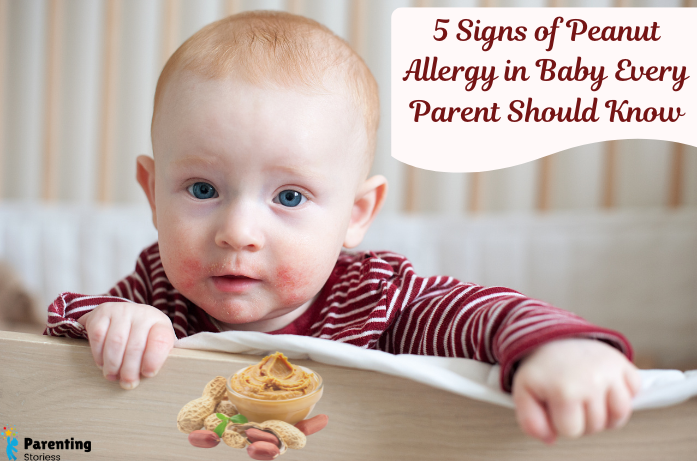
A sudden rash is one of the most common early symptoms of a peanut allergy.
Your baby may develop red spots, raised bumps called hives, or itchy patches on the skin. These often appear around the mouth, cheeks, or chin because that is where the food first touches the skin. In some cases, the rash may spread to the chest, arms, or back.
The rash can appear within minutes after eating peanuts or peanut-containing foods. Sometimes it may look mild at first, but it should still be taken seriously.
Even if the rash fades on its own, it is a good idea to mention it to your pediatrician. Keeping track of these reactions helps doctors determine whether your baby may have a food allergy.
2. Swelling of the Lips, Face, or Eyelids
Swelling is another important sign parents should watch for.
A baby with a peanut allergy may develop swelling around the lips, eyelids, tongue, or cheeks after eating peanuts. Sometimes the swelling appears suddenly and may look surprising or alarming.
Even mild swelling should be monitored closely. Allergic reactions can sometimes become more severe over time, especially if swelling affects the tongue or throat.
If swelling makes it difficult for your baby to breathe, swallow, or cry normally, seek medical help immediately.
3. Vomiting or Digestive Upset
Some babies show allergic reactions through their digestive system.
After eating peanuts, your baby may vomit, experience loose stools, or appear uncomfortable. They might cry more than usual, arch their back, or pull their legs toward their tummy.
Digestive symptoms can sometimes look similar to the signs of dairy allergy in baby, which also causes stomach discomfort, vomiting, or diarrhea.
Because babies naturally spit up sometimes, it can be difficult for parents to tell the difference between normal spit-up and an allergic reaction. If vomiting happens repeatedly after eating peanuts, it is important to talk with your pediatrician.
4. Coughing, Wheezing, or Breathing Changes
Breathing symptoms are one of the most serious signs of an allergic reaction.
If your baby begins coughing repeatedly, wheezing, or struggling to breathe after eating peanuts, it may indicate that the allergy is affecting their airways.
Parents may notice unusual breathing sounds, rapid breathing, or signs that their baby is working harder than normal to breathe.
Breathing changes should always be treated as a medical emergency. If you notice any difficulty breathing after your baby eats peanuts, seek medical help immediately.
5. Unusual Fussiness or Irritability
Babies cannot tell us when something feels wrong, but their behavior often gives important clues.
If your baby becomes suddenly very fussy, restless, or difficult to comfort after eating peanuts, it may be a sign that their body is reacting to the food.
Some babies may cry more than usual, appear uncomfortable, or have trouble settling down. Parents sometimes notice similar behavior when babies experience the signs of milk protein allergy in baby, especially when the digestive system is irritated.
Paying attention to changes in your baby’s behavior can help you recognize when something may not feel right.
When Introducing Peanuts to Your Baby
Many parents wonder when it is safe to introduce peanuts to their baby’s diet.
In the past, doctors often recommended delaying peanut introduction. However, newer research suggests that introducing peanut-containing foods earlier may actually help reduce the risk of developing allergies.
Most pediatric experts now recommend introducing peanuts around six months of age, once your baby is developmentally ready for solid foods.
When introducing peanuts, it’s important to choose safe textures that reduce choking risks. Some good options include:
- Peanut butter thinned with warm water
- Peanut powder mixed into baby cereal
- Peanut-containing baby snacks designed for infants
Whole peanuts and thick spoonfuls of peanut butter should always be avoided because they can cause choking.
Introducing new foods slowly and one at a time also makes it easier to notice any reactions.
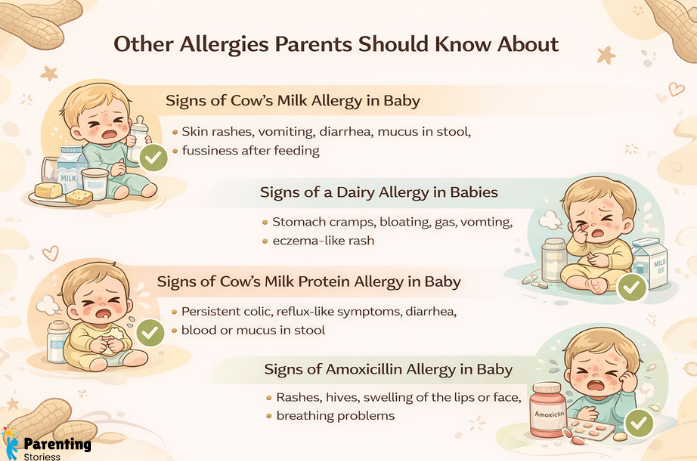
Other Allergies Parents Should Know About
Peanut allergy is one of the more well-known food allergies, but it’s not the only one babies may experience.
Some infants may also react to dairy products or medications during their first year of life. Being aware of these possibilities helps parents recognize symptoms sooner and seek medical advice if needed.
1. Signs of Cow’s Milk Allergy in Baby
The signs of cow milk allergy in baby often appear when a baby drinks formula or consumes dairy products containing cow’s milk proteins.
Some babies may develop skin rashes, vomiting, diarrhea, or mucus in their stool after feeding. Others may become unusually fussy during or after feedings.
These reactions occur because the baby’s immune system reacts to proteins found in cow’s milk.
2. Signs of a Dairy Allergy in Babies
The signs of a dairy allergy in babies can sometimes look similar to common feeding discomforts, which makes them easy to overlook at first.
Babies may experience stomach cramps, bloating, gas, vomiting, or eczema-like skin rashes.
Because dairy allergies can affect both the digestive system and the skin, parents may notice several symptoms appearing together.
3. Signs of Cow’s Milk Protein Allergy in Baby
The signs of cows milk protein allergy in baby are often connected to digestive discomfort.
Babies with this condition may experience persistent colic, reflux-like symptoms, diarrhea, or blood or mucus in their stool.
Some babies may also struggle with feeding or appear very uncomfortable after meals.
4. Signs of Amoxicillin Allergy in Baby
Medication allergies can also occur in infants.
The signs of amoxicillin allergy in baby may include rashes, hives, swelling of the lips or face, or breathing problems after taking the antibiotic.
If any unusual symptoms appear after your baby begins a medication, it’s important to contact your doctor right away.
What Parents Should Do If They Suspect an Allergy
If you think your baby may be having an allergic reaction, try to stay calm and follow these steps.
1. Stop feeding the suspected food
Remove the food immediately and observe your baby carefully.
2. Watch for worsening symptoms
Look for swelling, breathing changes, or repeated vomiting.
3. Contact your pediatrician
Even mild reactions should be discussed with a doctor.
4. Seek emergency care if symptoms are severe
Difficulty breathing, extreme sleepiness, or severe swelling requires immediate medical attention.
Frequently Asked Questions
1. What are the early signs of peanut allergy in baby?
Early symptoms may include skin rashes, hives around the mouth, vomiting, swelling of the lips or face, coughing, or unusual fussiness after eating peanuts.
2. When can babies be introduced to peanuts?
Most pediatric experts recommend introducing peanut-containing foods around six months of age, once babies are ready for solid foods.
3. How quickly can a peanut allergy reaction appear?
Allergic reactions can appear within minutes or up to two hours after eating peanuts.
4. Are peanut allergies common in babies?
Peanut allergies are not extremely common, but they are among the more serious food allergies that children may develop.
5. Can babies outgrow peanut allergies?
Some children outgrow peanut allergies, while others may continue to have them into later childhood. Regular follow-ups with a doctor can help monitor the condition.
Final Thoughts
Watching your baby grow, explore new foods, and discover different tastes is one of the most joyful parts of parenting.
While allergies like peanut allergy can happen, understanding the warning signs helps parents respond quickly and confidently.
If you ever notice symptoms such as rashes, vomiting, breathing changes, or unusual behavior after eating peanuts, trust your instincts and speak with your pediatrician.
You are not alone in this journey.
At Parenting Stories, we believe every parent deserves support, honest information, and reassurance along the beautiful journey of raising little ones.
And remember, you are doing an amazing job caring for your baby every single day.