Written by a caring mom at Parenting Stories
Pregnancy has a quiet way of changing everything, not just your body, but even the simplest parts of your daily routine. I still remember how sitting, something I never thought twice about, suddenly became uncomfortable. My back would ache, my hips felt tight, and I often wondered if I was doing something wrong.
That’s when I started paying attention to the sitting postures to avoid during pregnancy, and honestly, it made a bigger difference than I expected. The way you sit can directly affect your comfort, your posture, and even how your body supports a safe pregnancy.
If you’ve been feeling stiff, sore, or just not quite “right” while sitting, you’re not alone. Let’s gently walk through what to avoid, what helps, and how to make your everyday sitting habits more comfortable and supportive.
Why Sitting Posture Matters More During Pregnancy
During pregnancy, your body goes through natural but significant changes. As your belly grows, your center of gravity shifts forward. This places extra pressure on your spine and lower back. At the same time, pregnancy hormones like relaxin loosen your ligaments, making your joints less stable.
According to Cleveland Clinic, maintaining proper posture during pregnancy can help reduce back pain and support your body as it adapts to these physical changes. This combination means your body needs more support than ever, especially when sitting.
An incorrect pregnancy sitting posture can lead to:
- Persistent lower back pain
- Tightness in hips and pelvis
- Neck and shoulder strain
- Poor blood circulation in legs
- Increased fatigue throughout the day
The good news? You don’t need complicated solutions. Small, mindful adjustments in your sitting posture in pregnancy can ease discomfort and help your body feel more balanced.
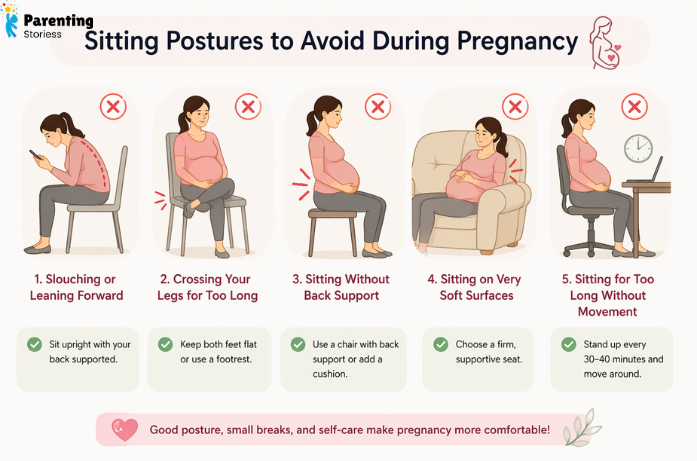
Sitting Postures to Avoid During Pregnancy
Let’s take a closer look at some common sitting habits that may seem harmless but can quietly strain your body over time.
1. Slouching or Leaning Forward
This is something most of us do without even thinking, especially when we’re tired or scrolling on our phone.
Slouching curves your spine and pulls your shoulders forward, adding pressure to your lower back. Over time, this can increase discomfort and affect your posture even when you are standing.
Sit upright with your back supported. Think of your spine as naturally tall and aligned relaxed, not stiff.
2. Sitting with Legs Crossed for Too Long
Crossing your legs can feel comfortable, but during pregnancy, it’s better to limit this habit.
It can slow down blood circulation and may lead to swelling in your feet and ankles. It can also create uneven pressure on your hips.
Keep both feet flat on the floor or place them on a small footrest to support healthy circulation.
3. Sitting Without Back Support
Whether it’s a stool, bed, or chair without proper support, this posture can strain your body over time.
Without support, your spine loses its natural alignment, which can lead to lower back and pelvic discomfort.
Choose a chair with good back support and add a cushion or rolled towel behind your lower back for extra comfort.
4. Sitting on Very Soft Surfaces
A soft sofa might feel relaxing, especially when you’re tired, but it doesn’t always support your body well.
Soft surfaces make it harder to maintain a proper pregnancy posture sitting, which can lead to strain on your back and hips.
Sit on a firm, supportive surface that helps you stay balanced and comfortable.
5. Sitting for Long Periods Without Movement
Even when your posture is correct, sitting for too long can still cause discomfort.
Staying in one position reduces blood flow, increases stiffness, and may lead to swelling in your legs.
Make it a habit to stand up every 30–40 minutes. Stretch gently or take a short walk to keep your body feeling light and relaxed.
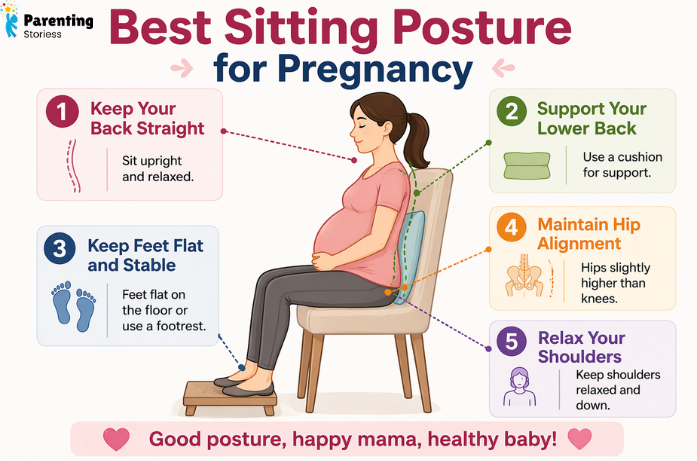
What Is the Best Sitting Posture for Pregnancy?
Now that we’ve covered what to avoid, let’s focus on what truly supports your body.
1. Keep Your Back Straight (But Relaxed)
Sit upright without forcing your posture. Your spine should feel naturally aligned, not stiff.
2. Support Your Lower Back
A small pillow or cushion behind your lower back can reduce pressure and improve comfort.
3. Keep Feet Flat and Stable
Your feet should rest flat on the floor. If they do not comfortably reach the ground, use a footrest.
4. Maintain Hip Alignment
Keep your hips slightly higher than your knees. This helps maintain your spine’s natural curve.
5. Relax Your Shoulders
Avoid tensing your shoulders. Let them fall naturally to prevent upper back strain.
This is what a healthy best sitting posture in pregnancy looks like, supportive, balanced, and easy to maintain.
As also explained by Stanford Children’s Health, maintaining correct posture during pregnancy can reduce strain on your body and improve overall comfort.
Practical Daily Tips for Better Sitting Habits
You don’t need to be perfect, just consistent. These small habits can make your day feel much easier.
1. Create a Comfortable Sitting Setup
Whether you’re working, eating, or relaxing, adjust your seat to support your back and hips.
2. Use Pillows Smartly
A cushion behind your back or under your hips can improve your posture instantly.
3. Keep Things Within Reach
Avoid leaning forward too often. Bring your phone, laptop, or food closer to you.
4. Stay Hydrated
It might sound simple, but drinking enough water helps reduce swelling and supports circulation.
5. Listen to Your Body’s Signals
If something feels uncomfortable, don’t ignore it. Shift your position or take a break.
How Poor Sitting Posture Affects Your Body Long-Term
Sometimes, discomfort builds slowly. You might not notice it right away, but poor sitting posture in pregnancy can lead to:
- Chronic back and pelvic pain
- Increased pressure on joints
- Reduced flexibility
- Muscle fatigue and tension
The important thing to remember is this, it’s never too late to improve your posture. Even small changes can bring relief.
When Sitting Feels Uncomfortable: Gentle Solutions
There will be days when nothing feels quite right, and that’s okay.
Here are a few gentle ways to find relief:
- Change positions frequently
- Use extra pillows for support
- Lie on your side for short rest breaks
- Do light stretching if your doctor approves
Comfort during pregnancy isn’t about perfection. It’s about responding to your body with care.
A Note for Working Moms and Busy Days
If your day involves long hours of sitting, I understand how difficult it can be to stay mindful all the time.
Try this simple routine:
- Sit with proper back support
- Take short breaks every 30 minutes
- Stretch your neck, shoulders, and legs
- Keep your workspace comfortable and close
Even a few mindful adjustments can make your workday feel less tiring.
Small Changes That Bring Big Relief
You don’t need to change everything overnight. Start small.
- Sit a little straighter
- Add a cushion for support
- Take short breaks
Over time, these small steps become habits, and your body will thank you for it.
Conclusion: Comfort Begins with Awareness
Understanding the sitting postures to avoid during pregnancy is not about strict rules or perfect posture. It’s about awareness, care, and making choices that support your body.
Some days will feel easier than others, and that’s completely normal. Just keep listening to your body, adjusting when needed, and giving yourself the kindness you deserve.
You are growing a new life, and that is something truly powerful. So take a deep breath, sit comfortably, and remind yourself… you are doing an amazing job.
Explore more helpful pregnancy tips on Parenting Stories.
Frequently Asked Questions (FAQs)
1. What sitting postures to avoid during pregnancy for back pain?
Avoid slouching, crossing legs for long periods, and sitting without proper back support to prevent back pain.
2. What is the best sitting posture for pregnancy at home or office?
Sit upright with back support, keep feet flat on the floor, and use a cushion for lower back comfort.
3. Is sitting for long hours safe during pregnancy or not?
Sitting too long is not ideal. Take breaks every 30–40 minutes to improve blood flow and reduce discomfort.
4. Can poor pregnancy sitting posture cause back and hip pain?
Yes, poor posture can lead to back pain, hip discomfort, and muscle strain during pregnancy.
5. How to improve sitting posture in pregnancy naturally at home?
Use a supportive chair, keep your spine straight, avoid slouching, and take regular movement breaks.
Disclaimer: This article is for informational purposes only and is not a substitute for medical advice. Every pregnancy is unique, so always consult your doctor or healthcare provider before making any changes to your posture, routine, or lifestyle.