

Written with love by a caring mom at Parenting Stories
Pregnancy changes your body in ways nobody fully prepares you for. One moment you feel completely exhausted, and the next you are staring at the ceiling at 2 a.m., unable to sleep. If this sounds familiar, you are far from alone. Pregnancy insomnia is one of the most common yet least talked-about pregnancy struggles many moms quietly experience.
Some women notice sleep problems during the very first weeks of pregnancy, while others struggle more during the final months when their growing belly makes every sleeping position uncomfortable. Whether you are dealing with pregnancy insomnia early, struggling through the pregnancy insomnia first trimester, or waking constantly during the pregnancy insomnia 3rd trimester, it can leave you feeling physically drained and emotionally overwhelmed.
The good news is that pregnancy insomnia is usually temporary, and there are many gentle, safe ways to help your body relax and improve sleep naturally.
What Is Pregnancy Insomnia?
Pregnancy insomnia means having difficulty falling asleep, staying asleep, or getting restful sleep during pregnancy. You may feel exhausted all day but suddenly wide awake at bedtime.
For some moms, insomnia looks like:
- Tossing and turning for hours
- Waking up repeatedly during the night
- Restless sleep
- Vivid dreams
- Early morning waking
- Feeling tired even after sleeping
Pregnancy affects hormones, emotions, digestion, breathing, and physical comfort all of which can impact sleep quality.
Research published on PubMed Central (PMC) explains that sleep disturbances during pregnancy are commonly linked to hormonal changes, anxiety, physical discomfort, and changing sleep cycles.
When Does Pregnancy Insomnia Start?
Many moms are surprised to learn that sleep problems can begin very early in pregnancy. In fact, early pregnancy insomnia sometimes starts before a woman even confirms she is pregnant.
Rapid hormonal changes begin immediately after conception. Rising progesterone levels can increase daytime fatigue while also disrupting nighttime sleep patterns.
This is why many women search:
- When does pregnancy insomnia start?
- Is insomnia an early sign of pregnancy?
- Could sleeplessness mean I’m pregnant?
Although insomnia alone cannot confirm pregnancy, it can absolutely appear alongside other early symptoms.
Is Insomnia an Early Sign of Pregnancy?
Yes, for some women, insomnia can be an insomnia early pregnancy sign.
Early pregnancy hormones affect the brain, nervous system, body temperature, and emotions. This can lead to unexpected sleep disturbances even during the first few weeks.
You may notice insomnia together with:
- Fatigue
- Nausea
- Mood swings
- Breast tenderness
- Frequent urination
- Food cravings
Still, it is important to remember that stress and anxiety can also affect sleep, so insomnia alone does not always mean pregnancy.
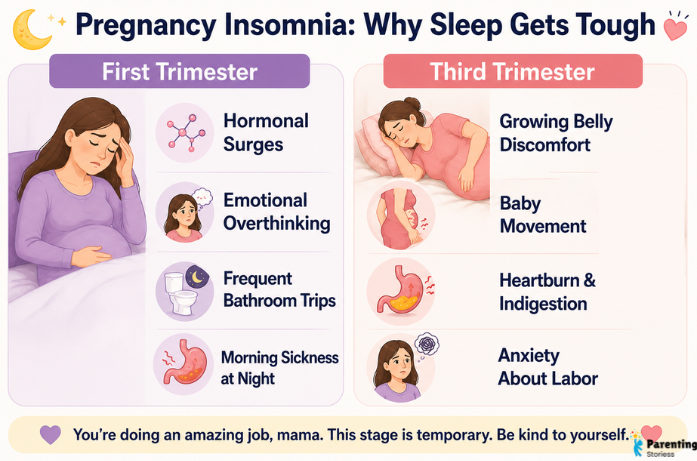
Pregnancy Insomnia First Trimester: Why Sleep Changes Happen So Early
The pregnancy insomnia first trimester experience often feels confusing because most moms are incredibly tired during the day.
You may desperately want sleep but still struggle to relax at night.
Hormonal Surges
Pregnancy hormones rise rapidly during the first trimester. These changes affect your body’s normal sleep cycle and can make sleep feel lighter or more interrupted.
Emotional Overthinking
Even happy pregnancies bring emotional stress. Your mind may suddenly fill with thoughts about the baby, health, finances, labor, or parenting.
Late-night overthinking becomes very common during early pregnancy.
Frequent Bathroom Trips
Your kidneys work harder during pregnancy, increasing urination even in the early weeks. Many moms find themselves waking several times a night.
Morning Sickness at Night
Nausea does not always happen in the morning. Heartburn, bloating, and nausea can easily interfere with restful sleep.
Pregnancy Insomnia 3rd Trimester: Why Sleep Feels Hardest Late in Pregnancy
For many moms, the third trimester becomes the most physically uncomfortable stage of pregnancy. The body is carrying extra weight, the baby is growing rapidly, and sleep becomes more challenging.
Growing Belly Discomfort
Finding a comfortable sleeping position can feel nearly impossible. Back pain, hip pain, and pelvic pressure often worsen at night.
Baby Movement
Babies tend to become surprisingly active when moms finally lie down to rest. Kicks, stretching, and movement can interrupt sleep repeatedly.
Heartburn and Indigestion
Pregnancy hormones relax the digestive system, allowing stomach acid to move upward more easily when lying flat.
Anxiety About Labor
As delivery approaches, many moms naturally feel nervous, emotional, or mentally overwhelmed about childbirth and becoming a parent.
This emotional buildup can make it difficult for the brain to fully relax at bedtime.
The experts at Pregnancy Birth & Baby also explain that physical discomfort, hormonal changes, and emotional stress are major reasons insomnia becomes more common later in pregnancy.
Common Symptoms of Pregnancy Insomnia
Pregnancy insomnia looks different for every woman, but common symptoms include:
- Trouble falling asleep
- Waking frequently during the night
- Restless sleep
- Feeling mentally alert at bedtime
- Early morning waking
- Daytime exhaustion
- Irritability
- Difficulty concentrating
- Emotional overwhelm
Lack of sleep during pregnancy can feel frustrating, especially when your body already feels exhausted.
Please remember that needing extra rest during pregnancy is completely normal.
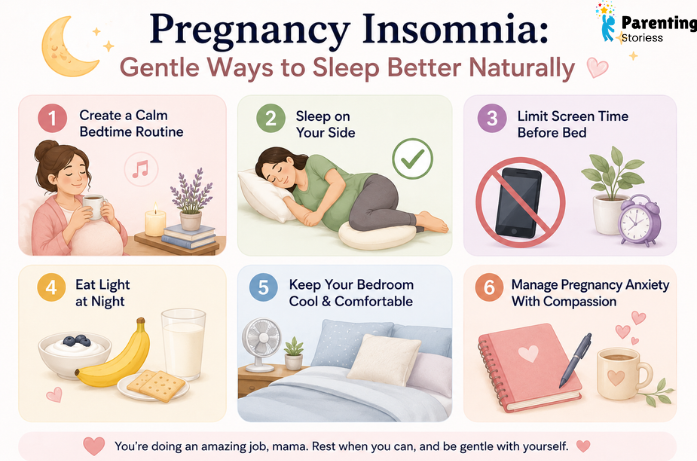
Pregnancy Insomnia: Gentle Ways to Sleep Better Naturally
1. Create a Calm Bedtime Routine
Your body loves routine during pregnancy. A peaceful bedtime routine can help your mind and body relax naturally before sleep.
Simple habits like taking a warm shower, reading a light book, listening to soft music, or doing gentle stretching may help you feel calmer at night. Even a few minutes of deep breathing or pregnancy meditation can make bedtime feel more peaceful.
2. Sleep on Your Side
Doctors usually recommend sleeping on your side during pregnancy, especially later in pregnancy.
Sleeping on your left side may improve blood flow, reduce swelling, and ease pressure on your back and organs. Many moms also find that placing a pregnancy pillow under the belly or between the knees makes sleeping much more comfortable.
3. Limit Screen Time Before Bed
Phones, bright screens, and social media can keep the brain active when your body is trying to rest.
Try avoiding stressful scrolling, work emails, or watching too much news before bedtime. Instead, choose calming activities that help your nervous system slow down naturally.
4. Eat Light at Night
Heavy meals before bed can worsen heartburn, bloating, and indigestion during pregnancy.
Try eating lighter evening meals and avoid lying down immediately after eating. Small bedtime snacks like bananas, yogurt, crackers, or warm milk may help some moms feel more comfortable and sleepy.
5. Keep Your Bedroom Cool and Comfortable
Pregnancy can make your body feel warmer than usual, especially at night.
A cool bedroom, soft blankets, supportive pillows, and comfortable sleepwear can help improve sleep quality. Small comfort changes often make a big difference during pregnancy.
6. Manage Pregnancy Anxiety With Compassion
Sometimes pregnancy insomnia is caused more by racing thoughts than physical discomfort.
Pregnancy brings excitement, but it can also bring worry and emotional stress. Writing in a journal, practicing gratitude, talking with your partner, or listening to calming affirmations may help quiet the mind before sleep.
Most importantly, remind yourself that you do not have to handle every fear alone.
Is It Safe to Take Sleep Aids During Pregnancy?
Always speak with your doctor before taking sleep medications, herbal supplements, or melatonin during pregnancy.
Some sleep products may not be considered safe while pregnant.
Most healthcare providers first recommend:
- Lifestyle changes
- Relaxation techniques
- Sleep habit improvements
- Managing stress naturally
Never self-medicate during pregnancy without professional guidance.
When Should You Talk to a Doctor?
Mild insomnia is common during pregnancy, but severe sleep deprivation should not be ignored.
According to Cleveland Clinic, ongoing insomnia during pregnancy may sometimes affect overall health, mood, and daily functioning, which is why proper medical support matters if symptoms become severe.
Talk with your healthcare provider if:
- You feel unable to function during the day
- Anxiety becomes overwhelming
- You feel persistently sad or depressed
- You stop breathing during sleep
- Insomnia becomes severe or constant
You deserve support, rest, and proper care throughout pregnancy.
Final Thoughts
Pregnancy insomnia can feel exhausting, emotional, and lonely, especially during those long quiet nights when sleep simply will not come.
But please remember you are not alone, and your body is not broken.
Pregnancy brings enormous physical and emotional changes, and sleep struggles are often part of that journey. With gentle routines, emotional support, and small lifestyle adjustments, many moms find meaningful relief.
Most importantly, give yourself grace.
You are growing a tiny human with your body, heart, and energy every single day. That is powerful, beautiful, and deeply demanding work.
Follow Parenting Stories for more gentle pregnancy tips, mom support, and trusted parenting guidance.
FAQs About Pregnancy Insomnia
1. Is pregnancy insomnia normal?
Yes. Many women experience sleep problems during pregnancy due to hormones, discomfort, anxiety, and physical changes.
2. Can pregnancy insomnia start early?
Yes. Some moms notice insomnia during the first few weeks of pregnancy because of hormonal changes.
3. Is insomnia an early sign of pregnancy?
It can be. Some women experience insomnia alongside other early pregnancy symptoms like fatigue and nausea.
4. Why is pregnancy insomnia worse in the third trimester?
Growing belly discomfort, frequent urination, baby movement, and anxiety about labor often make sleep harder later in pregnancy.
5. How can I sleep better during pregnancy?
Creating a calming bedtime routine, sleeping on your side, limiting screens, and managing stress gently may improve sleep naturally.
Disclaimer: This content is for informational purposes only and should not replace medical advice from your healthcare provider. Always consult your doctor for pregnancy-related concerns.