Written by a caring mom at Parenting Stories
Pelvic pain during pregnancy is often caused by a growing uterus, stretching ligaments, posture changes, or pregnancy-related pelvic girdle pain. Mild pain that improves with rest or changing position is usually not dangerous. Contact your maternity provider urgently if the pain is severe, constant, one-sided, or comes with bleeding, leaking fluid, fever, painful urination, regular contractions, dizziness, or reduced baby movement.
Pelvic discomfort can catch you by surprise. Walking, climbing stairs, rolling over in bed, or putting on your shoes may suddenly feel difficult. It is natural to worry, but most pregnancy pain has a manageable cause. You never need to feel embarrassed about asking for reassurance.
What Does Pelvic Pain During Pregnancy Feel Like?
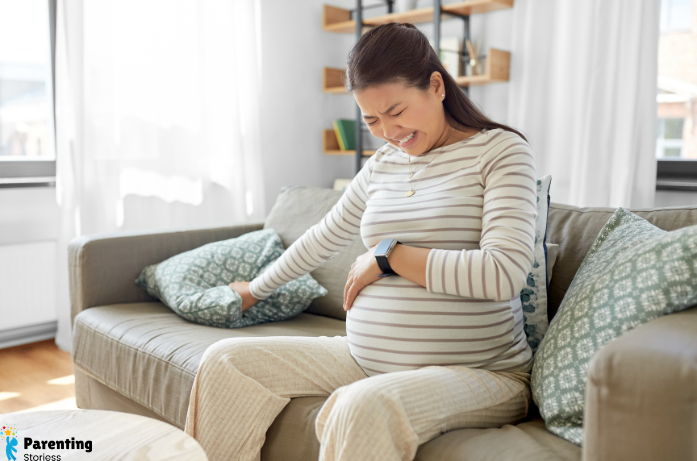
Pelvic pain may present itself on the front of the pelvis, groin region, lower abdomen, hip, lower back, inner thigh, and vaginal regions. Pelvic pain can occur as a dull aching, pulling, stretching, clicking, burning, and sharp stabbing sensation.
For some women, the pain occurs during activities such as walking, stair climbing, sitting into a car seat, and rolling in bed. The brief pain experienced immediately after an abrupt movement may result from overstretched ligaments, whereas worsening pain when spreading the legs apart is pelvic girdle pain.
Common Causes of Pelvic Pain During Pregnancy
1. A Growing Uterus and Changing Posture
As your uterus expands, there will be more pressure landing on the muscles and joints in your belly, back, hips, and pelvis. A massive pregnant belly can sometimes be related to your baby’s position, body shape, or other normal pregnancy changes.
That change also alters your center of gravity, so how you stand and even how you walk can start feeling different. Because of that, some people notice pelvic pressure or a heavy sensation after standing for a long time, or when carrying something mostly on one side.
2. Round Ligament Pain
The function of round ligaments is the stabilization of the uterus in its position. The stretching of these ligaments results in sudden pain in the lower abdomen, hip joint or groin area.
This type of pain occurs commonly during the second trimester. Its onset may be due to such reasons as getting up suddenly, rolling over in bed, sneezing, coughing, laughing or performing any quick movements.
It is normally a short-lived pain which subsides with resting and slower movements.
3. Pregnancy-Related Pelvic Girdle Pain
It involves the pain in pelvic muscles and joints. It may appear in the region of the pubis, lower back, hips, groin and thighs.
Usually the PGP increases with walking, climbing stairs, standing on one foot, separating knees and turning around in bed. It does not usually harm your baby, but it can make daily movement difficult and tiring.
According to the National Center for Biotechnology Information, pelvic girdle pain is a common pregnancy concern, and early support may help reduce its effect on daily movement and comfort.
4. Constipation and Gas
The hormones during pregnancy can have an effect on the digestive process and thus, slow it down, which causes constipation, bloating, excessive gas, and pressure at the bottom of the abdomen.
Therefore, you should drink enough fluids and eat foods that contain fiber such as fruits, vegetables, beans, lentils, and whole-grain products.
Prior consultation with your health care provider before taking any medications or laxatives for constipation in pregnant women is needed.
5. Urinary Tract Infection
Urinary tract infection might also lead to pain in the lower abdomen or pelvis. Other symptoms include painful urination, cloudy urine, blood in urine, fever, or back pain.
Medical treatment is required, as UTIs should not be ignored and treated only when symptoms go away. According to the American College of Obstetricians and Gynecologists, you should consult an obstetrician when experiencing pain associated with fever, painful urination, or vaginal bleeding.
Pelvic Pain During Pregnancy by Trimester
Pelvic Pain in the First Trimester
Cramps in early pregnancy might happen because the uterus is adjusting, like shifting a bit. The discomfort can come from gas, constipation, or the normal stretching that goes on, even when everything is okay.
That said, if you get sharp pain on one side , or shoulder pain, or dizziness, fainting, unusual weakness, or pain that shows up along with vaginal bleeding… please treat that like a red flag. It can mean ectopic pregnancy, and that needs quick attention, evaluation, and treatment.
Pelvic Pain During Pregnancy Second Trimester
In the second trimester pelvic pain is often linked to stretching in the round ligaments, rapid uterine growth, posture changes, or an early start of pelvic girdle pain.
You might notice a sharp pulling sensation when you’re standing, sneezing, coughing, laughing, or just turning over in bed.
Try to change position slowly, and if you’re coughing or sneezing, support your bump with your hands, it can really help. Get checked if the pain starts to mess with your sleep, walking, work, or daily life.
Sharp Pelvic Pain During Pregnancy Third Trimester
In the third trimester, sharp pelvic pain can show up when the baby presses the cervix or when nearby nerves get irritated. Some people describe a quick jolt, like a shock, burning feeling, or a shooting sensation in the vagina, often called lightning crotch.
This usually stops fast, and it’s different from labor contractions, which tend to follow a pattern or keep building, becoming stronger and more frequent. Call your maternity provider if the pain becomes regular or stays constant, or if it comes with bleeding, leaking fluid, unusual discharge, strong pelvic pressure, or a dull backache.
These signs are especially important before 37 weeks, because they can point to preterm labor.
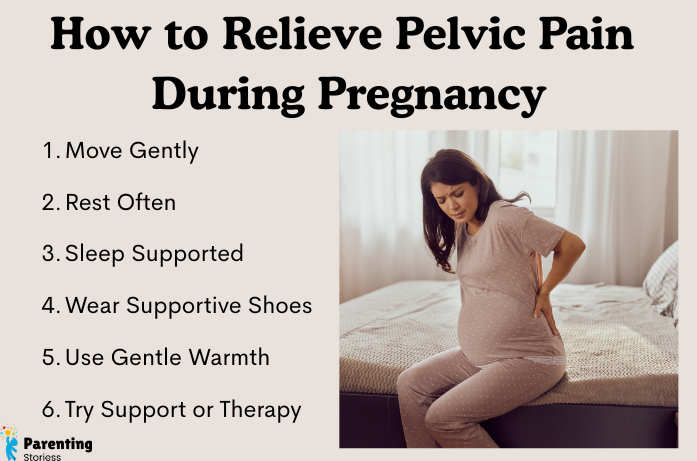
How to Relieve Pelvic Pain During Pregnancy
Many moms searching for how to relieve pelvic pain during pregnancy hope for one quick solution. Relief usually comes from several small habits that reduce strain throughout the day.
1. Move Slowly and Evenly
Avoid sudden twisting, wide steps, or standing on one leg for too long. Sit down while putting on trousers, socks, or shoes.
When getting out of bed or a car, keep your knees close together and move both legs at the same time.
When turning in bed, try moving your shoulders and hips together instead of twisting your lower body first.
2. Balance Activity With Rest
Rest when your body asks for it, but avoid remaining in one position all day. Gentle movement may reduce stiffness, while short breaks can calm tired muscles.
Break household jobs into smaller tasks. Sit while folding clothes, avoid repeated trips upstairs, and ask someone else to carry shopping bags or heavy laundry.
Resting does not mean you are lazy. Your body is already doing important work every moment of the day.
Pelvic discomfort can make normal pregnancy tiredness feel even harder to manage. Feeling tired all the time during pregnancy is common, but gentle rest, regular meals, and lighter daily tasks may help.
3. Support Your Body at Night
Sleep on your side with a pillow between your knees and ankles. This may help keep your hips and pelvis in a more comfortable position.
Placing another pillow underneath your bump may reduce pulling and help your body relax.
Ordinary pillows can work well. Choose a position that does not increase your pain.
4. Wear Stable, Supportive Shoes
Choose flat, comfortable shoes that help you feel balanced. Try to keep your weight evenly spread across both feet rather than leaning onto one hip.
Avoid carrying a heavy bag or child on the same side for long periods. Uneven weight can place additional pressure on an already sensitive pelvis.
5. Try Gentle Warmth
A warm bath, shower, or carefully placed warm pack may relax tense muscles. Keep the temperature comfortable rather than very hot.
Always place a layer of fabric between your skin and a warm pack. Avoid placing strong heat directly over your bump.
NHS physiotherapy guidance suggests using gentle warmth for short periods over areas such as the lower back, hips, or buttocks.
Gentle stretching may help your body feel less stiff, especially after sitting or standing for a long time. If you also experience painful leg cramps, regular hydration, light movement, and supportive footwear may provide some comfort.
6. Ask About a Support Belt or Physiotherapy
A correctly fitted pelvic support belt may make walking more comfortable without squeezing your abdomen.
A pelvic-health physiotherapist can assess your movement and suggest suitable exercises for your hips, back, abdomen, and pelvic floor. Pregnancy, Birth and Baby also recommends speaking with a physiotherapist about suitable exercises and correctly fitted pelvic support garments.
Do not force yourself through exercises that increase your pain. A personalized plan is usually safer than following random pregnancy exercise videos online.
Home Remedies to Reduce Pelvic Pain During Pregnancy
The best home remedies to reduce pelvic pain during pregnancy are usually gentle changes repeated consistently.
Try taking shorter steps, keeping your knees together when getting out of bed, changing positions regularly, and resting before your pain becomes intense.
Use pillows to support your knees, ankles, and bump. Ask for help with lifting, shopping, stairs, and heavy household work.
Drink enough water and eat fiber-rich foods to help prevent constipation. A comfortable bowel movement may reduce some of the pressure felt low in the pelvis.
Gentle walking, swimming, or prenatal movement may feel good for some moms. However, stop or reduce the activity if your pelvic pain becomes worse.
Physical activity is safe for many healthy pregnancies, although routines may need to be modified as the body changes. Ask your maternity provider what is suitable for your pregnancy, especially if you have complications or significant pain.
Before taking paracetamol, acetaminophen, herbal remedies, supplements, or other pain treatments, speak with your doctor, midwife, or pharmacist.
Natural products are not automatically safe during pregnancy.
Choose gentle movement and avoid lifting, stretching, or exercising through pain. Following simple dos and don’ts in pregnancy can make everyday activities feel safer and more comfortable.
When Should You Worry About Pelvic Pain?
Seek urgent medical advice if pelvic pain is severe, sudden, constant, worsening, or does not improve after resting.
You should also contact your maternity provider if the pain occurs with:
- Vaginal bleeding or spotting
- Fluid leaking from the vagina
- Regular cramps, tightenings, or contractions
- Fever, chills, vomiting, or feeling very unwell
- Burning or pain while urinating
- Dizziness, fainting, weakness, or shoulder pain
- Strong pelvic pressure or a constant backache
- Reduced or changed baby movement
Before 37 weeks, cramps, pelvic pressure, watery or bloody discharge, leaking fluid, or a dull lower backache may signal preterm labor.
Contact your maternity unit promptly rather than waiting for the symptoms to pass.
Trust your instincts and ask for professional advice when something feels unusual.
Coping With Pelvic Pain Emotionally
Pelvic discomfort may disturb your sleep and make simple tasks frustrating. Please do not judge yourself for slowing down.
Accept help with heavy chores and ask for more sitting or movement breaks at work. You are not weak for needing extra support during pregnancy.
Your pelvic floor muscles support important organs, including your uterus, bladder, and bowel. Pregnancy places extra pressure on these muscles, so caring for them can be an important part of pregnancy health. Mayo Clinic Health System explains that pelvic floor exercises and professional guidance can help support these muscles during and after pregnancy.
Frequently Asked Questions
1. Is pelvic pain normal during pregnancy?
Mild, occasional pelvic pain can be normal as the uterus grows and ligaments stretch. Severe, constant, worsening, or unusual pain should be checked.
2. When does pelvic pain usually begin?
It can begin during any trimester. Round ligament pain is common in the second trimester, while pressure from the baby may become stronger later.
3. Can pelvic pain harm my baby?
Common pelvic girdle pain does not usually harm the baby. Pain with bleeding, leaking fluid, fever, or regular contractions needs urgent assessment.
4. Does pelvic pain mean labor is starting?
Not always. Labor contractions usually form a pattern and become stronger or more regular. Contact your provider if pain comes with contractions, fluid leakage, or bleeding.
5. Should I walk when I have pelvic pain?
Gentle walking may help some moms, but stop or shorten your walk if the pain increases. A physiotherapist can guide you toward safer movement.
Final Thoughts
Pelvic pain during pregnancy can be uncomfortable and frightening, but you do not have to quietly struggle through it.
Many common causes can be managed with slower movement, supportive sleep positions, balanced activity, gentle warmth, and professional physiotherapy.
Listen to your body and rest without guilt. Ask for help when daily tasks become difficult, and contact your maternity provider whenever pain feels severe, unusual, or comes with warning signs.
Seeking reassurance is not overreacting. Caring for yourself is part of caring for your baby, especially as you adjust to life as a new mom.
Medical Disclaimer: This article provides general information and does not replace medical advice, diagnosis, or treatment. Contact your maternity provider about any new, persistent, severe, or concerning symptoms.