Written by a Caring Mom at Parenting Stories
Once you bring your baby home, even something as simple as making breakfast can feel harder than expected. Between feeding, changing diapers, resting when you can, and getting used to a completely new routine, your own meals can easily get pushed to the side.
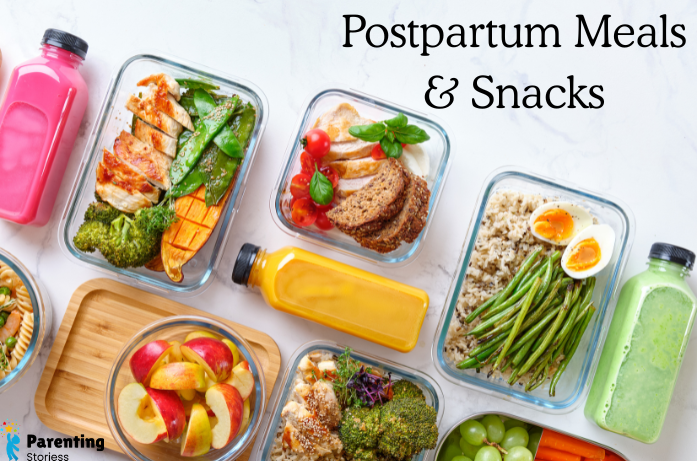
Having a few simple postpartum meals ready can make those first weeks much easier. They do not need to be fancy or perfectly balanced every single time. The most helpful meals are usually the ones that are easy to heat, filling, and made with foods you already enjoy.
A little preparation before or after birth can save a lot of effort later. A stocked pantry, a few freezer meals, and some easy snacks can help you eat more regularly while you recover and care for your newborn.
Why Postpartum Meals Are Important
The postpartum period places extra demands on your body. You are recovering from pregnancy and birth while adjusting to less sleep and a completely different daily routine.
Regular meals can help support energy levels and make it easier to meet your nutritional needs. Meals that include a mix of protein, carbohydrates, vegetables or fruit, and healthy fats can also help you feel fuller for longer.
Your needs may be different if you are breastfeeding, recovering from significant blood loss, managing anemia, diabetes, food allergies, or another health condition. In those cases, personalized advice from your doctor or dietitian is more useful than following a general meal plan.
Keep Postpartum Meals Simple and Balanced
You do not need complicated recipes to build a useful postpartum meal.
A simple plate can include a carbohydrate, a protein source, some fruit or vegetables, and a source of healthy fat.
For example, rice with dal and vegetables, eggs with toast and fruit, yogurt with oats and nuts, or chicken with potatoes and salad can all work well.
The main aim is to choose meals that are practical enough to prepare or reheat on busy days.
Easy Postpartum Breakfast Ideas
Breakfast is often easier when it can be prepared quickly or made ahead.
Oatmeal, overnight oats, eggs on toast, yogurt with fruit, smoothies, peanut butter toast, and baked oatmeal are all simple options.
You can also prepare breakfast foods in batches. Muffins, pancakes, breakfast wraps, and cooked oats can be frozen in portions and reheated when needed.
Easy Postpartum Meals for Lunch
Lunch is one of the easiest meals to miss when your day is filled with feeding, baby care, and trying to rest whenever you can. Keeping a few simple options ready can help you eat before you become overly hungry or tired.
Choose lunches that are quick to assemble and include a mix of protein, carbohydrates, and vegetables when possible. Leftovers, wraps, sandwiches, rice bowls, lentil soup, baked potatoes, or pasta with vegetables are all practical choices.
You can also make lunch easier by cooking extra dinner the night before. Storing one or two portions separately gives you a ready-made meal for the next day with almost no extra work.
Simple Dinner Ideas for Tired Evenings
Dinner should not require a lot of preparation during the early postpartum weeks.
One-pot meals, soups, curries, casseroles, baked pasta, khichdi, dal and rice, and tray-bake meals are useful because they require less active cooking.
Meals that reheat well are especially practical. Prepare extra portions when you have the energy and use them on busier days.
Postpartum Snacks for Busy Days
Postpartum snacks are useful when you do not have time for a full meal or need something between feeding sessions.
Keep easy snacks where you spend the most time. Nuts, fruit, yogurt, cheese and crackers, boiled eggs, roasted chickpeas, peanut butter toast, and oat bars are simple options.
Combining two food groups can make a snack more filling. For example, fruit with nut butter or crackers with cheese can be more satisfying than eating only one item.
Create a Feeding-Station Snack Basket
A small snack basket near your usual feeding area can save time.
Keep shelf-stable foods such as nuts, crackers, dried fruit, oat bars, or roasted chickpeas in the basket. Add a water bottle nearby as well.
Refill the basket once a day so you always have something easy to reach during longer feeds.
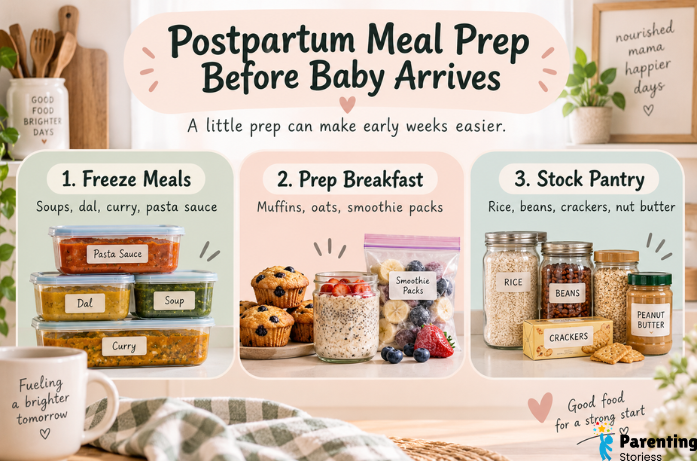
Postpartum Meal Prep Before Baby Arrives
Postpartum meal prep does not have to mean filling an entire freezer.
Preparing a few meals and kitchen basics before delivery can still make a big difference.
1. Prepare a Few Freezer Meals
Choose foods that freeze and reheat well, such as soups, stews, dal, pasta sauce, casseroles, curry, or chili.
Store meals in smaller portions so you can defrost only what you need.
2. Prepare Breakfast Shortcuts
Freeze muffins, breakfast wraps, pancakes, or baked oatmeal portions.
You can also prepare smoothie packs with frozen fruit so they are ready to blend.
3. Keep Pantry Basics Available
Useful pantry items include rice, oats, pasta, canned beans, lentils, nut butter, crackers, soup, and canned fish if you eat it.
These foods give you quick meal options even when your freezer supply is running low.
Use Different Meal Options for Different Energy Levels
Not every postpartum day feels the same.
Some days you may feel well enough to cook. Other days you may need something that takes five minutes.
Higher-Energy Days
Prepare a simple cooked meal and make extra portions for later.
Low-Energy Days
Use leftovers, freezer meals, soup, wraps, or quick rice bowls.
Very Tired Days
Keep a few rescue meals available, such as eggs and toast, yogurt with granola, cereal and fruit, or a simple sandwich.
Having these options ready can reduce the pressure to cook every day.
Keep Two or Three Rescue Meals at Home
A rescue meal is something you can make in about five minutes using ingredients you normally keep in the kitchen.
Good examples include eggs and toast, yogurt with fruit and oats, a quick rice bowl, or peanut butter toast with fruit.
Choose meals that suit your usual diet so you do not have to think about what to prepare when you are tired.
Stay Hydrated
It can be easy to forget water when you are busy caring for a newborn.
Keep a water bottle near your bed, feeding chair, and main living area.
Soups, milk, smoothies, fruit, and other foods can also contribute to fluid intake, but keeping plain water within reach is one of the easiest habits to maintain.
If you are breastfeeding, hydration may need a little more attention. Mayo Clinic recommends drinking when you feel thirsty and keeping water or another drink nearby during breastfeeding.
Include Protein in Meals and Snacks
Protein can help make meals more filling and provides important nutrients during recovery.
Easy sources include eggs, yogurt, paneer, beans, lentils, tofu, chicken, fish, nuts, and seeds.
Try adding a protein source to most meals and snacks without worrying about making every meal perfect.
Add Fiber-Rich Foods
Fiber can be helpful for digestion and can also make meals more satisfying.
Oats, fruits, vegetables, beans, lentils, whole grains, and seeds are useful options.
You do not need to add everything at once. Small additions, such as fruit with breakfast or vegetables in soup, can make a meal more balanced.
Include Iron-Rich Foods
Iron can be especially important after birth if you experienced blood loss or were told you had low iron.
Iron-containing foods include beans, lentils, leafy greens, eggs, meat, and fortified foods.
Vitamin C-rich foods such as citrus fruit, tomatoes, peppers, and guava can help your body absorb iron from plant foods.
If your healthcare provider has prescribed an iron supplement, follow their advice rather than relying on food alone.
Postpartum supplement needs are not the same for every mother. A recent review of dietary supplements during pregnancy and postpartum highlights the importance of considering individual nutrient needs and using supplements carefully rather than assuming that higher doses are always better.
Make Meals Easy for Family and Friends to Help With
If someone offers to help, giving them a clear food-related task can be useful.
Keep a short list of meals your household enjoys, such as soup, dal and rice, pasta bake, cut fruit, or breakfast muffins.
Friends or family can also help by washing fruit, chopping vegetables, portioning snacks, or putting groceries away.
Keep Food Where You Spend Your Time
Sometimes food is available, but it is not easy to reach.
If you spend a lot of time in one room feeding your baby, keep water and shelf-stable snacks nearby.
In a two-level home, a small snack station upstairs can also be useful.
Reducing small barriers can make it easier to eat regularly.
Postpartum Meals While Breastfeeding
If you are breastfeeding, you may notice increased hunger or thirst.
A balanced eating pattern with regular meals, snacks, protein, carbohydrates, healthy fats, fruits, vegetables, and fluids is a practical approach for most moms.
Breastfeeding can also change some nutrient needs. The CDC’s guidance on maternal diet and breastfeeding notes that breastfeeding mothers generally need additional energy, and needs for nutrients such as iodine and choline also increase during lactation.
There is no single food that guarantees milk supply. If you are concerned about feeding, milk production, your baby’s growth, or your own nutrition, speak with your healthcare provider or a qualified lactation professional.
Convenience Foods Can Be Useful Too
Not every postpartum meal has to be cooked from scratch. During recovery, convenience foods can save time and energy while still helping you put together a filling meal.
Useful options include frozen meals, canned beans, prepared soups, rotisserie chicken, pre-cut vegetables, microwaveable rice, and simple takeout. You can make these more balanced by adding something easy, such as fruit, yogurt, whole-grain toast, or a side of vegetables.
When choosing packaged foods, look for options you enjoy and can prepare quickly. Keeping a few reliable choices at home can be especially helpful on days when cooking feels unrealistic.
A Simple Postpartum Grocery List
Focus on foods that can be used in several different meals.
Useful basics include:
- Eggs, yogurt, cheese, beans, lentils, or other protein foods
- Rice, oats, bread, pasta, and potatoes
- Fresh and frozen fruits and vegetables
- Nuts, seeds, crackers, and easy snacks
- Freezer meals or ready-to-heat foods
Choose foods your family already eats and enjoys.
Common Postpartum Meal Planning Mistakes
One common mistake is planning meals as if your schedule will stay the same after the baby arrives.
Another is preparing only dinners while forgetting breakfast, lunch, and snacks.
It also helps to keep a mix of fresh, frozen, canned, and shelf-stable foods. This gives you more options when grocery shopping is delayed or you do not have the energy to cook.
Final Thoughts
Simple postpartum meals can make the first few weeks at home easier by reducing the amount of planning and cooking you need to do each day. Keeping a mix of ready meals, easy snacks, pantry staples, and a few quick backup options can help you eat more regularly while your routine is still changing.
Try to focus on meals that include a source of protein, a filling carbohydrate, and some fruit or vegetables when possible. You do not need every meal to be perfect, and convenience foods can still be useful when they help you stay fed and save energy.
Your food routine may look different from day to day, and that is normal during postpartum recovery. The most helpful approach is to keep meals simple, accessible, and flexible enough to work around feeding, rest, and caring for your newborn.
For more practical postpartum tips, newborn care ideas, and simple parenting guidance, explore more helpful articles on Parenting Stories.
Disclaimer
This article is for general information only and is not a substitute for medical or nutritional advice. If you have specific postpartum health or dietary concerns, speak with your doctor or a qualified dietitian.