Written by a caring mom at parenting stories
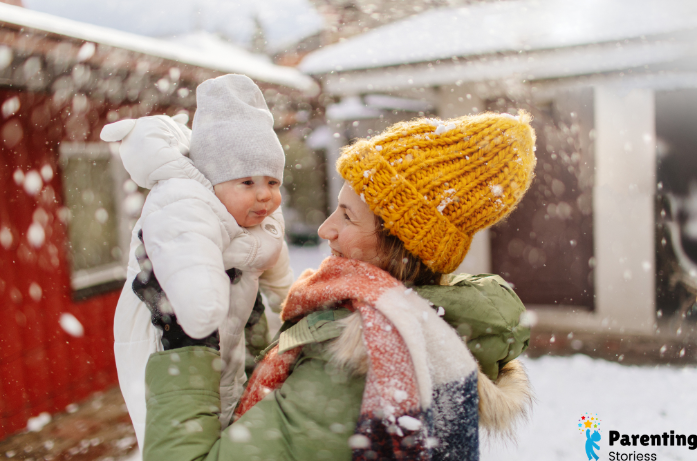
Watching your baby experience snow for the first time is a special moment. Those tiny snowflakes, cozy winter outfits, and curious little expressions create memories you’ll want to treasure for years.
But as a mom, you might wonder how to make your baby’s first snow experience safe and enjoyable. Is your little one old enough to go outside? How many layers should they wear? And what can babies actually do in the snow?
The good news is that you don’t need to plan anything complicated to enjoy your first snow with baby. A short outdoor adventure, a few sweet photographs, or simply watching snowflakes together from a warm window can make the day memorable.
In this guide, you’ll find cute baby snow day activities, adorable winter photo ideas, and practical safety tips to help you enjoy this special milestone with your little one.
Baby’s First Snow: When Is It Safe to Take Your Baby Outside?
Healthy babies can generally enjoy brief outdoor time in suitable winter weather when dressed appropriately.
However, newborns lose body heat more easily than older children, so their first snow experience should be different from that of a curious 10-month-old.
Your baby’s age, health, outdoor temperature, and wind chill all matter.
First Snow Activities by Baby’s Age
| Baby’s age | Suitable activities |
| 0–3 months | Watch snowfall through a window and take cozy indoor pictures |
| 3–6 months | Enjoy a brief outdoor cuddle in suitable weather |
| 6–9 months | Watch falling snow and briefly explore it with mittens |
| 9–12 months | Watch a parent build a snowman and enjoy supervised winter activities |
These are general activity ideas, not medical age requirements.
If your baby was born prematurely or has breathing difficulties or other medical concerns, speak with your pediatrician before taking them into cold weather.
Remember: Your baby doesn’t need to go outside to experience their first snowfall. Watching snowflakes from a warm room can be just as special.
How to Dress Your Baby for Their First Snow
Choosing the right baby first snow outfit is important because babies can become too cold or overheated more easily than adults.
The American Academy of Pediatrics recommends dressing older babies and young children in approximately one more layer than an adult would wear in similar conditions.
What Should Your Baby Wear?
For a short winter outing, consider:
- Base layer: A soft, long-sleeved bodysuit.
- Middle layer: A warm fleece outfit or sweater.
- Outer layer: A weather-appropriate jacket or snowsuit.
- Hat: A comfortable winter hat covering the ears.
- Mittens and booties: Warm protection for little hands and feet.
Check your baby’s chest or upper back regularly to make sure they’re comfortable. Cold hands alone don’t necessarily mean your baby is too cold.
Important Car Seat Safety Tip
Never place your baby in a car seat wearing a bulky winter coat or padded snowsuit.
Thick padding can compress during a crash, making the harness dangerously loose.
Instead, secure your baby in thin, warm layers and place a blanket over the fastened harness if needed. Keep their face uncovered.
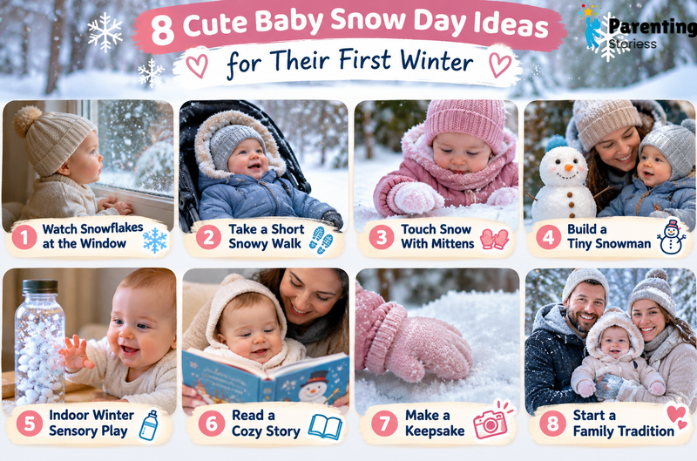
8 Cute Baby Snow Day Ideas for Their First Winter
You don’t need expensive toys or big plans to make your baby’s first snowfall special. These simple baby snow day ideas are fun, easy to try, and suitable for different ages.
1. Watch Snowflakes From the Window
To enjoy the winter with babies, watching snowflakes from the window is a sweet original activity. Make sure to hold your baby closely and indicate the snow falling outside.
Use a soft tone when talking, for instance, “Look! It’s snowing!” Although your baby may not decipher what you say yet, the noise of your voice and the sight of the snowflakes will be engaging for them.
2. Take a Short Snowy Walk
If the weather allows, put warm layers on your baby, and enjoy a brief outside walk. Let your baby observe trees, houses and sky covered with snow.
Choose an easy, non-slippery path, and avoid windy, cold weather. Keep your walk short, and come back home if your baby does not feel ok.
3. Let Your Baby Touch Snow With Mittens
Older babies may enjoy discovering how snow looks and feels. Hold a little clean snow in your hand and let your baby briefly touch it with a mitten.
Watch their reaction! They might look surprised or become curious. Avoid prolonged contact with bare skin, and never let your baby eat snow.
4. Build a Tiny Snowman
Make a small snowman while your baby watches from your arms or another safe, supported position. You can talk about what you’re doing and show them the finished snowman.
Take a cute picture together afterward. Keep buttons, stones, and other small decorations away from your baby to prevent choking hazards.
5. Try an Indoor Winter Sensory Activity
If it’s too cold outside, bring some winter fun indoors. Show your baby a securely sealed, shatter-resistant sensory bottle containing white pom-poms to resemble snowflakes.
Gently move the bottle and let your baby watch the shapes inside. Always supervise and make sure the bottle cannot be opened or broken.
6. Read a Cozy Winter Story
After enjoying the snowfall, cuddle up with your baby and read a winter-themed board book. Point to pictures of snowflakes, mittens, animals, and snowy trees.
Use different voices and let your baby explore the sturdy pages. It’s a relaxing way to encourage early language development while spending time together.
7. Make a First Snow Keepsake
Capture a sweet picture of your baby’s mitten-covered hand near the snow or take a photograph of their first winter outfit.
Print the picture and add it to a memory book with the date and your baby’s age. You can also write a little note about their first reaction to snow.
8. Start a Family Snow Tradition
Make your baby’s first snowfall the beginning of a sweet family tradition. Take a family picture together whenever the first snow arrives each winter.
You could choose the same safe location or include a favorite winter book in each photograph. Over the years, these pictures will become beautiful reminders of how much your little one has grown.
Adorable Baby Winter Photo Ideas You’ll Treasure
Your baby’s first snowfall deserves a few sweet pictures! And the best part? You don’t need a professional camera or fancy decorations. These simple baby winter photo ideas can help you capture beautiful memories without much effort.
1. The Cozy Window Photo
Sit with your baby near a bright window and let them watch the falling snow. Capture their curious face as they look outside.
This is a lovely option for newborns because you can take beautiful winter pictures without exposing them to the cold.
2. The Cute Winter Hat Picture
Dress your little one in a cozy winter outfit with a soft knitted hat. Capture their adorable expressions against a snowy background.
Choose a comfortable hat without loose ties or small decorations. Keep your baby awake and supervised during the photoshoot.
3. The Snowy Family Cuddle
Hold your baby close while someone takes a family picture with snow-covered trees in the background.
Try a natural moment, like kissing your baby’s forehead or smiling at each other. These simple, loving pictures often become the most meaningful.
4. The Tiny Mittens Photo
Take a close-up picture of your baby’s little hands wearing warm mittens, with snow in the background.
It’s a sweet way to remember just how tiny those hands were during their first winter. You can even add the picture to a baby memory album.
5. The First Snow Reaction
Capture your baby’s face when they see falling snow for the first time. Some babies look amazed, while others make the funniest confused expressions!
Don’t worry about getting a perfect smile. Those natural reactions make the best memories.
Photo tip: Use natural daylight for clearer pictures, keep outdoor photoshoots short, and never place your baby directly on snow or unsafe props just for a photograph.
Important Winter Safety Tips Every Parent Should Know
Snow can be exciting for babies, but cold weather also brings a few risks. Before taking your little one outside, keep these simple baby winter safety tips in mind.
1. Check the Temperature and Wind Chill
Even a sunny winter day can feel freezing when the wind is strong. Always check the weather forecast before heading outside.
Keep outdoor visits short, avoid extreme cold, and bring your baby inside if they seem uncomfortable.
2. Watch for Signs Your Baby Is Too Cold
Babies can’t tell us when they’re feeling too cold, so pay attention to their skin and behavior.
According to the Centers for Disease Control and Prevention (CDC), unusually cold, bright red skin and very low energy can be signs of hypothermia in babies.
If your baby seems unusually sleepy, unresponsive, or has breathing difficulties, move them somewhere warm and seek emergency medical care.
3. Protect Your Baby’s Delicate Skin
Cold winds can make your baby’s cheeks and lips dry. A gentle, fragrance-free baby moisturizer can help prevent dryness.
Snow also reflects sunlight. Keep babies under six months in the shade and use protective clothing. For older babies, apply an age-appropriate broad-spectrum sunscreen to exposed skin.
4. Keep Your Baby Warm and Dry
Wet mittens, socks, or clothes can make your baby cold quickly. Carry an extra pair of mittens and dry clothing when going outside.
If your baby’s clothes become wet, change them promptly and warm them indoors.
5. Follow Safe Sleep Practices After Snow Play
Your baby may feel sleepy after spending time outdoors. Before putting them down for a nap, remove their winter hat, bulky coat, and extra blankets.
Always place your baby on their back on a firm, flat sleep surface without pillows, loose blankets, or soft toys.
Baby’s First Snow Checklist
Before stepping outside, quickly check that you have everything ready.
- Checked the weather and wind chill
- Warm, comfortable clothing layers
- Winter hat, mittens, socks, and booties
- Extra dry clothes
- Diapers and wipes
- Feeding supplies, if needed
- Safe stroller or baby carrier
- Phone or camera for pictures
- A plan to return indoors quickly
A helpful mom tip: Feed your baby and change their diaper before dressing them for the outing, if it fits their routine. It may save you from removing several layers just minutes later!
What If Your Baby Doesn’t Like Their First Snow?
Not every baby enjoys seeing snow for the first time, and that’s perfectly normal! Some babies may look curious, while others might cry when they feel the cold air or see something unfamiliar.
Snow brings new sights, sounds, and sensations that can feel overwhelming for little ones. If your baby becomes upset, hold them close, comfort them, and head back inside.
You can always watch the snowfall together from a warm window instead. Remember, your baby’s comfort matters more than getting the perfect picture. Let them enjoy new experiences at their own pace.
Frequently Asked Questions About Baby’s First Snow
1. Can a 3-month-old baby go outside in the snow?
A healthy, full-term 3-month-old may be able to enjoy a brief outdoor outing in suitable weather with appropriate clothing. Avoid extreme cold and strong winds.
2. How long can a baby stay outside in winter?
There is no universal safe time limit. It depends on your baby’s age, health, clothing, temperature, and wind chill. Keep outings brief and return indoors if your baby seems uncomfortable.
3. Can a 6-month-old baby touch snow?
Yes, an older baby may briefly touch clean snow with mittens under close supervision. Avoid prolonged bare-skin contact and prevent them from eating snow.
4. What should my baby wear for first snow pictures?
Choose comfortable winter layers, a warm hat, mittens, and covered feet. Avoid bulky clothing in car seats and unsafe photography props.
5. What if it’s too cold to take my baby outside?
Try watching snowfall through a window, reading winter books, taking cozy indoor photographs, or enjoying a supervised winter-themed sensory activity.
Final Thoughts
Your baby’s first snow is a special milestone, but it doesn’t have to be a big adventure to become a beautiful memory. Whether you are watching snowflakes through a window, taking cute winter pictures, or enjoying a short snowy walk, the little moments often mean the most.
Just remember to dress your baby in warm, comfortable layers, keep outdoor activities short, and pay attention to how they are feeling. Every baby reacts differently to new experiences, so there’s no need to rush or force them to enjoy the snow.
As your little one grows, there will be plenty of winters filled with snowmen, snowball fights, and outdoor adventures. For now, enjoy these quiet first moments, take a few pictures, and make memories you’ll love looking back on.
At Parenting Stories, we believe the sweetest childhood memories aren’t always perfectly planned. They’re the simple, happy moments you share together.
Disclaimer
This article provides general parenting and winter safety information and is not a substitute for professional medical advice. Consult your pediatrician if you have concerns about your baby’s health or cold-weather exposure.