

Written by a caring mom at Parenting Stories
If you’re sitting there holding your baby, softly whispering, trying everything you know, and still wondering what do parents do to stop babies from crying, I want you to take a deep breath first. You’re doing your best, and that matters more than you realize.
Parenting in 2026 looks a little different. We still rely on timeless love and instinct, but we also understand babies better than ever before. We know their emotions are deeper, their senses more sensitive, and their need for connection stronger than we once thought.
So instead of just “fixing” the crying, modern parenting focuses on understanding it, and responding in gentle, creative ways that actually work in real life.
Let me share some fresh, unique calming ideas that many parents are quietly discovering today.
What Do Parents Do to Stop Babies From Crying in 2026?
Today, parents are moving away from rigid rules and toward responsive, intuitive care. Instead of trying to control the crying, we’re learning to connect, regulate, and comfort in ways that match our baby’s emotional needs.
It’s not about doing more, it’s about doing what feels right for your baby.
Why Modern Babies Seem More Sensitive
Many parents feel their babies are more “aware” or sensitive than expected, and honestly, that’s not wrong.
Babies today are often:
- More stimulated by screens and noise around them
- More aware of emotional energy
- More reactive to sudden changes
This doesn’t mean something is wrong. It simply means they need gentler, more mindful soothing.
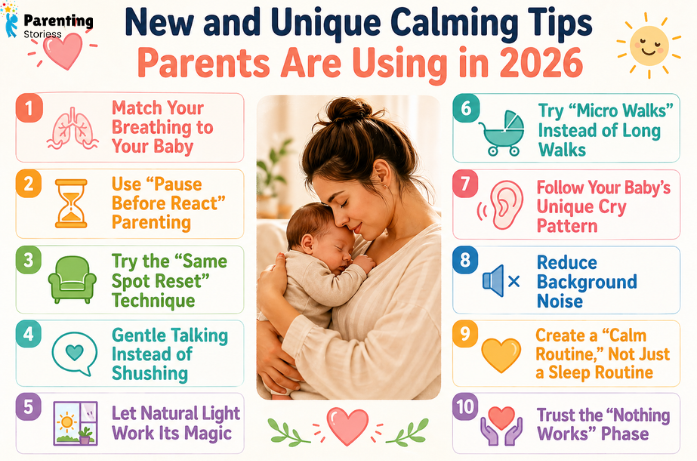
New and Unique Calming Tips Parents Are Using in 2026
These are not the usual “rock and feed” suggestions. These are small, thoughtful shifts that can make a big difference.
Global parenting experts also recommend simple, responsive techniques like holding, talking softly, and creating a calm environment. Helpful guidance from UNICEF supports these gentle approaches.
1. Match Your Breathing to Your Baby
Hold your baby close and gently slow your breathing. Take deep, steady breaths and allow your body to relax. Babies are incredibly sensitive to rhythm, and they often begin to sync with your calm breathing without even realizing it.
Within a few minutes, you may notice their body softening and their cries becoming quieter. It’s not magic, it’s connection. Your calm energy becomes their sense of safety.
2. Use “Pause Before React” Parenting
When your baby starts crying, try not to rush immediately into action. Pause for a few seconds and observe what might be happening. This small moment gives you clarity instead of reacting out of stress.
Sometimes, babies settle on their own in those few seconds. And when they don’t, you’re able to respond more thoughtfully, whether it’s feeding, comforting, or simply holding them close.
3. Try the “Same Spot Reset” Technique
Create a calm, cozy corner in your home where you always go to soothe your baby. Keep it simple soft lighting, quiet surroundings, and a comfortable place to sit.
Over time, your baby begins to associate that spot with comfort and calmness. Just being there can help them relax faster, even before you try anything else.
4. Gentle Talking Instead of Shushing
Instead of only making shushing sounds, try softly talking to your baby. Use a calm, warm tone and simple reassuring words like “I’m here” or “You are okay.”
Your baby may not understand the words yet, but they understand your voice. That emotional connection helps them feel secure and less alone in their discomfort.
5. Let Natural Light Work Its Magic
Take your baby near a window during the day and let them quietly look outside. The soft natural light and gentle movement of trees or people can be very calming.
This simple shift in environment often relaxes their senses. It gives them something peaceful to focus on and can gently distract them from crying.
6. Try “Micro Walks” Instead of Long Walks
You don’t always need to go out for a long walk to calm your baby. Sometimes, just stepping outside for a minute or two is enough.
Fresh air, a slight change in temperature, and new sounds can quickly reset their mood. Even standing near a doorway or balcony can make a noticeable difference.
7. Follow Your Baby’s Unique Cry Pattern
Every baby has different types of cries, and over time, you’ll start noticing the patterns. Some cries are sharp and urgent, while others are slow and tired.
Understanding these small differences helps you respond with confidence. Instead of guessing, you begin to know what your baby needs and that makes soothing much easier.
8. Reduce Background Noise
Even if your home feels calm, small background noises can be overwhelming for your baby. Things like TV sounds, phone notifications, or kitchen noise can add up.
Try turning everything off for a while and create a quieter space. You’ll often notice your baby settling faster in a peaceful environment.
9. Create a “Calm Routine,” Not Just a Sleep Routine
Babies need calming moments throughout the day, not just before sleep. Simple habits like quiet cuddling after feeding or slowing down after playtime can help.
These gentle pauses prevent overstimulation. When babies feel more balanced during the day, they tend to cry less overall.
10. Trust the “Nothing Works” Phase
There will be moments when nothing seems to calm your baby, no matter what you try. This can feel frustrating and overwhelming, but it’s completely normal.
Sometimes babies just need to release their feelings through crying. In those moments, your presence, patience, and love matter more than any technique.
What Most Parents Realize Over Time
At the beginning, everything feels urgent.
Every cry feels like a problem to solve.
But slowly, you begin to notice:
- Your baby calms faster with you
- You understand their needs quicker
- You feel less anxious and more steady
This doesn’t happen overnight. It grows quietly, day by day. If your baby remains fussy despite trying different methods, it can help to explore additional soothing ideas shared by pediatric experts at American Academy of Pediatrics, which offers practical tips for calming babies safely.
When You Start Feeling Overwhelmed
Let’s be honest, there will be moments when you feel exhausted.
When the crying feels endless.
In those moments:
- Put your baby down safely for a minute
- Take a deep breath
- Drink water
- Reset yourself
A calm parent is more powerful than any technique.
A Gentle Truth Many Parents Need to Hear
You don’t have to try every method to be a good parent. You don’t have to get everything right all the time either. Parenting isn’t about perfection it’s about showing up with love, even on the hard days.
And most importantly, there’s no need to compare yourself to what you see online. Every baby is different, and so is every parent’s journey. Trust yourself a little more, because your baby feels safest with you and that’s what truly matters.
Many trusted parenting resources also explain that crying is a baby’s natural way of communicating their needs, whether it’s hunger, discomfort, or the need for closeness. You can read more about this on Kids Health.
Conclusion: The Real Answer to Soothing a Crying Baby
If you’re still wondering what do parents do to stop babies from crying, the truth is much simpler and much more comforting, than it seems. Parents don’t always have perfect answers. They stay present, they learn with time, and they continue loving their baby through every difficult moment.
Some days, you’ll discover a method that works like magic. Other days, nothing seems to help, and all you can do is hold your baby close and wait for the storm to pass. And honestly, both of these moments are completely okay.
Because in the end, your baby won’t remember every technique you tried. They will remember the warmth of your arms, the sound of your voice, and the feeling of being safe with you. And that quiet sense of safety that is what truly matters.
If this helped you, share it with another parent and explore more tips on Parenting Stories.
FAQs
1. What do parents do to stop babies from crying quickly?
Parents usually check basic needs like feeding, sleep, and comfort first. Gentle holding, calm voice, and a peaceful environment often help babies settle faster.
2. Why do babies cry even after feeding?
Babies may cry due to gas, tiredness, overstimulation, or simply needing comfort. Crying is their way of expressing different needs beyond hunger.
3. Is it okay to let a baby cry for some time?
Short periods of crying can be normal, especially if all needs are met. However, babies still need comfort and reassurance to feel safe.
4. How can I calm my baby naturally without too many methods?
Simple things like holding your baby, talking softly, and creating a calm environment work best. Babies respond more to connection than complex techniques.
5. When should I worry about my baby’s crying?
If your baby cries excessively, refuses feeding, or shows signs of illness, it’s best to consult a doctor. Trust your instincts as a parent.
Disclaimer: This article is for informational purposes only and is based on general parenting experiences. Every baby is different, so what works for one may not work for another. If you have concerns about your baby’s health or crying patterns, please consult a qualified pediatrician.