Written by a caring mom at parenting stories
You’ve finally welcomed your baby into the world, but your body may still look and feel different than it did before pregnancy. Your belly may still look swollen, your clothes might feel tighter, and you may wonder how long it will take to lose the extra pregnancy weight.
The postpartum weight loss timeline varies from one mother to another. Some women notice changes within the first few weeks, while others take several months. During this time, your body gradually releases extra fluid, and your uterus slowly returns to its pre-pregnancy size. These changes are a natural part of recovery after childbirth.
In this guide, we’ll explore how your weight may change during the first year after giving birth, why weight loss sometimes slows down, and simple ways to support your recovery. You’ll also learn when it’s safe to start exercising and what to realistically expect as your body heals.
What Is a Normal Postpartum Weight Loss Timeline?
Postpartum weight loss usually happens gradually, although the first few days can bring noticeable changes.
Immediately after delivery, you lose the weight of your baby, placenta, and amniotic fluid. Over the following weeks, your body also releases extra pregnancy-related fluid.
Later weight changes depend on factors such as breastfeeding, nutrition, sleep, physical activity, and individual metabolism.
Here’s a general overview.
| Time After Birth | What to Expect |
| First 24–48 hours | Initial weight loss from delivering your baby, placenta, and amniotic fluid |
| First week | Additional changes as your body releases retained fluid |
| Weeks 2–6 | Your uterus gradually shrinks and swelling may improve |
| Months 2–3 | Some moms notice gradual weight loss, while others experience a plateau |
| Months 3–6 | Weight changes depend on recovery, activity, and feeding routines |
| Months 6–12 | Some moms approach their pre-pregnancy weight, while others need longer |
According to MedlinePlus, a health information resource from the U.S. National Library of Medicine, returning toward your pre-pregnancy weight may take approximately 6–12 months.
However, this isn’t a deadline. Every mother’s recovery looks different.
Postpartum Weight Loss Timeline: Week by Week and Month by Month
Your body needs time to recover after childbirth, and weight loss doesn’t happen at the same pace for every mom. Here’s what you can expect during the first year.
First 24–48 Hours: The Initial Weight Drop
Right after delivery, many moms lose around 10–13 pounds (4.5–6 kg) from the baby, placenta, and amniotic fluid.
However, your belly may still look pregnant because your uterus is enlarged and your abdominal muscles are stretched. This is completely normal.
First Week: Losing Extra Water Weight
During pregnancy, your body holds extra fluid. After delivery, it gradually releases this fluid through sweating and urination.
You may notice night sweats, frequent bathroom trips, or reduced swelling. However, swelling may take longer to improve after a C-section or IV fluids.
Mom tip: Avoid weighing yourself daily because fluid changes can make your weight fluctuate.
Weeks 2–6: Your Body Is Healing
Your uterus continues shrinking toward its pre-pregnancy size, usually taking around six weeks. You may notice your belly getting smaller even if your weight stays the same.
Your body is still healing, especially after a C-section. Focus on healthy meals, enough water, rest, and gentle movement when you’re ready.
Months 2–3: Gradual Weight Loss May Begin
By two or three months, some moms start feeling stronger and notice gradual weight changes.
However, breastfeeding, increased hunger, and sleepless nights can slow your progress. If you’re not losing weight yet, don’t worry. Every mother’s recovery is different.
Months 3–6: Building Healthy Habits
You may find it easier to follow a routine with regular meals, short walks, and gentle exercise.
Your weight might slowly decrease or stay the same for a while. Focus on feeling stronger, having more energy, and staying healthy rather than just watching the scale.
Months 6–12: Your Body Continues to Change
Some moms return close to their pre-pregnancy weight within a year, while others take longer.
Your weight may also change as breastfeeding patterns and daily activities change. Even if you lose the pregnancy weight, your body may look different than before.
Remember: There’s no deadline for losing baby weight. Give yourself time to heal and focus on healthy habits that work for you.
Why Do Some Moms Lose Baby Weight Faster Than Others?
Every postpartum body responds differently.
Several factors can influence how quickly you lose pregnancy weight.
Breastfeeding
Breastfeeding requires additional energy and may support weight loss for some mothers.
However, it doesn’t guarantee faster results.
According to the Centers for Disease Control and Prevention (CDC), breastfeeding mothers generally need approximately 330–400 additional calories daily compared with their pre-pregnancy needs, depending on individual circumstances.
Restricting food too aggressively may affect your nutrition and potentially your milk supply.
Sleep and Stress
Newborns often wake several times throughout the night.
Interrupted sleep and ongoing stress can affect appetite, energy, and daily activity.
When you’re exhausted, even preparing a healthy meal can feel difficult.
Pregnancy Weight Gain and Hormones
Your pregnancy weight gain, genetics, metabolism, and hormonal changes can also influence postpartum weight loss.
Medical conditions, including postpartum thyroiditis, may affect weight and energy levels.
If you notice unexplained weight changes or unusual symptoms, consult your healthcare provider.
Postpartum Weight Loss Plateau: Why Your Weight Stops Changing
Have you lost several pounds after delivery, only to notice that the scale hasn’t moved for weeks?
A postpartum weight loss plateau can feel frustrating, especially when you’re trying to eat well and stay active.
But it doesn’t necessarily mean you’re doing something wrong.
Initial postpartum weight loss often includes extra fluid. Once those changes slow down, further weight loss may become less noticeable.
Breastfeeding, sleep deprivation, appetite changes, and activity levels may also contribute.
How to Manage a Postpartum Weight Loss Plateau
Instead of immediately reducing your food intake, focus on a few manageable habits:
- Eat balanced meals containing protein and fiber.
- Drink water regularly throughout the day.
- Include comfortable physical activity when you’re ready.
- Rest whenever possible.
- Avoid comparing your progress with other moms.
If you’re concerned about persistent weight changes, especially alongside unusual symptoms, discuss them with your healthcare provider.
When Is It Safe to Start Losing Weight After Giving Birth?
Your body needs adequate nutrition and time to recover after childbirth.
For many mothers, the first several weeks should focus on healing rather than intentional weight loss.
Gentle walking may be appropriate soon after an uncomplicated vaginal delivery, depending on how you feel.
However, strenuous exercise and weight-loss diets require more consideration, especially after a C-section or complicated birth.
The American College of Obstetricians and Gynecologists (ACOG) recommends gradually returning to exercise based on your delivery and recovery.
Before starting a deliberate weight-loss plan, discuss your needs with your healthcare provider, particularly if you’re breastfeeding.
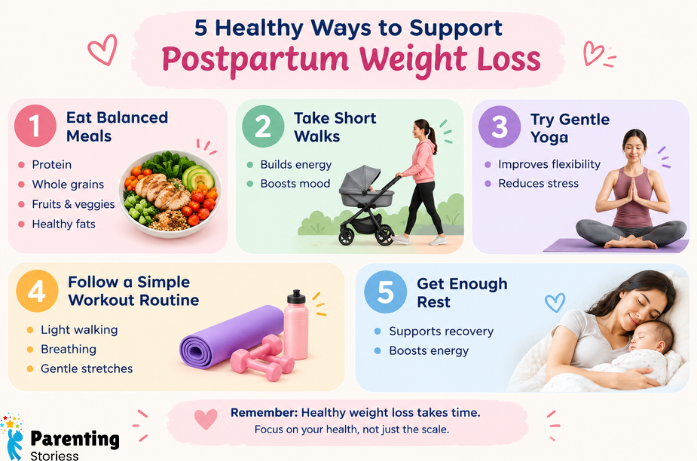
5 Healthy Ways to Support Postpartum Weight Loss
Losing weight after childbirth doesn’t mean following a strict diet or spending hours exercising. Simple, healthy habits can help your body recover while you care for your baby.
1. Eat Healthy, Balanced Meals
Your body needs proper nutrition to heal after childbirth and maintain energy, especially if you’re breastfeeding.
Include protein, whole grains, fruits, vegetables, and healthy fats in your daily meals. Try simple foods like eggs, oatmeal, yogurt, lentils, and vegetable soup.
Avoid skipping meals or following crash diets, as they can leave you feeling tired and make it harder to meet your nutritional needs.
2. Start With Short Walks
Walking is an easy way to become active again after delivery. It can help improve your energy, mood, and overall fitness.
Start with a short walk around your home or take your baby outside in a stroller when you feel comfortable.
Slowly increase your walking time as your strength improves. There’s no need to rush or push yourself too hard.
3. Try Gentle Postpartum Yoga
Practicing yoga for postpartum weight loss can help improve flexibility, strengthen muscles, and reduce stress.
Once your healthcare provider confirms it’s safe, try gentle movements such as pelvic tilts, cat-cow stretches, and breathing exercises.
Start slowly and avoid poses that cause pain, abdominal bulging, or pelvic pressure. Remember, yoga supports recovery but doesn’t guarantee weight loss.
4. Follow a Simple Postpartum Workout Routine
A postpartum weight loss workout doesn’t need to be difficult or time-consuming. Once you’re cleared for exercise, you can begin with a few gentle activities.
Here’s an example of a short beginner-friendly routine:
| Exercise | Duration |
| Comfortable walking | 5 minutes |
| Gentle breathing exercises | 2 minutes |
| Supported sit-to-stands | 2 minutes |
| Gentle stretching | 2 minutes |
You can adjust the routine based on your energy and recovery. Stop if you experience pain, dizziness, increased bleeding, or pelvic discomfort.
5. Get Enough Rest and Sleep
Getting enough sleep with a newborn can be challenging, but rest is important for your physical and emotional recovery.
Lack of sleep can affect your energy, appetite, and motivation to stay active.
Try resting when you have the opportunity, sharing baby-care responsibilities with your partner, and accepting help with household chores.
Even small breaks throughout the day can help you feel more refreshed.
Remember: Healthy postpartum weight loss takes time. Focus on eating well, moving gently, and getting enough rest rather than trying to lose weight quickly.
Do You Need a Postpartum Weight Loss Program?
You may come across a postpartum weight loss program promising quick results.
Before joining, consider whether it supports your recovery and nutritional needs.
A responsible program should encourage gradual progress, balanced nutrition, and exercises appropriate for postpartum healing.
It should also offer modifications for breastfeeding mothers and those recovering from a C-section.
Avoid programs promoting extreme calorie restrictions, detox products, or unrealistic transformations.
For personalized support, consider working with a registered dietitian or qualified postpartum fitness professional.
When Should You Talk to Your Doctor?
Although weight changes are common after childbirth, certain symptoms deserve medical attention.
According to the American Thyroid Association, postpartum thyroiditis can develop during the first year after delivery and may affect energy levels, weight, and other bodily functions.
Speak with your healthcare provider if you experience unexplained weight changes, persistent unusual fatigue, heart palpitations, or other concerning symptoms.
Seek urgent medical attention for chest pain, severe shortness of breath, fainting, heavy bleeding, or a painful swollen leg.
Frequently Asked Questions
1. How much weight do you lose immediately after giving birth?
Many mothers lose approximately 10–13 pounds (4.5–6 kg) from delivering the baby, placenta, and amniotic fluid. The amount varies.
2. How long does it take to lose pregnancy weight?
Some women return toward their pre-pregnancy weight within 6–12 months, while others take longer. There is no universal deadline.
3. Does breastfeeding help with postpartum weight loss?
Breastfeeding uses additional energy and may support weight loss for some mothers, but it doesn’t guarantee faster results.
4. Why am I not losing weight three months postpartum?
Breastfeeding, appetite changes, sleep deprivation, activity levels, and individual metabolism may all influence weight loss.
5. Is it normal to still have a postpartum belly after six months?
Yes. Stretched skin, abdominal muscle changes, body fat distribution, or diastasis recti may contribute to a rounded belly.
Final Thoughts: Give Your Body Time to Heal
Losing pregnancy weight takes time, and every mother’s journey is different. Some moms notice changes within a few months, while others need longer. What matters most is giving your body the care and support it needs after childbirth.
Instead of worrying about how quickly the weight comes off, focus on eating healthy meals, staying gently active, and getting enough rest. Remember, your postpartum weight loss timeline is personal, and there’s no need to compare your progress with anyone else’s.
Be kind to yourself, celebrate small improvements, and enjoy these precious moments with your baby. Your body has done something amazing, and it deserves patience, love, and time to recover.
With love,
A fellow mom at Parenting Stories
Visit Parenting Stories for practical advice on postpartum recovery, baby care, and motherhood to support you at every stage of your parenting journey.
Medical disclaimer
This article is for general educational purposes and doesn’t replace professional medical advice. Consult your healthcare provider before beginning a postpartum weight-loss diet or exercise program, particularly if you’re breastfeeding or recovering from complications.