Written by a caring mom at Parenting Stories
As a mom, I know how many questions come to mind when introducing new foods to our little ones. We want every bite to be healthy, safe, and full of nutrients, but we also want our babies to enjoy the flavors we offer. When I first introduced baby spinach to my child’s meals, I wondered about its benefits, baby spinach calories, and the best way to serve it.
The good news is that baby spinach is a gentle, nutrient-rich vegetable that is naturally low in calories while providing important vitamins and minerals for growing babies. From soft purees to easy homemade recipes, there are many simple ways to add this leafy green to your baby’s diet.
In this guide, I’ll share the nutrition facts, health benefits, and practical tips I learned about baby spinach to help you confidently include it in your little one’s meals.
What Is Baby Spinach?
Baby spinach is simply spinach that is harvested earlier than mature spinach. Because it is picked when the leaves are younger, it has a softer texture and a milder taste compared to regular spinach.
This makes it a wonderful choice for babies and toddlers who are still exploring different flavors and textures. Many parents find that baby spinach blends easily into purees, soups, smoothies, and homemade meals.
I personally love baby spinach because it does not require complicated preparation. A small handful can add extra nutrition to a meal without changing the taste too much.
Baby Spinach Calories and Nutrition Facts
When we talk about healthy foods for babies, many parents focus on calories. While calories are important for growth, the quality of those calories matters too.
Baby spinach calories are very low, making it a nutrient-dense food rather than a high-calorie food. A cup of raw baby spinach contains only a small number of calories while providing valuable nutrients that support your baby’s development.
Here are some important baby spinach nutrition facts:
- Low in calories and naturally light
- Rich in vitamins A, C, and K
- Baby spinach also provides folate, an important nutrient that helps support healthy cell growth and development. Folate plays an essential role in the body, and parents can learn more about its benefits from the FDA’s information on folate and folic acid.
- Provides iron, which helps support healthy blood development
- Contains calcium for growing bones
- Includes fiber to support digestion
- Provides antioxidants that help protect body cells
Although babies do not need large amounts of spinach, adding small portions to their meals can help introduce them to a variety of nutrients and flavors.
Why Is Baby Spinach Healthy for Babies?
Introducing vegetables early can help children become comfortable with different tastes and textures. Baby spinach offers many benefits that make it a smart addition to a balanced diet.
1. Supports Healthy Growth and Development
Babies grow quickly during their first years, and their bodies need a variety of nutrients. Baby spinach contains vitamins and minerals that support overall growth.
Vitamin A helps support healthy vision and the immune system, while vitamin C helps the body absorb iron and supports natural defenses.
2. Helps Support Strong Bones
Growing babies need nutrients that help their bones develop properly. Baby spinach contains vitamin K and calcium, which play important roles in maintaining healthy bones.
Of course, spinach should be part of a balanced diet that includes other calcium-rich foods as well.
3. Supports Digestion
Many parents worry about constipation when introducing solid foods. Baby spinach contains fiber, which can support healthy digestion when included as part of a varied diet.
I always believe that small, consistent steps work best when introducing new foods. A few spoonfuls mixed into familiar meals can be enough.
When Can Babies Eat Baby Spinach?
Most babies can start eating spinach when they are ready for solid foods, usually around 6 months of age.
Some signs your baby may be ready include:
- Sitting upright with support
- Showing interest in food
- Bringing objects to their mouth
- Losing the tongue-thrust reflex
When introducing spinach for the first time, start with a small amount and watch how your baby responds.
New foods can sometimes take several tries before babies accept them. A baby refusing spinach once does not mean they dislike it forever. Taste preferences change as they grow.
How to Prepare Spinach Baby Food Safely
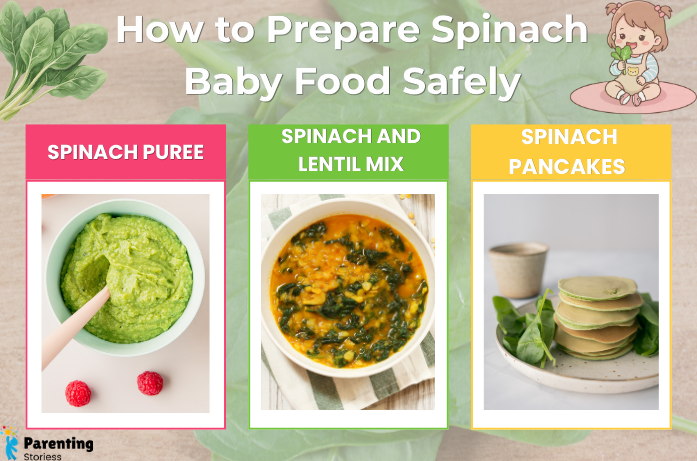
Preparing homemade spinach baby food is much easier than many parents imagine. The most important thing is to make sure the spinach is soft, easy to digest, and served in a texture that matches your baby’s age and eating stage. Always wash baby spinach thoroughly before cooking to remove any dirt or residue, and avoid adding salt or strong seasonings when preparing meals for young babies.
Here are a few simple and nutritious ways to include spinach in your baby’s meals:
Spinach Puree
A smooth spinach puree is one of the easiest ways to introduce leafy greens to your baby. Simply steam fresh baby spinach until it becomes tender, then blend it into a soft puree. You can make it more flavorful and nutritious by mixing spinach with naturally sweet and familiar foods such as:
- Sweet potato: Adds a creamy texture and mild sweetness that many babies enjoy.
- Carrots: Provides extra vitamins and a naturally sweet taste.
- Peas: Adds more fiber and plant-based nutrients.
- Apple puree: A small amount can balance the earthy flavor of spinach.
- Potato: Makes the puree thicker and more filling.
Combining spinach with foods your baby already loves can make the new flavor easier to accept and help create a positive experience with vegetables.
Spinach and Lentil Mix
Spinach and lentils make a wonderful combination for growing babies. Lentils provide protein and energy, while spinach adds vitamins, minerals, and antioxidants. Together, they create a soft, nourishing meal that can keep your baby satisfied.
You can cook lentils until they are very soft, add cooked spinach, and blend or mash the mixture depending on your baby’s age and texture preferences. This is a great option for introducing more variety into your baby’s meals.
Spinach Pancakes Baby Recipe Idea
Many parents look for spinach pancakes baby recipes because they are a fun way to introduce vegetables as a finger food. These soft little pancakes are easy for babies to hold and can make mealtime more enjoyable.
A simple baby-friendly spinach pancake recipe can include:
- Cooked and finely blended spinach
- Banana or another naturally sweet fruit
- Egg for protein and softness
- Whole wheat flour or oats for texture
Blend the ingredients together, then cook small pancakes until they are soft and fully cooked. Allow them to cool before serving.
Spinach pancakes are a great choice for babies who are learning to self-feed because they are soft, easy to grip, and a creative way to add more vegetables to their diet.
Can You Freeze Baby Spinach?
The answer is yes. Freezing baby spinach can be a helpful way to reduce food waste and save preparation time.
Here are some simple steps:
- Wash the spinach leaves thoroughly.
- Cook or steam them lightly.
- Allow them to cool.
- Place them in small freezer-safe containers or ice cube trays.
- Use small portions whenever needed.
Frozen spinach can be added to purees, soups, pasta sauces, or baby meals.
I personally love preparing small portions ahead of time because parenting already comes with many busy moments. Having healthy ingredients ready can make mealtime much less stressful.
Tips for Introducing Baby Spinach to Your Child
Introducing new foods is a journey, and every child has their own personality when it comes to eating.
Here are some gentle tips that helped me:
1. Start Small
You do not need to serve a large amount of spinach right away. A teaspoon mixed into a familiar food is a great beginning.
2. Mix With Familiar Flavors
Babies often prefer flavors they already know. Mixing spinach with sweet potato, banana, or carrots can make the taste easier to accept.
3. Keep Offering Without Pressure
Sometimes babies need multiple opportunities before accepting a new food. Keep offering spinach calmly without forcing your child to eat it.
Creating a positive relationship with food is more important than finishing every bite.
Things Parents Should Keep in Mind
While baby spinach is healthy, balance is always important. Babies need a variety of foods, including fruits, vegetables, grains, proteins, and healthy fats.
A few things to remember:
- Always wash spinach properly before preparing it.
- Serve spinach in an age-appropriate texture.
- Avoid adding salt or strong seasonings for young babies.
- Introduce new foods one at a time if you are concerned about possible reactions.
- Offer a variety of vegetables instead of relying on only one food.
As moms, we sometimes worry about creating the “perfect” diet for our children. But feeding is a learning process, and small healthy choices add up over time.
Frequently Asked Questions About Baby Spinach
1. Is baby spinach good for babies?
Yes, baby spinach can be a healthy addition to a baby’s diet when prepared safely. It provides vitamins, minerals, fiber, and antioxidants that support growth and development.
2. How much spinach can a baby eat?
Babies only need small amounts of spinach. A few spoonfuls mixed with other foods can be enough depending on their age and eating habits.
3. Can babies eat raw baby spinach?
For younger babies, cooked spinach is usually a better option because it is softer and easier to digest. Raw spinach may be harder for babies to chew.
4. Does baby spinach contain iron?
Yes, baby spinach contains iron. However, plant-based iron rich food is absorbed better when eaten with vitamin C-rich foods like fruits and vegetables.
Final Thoughts
As a mom, I ve learned that feeding our children is not about making perfect meals every single day. It s more about offering love and patience, plus giving a variety of healthy options while letting our little ones look, taste, and figure things out at their own pace.
Baby spinach is a pretty simple ingredient, but it can still bring meaningful nutrition to your child’s meals. From purees to spinach pancakes baby recipe ideas, there are a lot of calm and gentle ways to tuck this leafy green into your family routine, without turning it into a big project.
Also remember every baby is different. Some children may enjoy spinach right away, while others might need time to become comfortable with the taste. Just keep serving nutritious foods with kindness, and try not to rush the process.
The small choices you make today, like adding one spoonful of spinach to a meal, can feel tiny in the moment. Yet those little steps are how healthy habits get built, and they can last a lifetime.
Want more simple baby nutrition tips and feeding ideas? Visit Parenting Stories for gentle guidance, healthy recipes, and helpful parenting advice to support your little one’s journey.