Written by a caring mom at Parenting Stories
Watching your baby grow and catching those first little sounds, it’s honestly one of the most emotional moments of parenthood. I still remember just sitting there waiting, for those tiny noises that felt like they were having a conversation, and thinking, when is my baby going to finally say a real word. Every coo, giggle and babble seemed like a small mile marker toward hearing “mama” or “dada” for the first time, like it was coming soon but not yet.
And yeah, lots of parents ask, what age do babies start talking, and how do I know my baby is keeping up with speech development. The thing is, every child follows their own path. Some babies put out their first words early, other ones need a little more time, that’s just how it goes. What really matters, is the bigger picture of how they communicate. Notice how they respond to you, how they interact with sounds, and keep building a warm, nurturing space where they feel safe to express themselves.
In this guide, I’ll share baby speech milestones by age, what sounds and words you can expect, and simple ways you can support your little one’s language development.
What Age Do Babies Start Talking?
Most babies begin saying their first meaningful words around 12 months of age, although early communication starts much sooner. Before babies can speak actual words, they are learning how sounds work, how conversations happen, and how to connect with the people around them.
From the moment your baby is born, they are listening. They recognize your voice, learn the rhythm of your language, and slowly begin practicing sounds. Those early cries, smiles, coos, and babbles are all important parts of learning to communicate.
Some babies may say their first words before their first birthday, while others may start closer to 15 or 18 months. There is a wide range of normal development, and comparing your baby’s progress with another child can often create unnecessary worry.
As a mom, I learned that babies are not following a strict schedule. They are building skills at their own pace, one tiny step at a time.
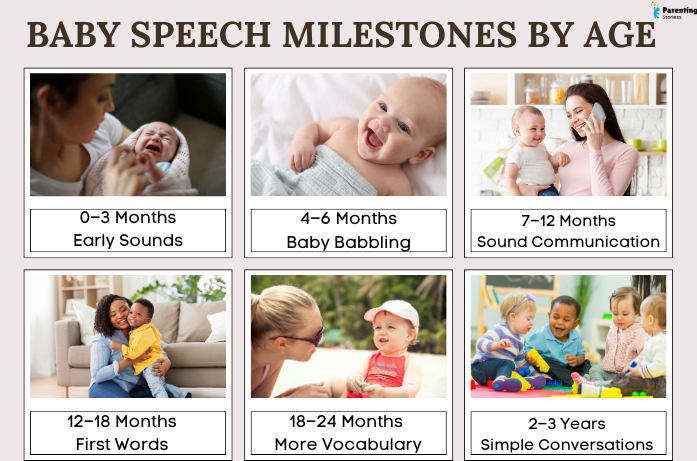
Baby Speech Milestones by Age
Every baby’s journey is unique, but these general milestones can help you understand what language development may look like during the first few years. According to Kids Health, babies learn language through listening, interacting, and practicing sounds during their early years.
Birth to 3 Months: Early Communication Begins
During the first three months, your baby is already learning how to communicate with you. Even though they cannot say words yet, they are expressing their needs through sounds, facial expressions, and movements.
You may notice your baby:
- Makes soft cooing sounds
- Smiles when you talk to them
- Reacts to familiar voices
- Turns toward sounds
- Makes different cries for different needs
Talking, singing, and responding to your baby during this stage helps them understand that communication is a two-way connection.
I loved having little “conversations” with my baby during this stage. Even when they only responded with tiny sounds, those moments helped build a strong bond.
4 to 6 Months: More Sounds and Baby Babbling
Between four and six months, babies usually become more vocal. This is when many parents notice their baby experimenting with different sounds.
Your baby may start:
- Laughing and squealing
- Making sounds like “ba,” “ma,” or “ga”
- Copying some sounds you make
- Showing excitement through their voice
- Responding when their name is called
Many parents ask, at what age do babies start talking gibberish? This playful “baby talk” or babbling often begins around this stage. While it may sound like random sounds to us, your baby is actually practicing the movements needed for speech.
Those adorable babbles are your baby’s way of learning how conversations work.
7 to 12 Months: Babbling Turns Into Communication
The second half of the first year is an exciting time because babies begin connecting sounds with people and things around them.
Your baby may:
- Repeat sounds like “bababa” or “dadada”
- Use gestures like pointing or waving
- Understand simple words like “no” or “bye-bye”
- Respond to simple requests
- Try to imitate words
Many babies start using sounds that resemble words during this period. They may say “mama” or “dada,” although sometimes they are practicing sounds rather than using the word with a specific meaning.
Talking to your baby regularly during everyday activities can make a big difference. Describe what you are doing, name objects, and respond when they make sounds.
12 to 18 Months: First Real Words
This is often the stage parents are waiting for. Around the first birthday, many babies begin saying their first meaningful words.
Your baby may start saying words like:
- Mama
- Dada
- Milk
- More
- Bye
- Ball
- Dog
At this age, babies may understand much more than they can say. They might follow simple instructions, recognize familiar objects, and communicate through pointing and gestures.
If your baby is not saying many words yet, try not to panic. Some children are busy developing other skills, such as movement or understanding language, before they begin speaking more. The American Academy of Pediatrics explains that children develop language at different rates, and parents should look at overall communication rather than only counting words.
18 to 24 Months: Growing Vocabulary
Between 18 and 24 months, many toddlers experience a big language growth period. Their vocabulary may expand quickly as they learn new words every day.
Your toddler may:
- Say several words clearly
- Combine two words like “more milk” or “mommy come”
- Name familiar objects
- Ask for things using words
- Copy words they hear
This stage can be surprising because your little one may suddenly start repeating everything you say. Their curiosity and excitement about language are signs that they are learning.
2 to 3 Years: Little Conversations Begin
Between ages two and three, children often begin using short sentences and expressing their thoughts more clearly.
They may:
- Use three- to four-word sentences
- Ask simple questions
- Tell small stories
- Sing parts of songs
- Talk about their feelings
At this age, conversations become much more interactive. You may find yourself having funny and unexpected chats with your toddler as their personality shines through their words.
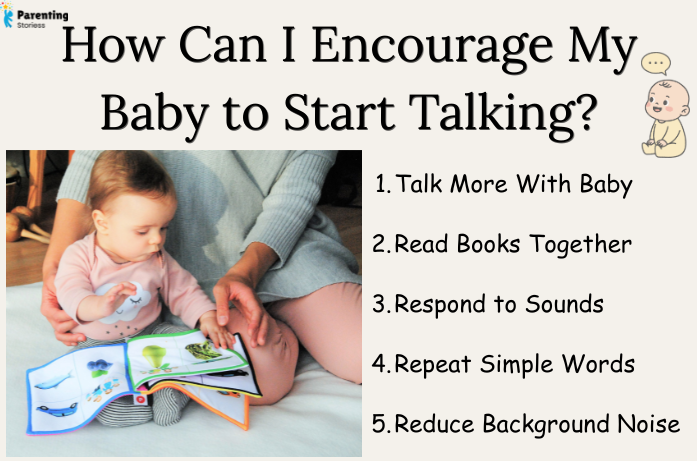
How Can I Encourage My Baby to Start Talking?
The best way to support speech development is through everyday interactions. You do not need expensive toys or special programs. Simple moments with you are often the most powerful learning opportunities.
1. Talk to Your Baby Throughout the Day
Narrate what you are doing during daily routines. You can say, “We are washing your hands,” or “Here is your little cup.”
Even if your baby does not respond with words, they are listening and learning.
2. Read Books Together
Reading from an early age helps babies hear new words and understand language patterns. Choose colorful picture books and point out objects while naming them.
You can ask simple questions like, “Where is the cat?” and give your baby time to respond.
3. Respond to Their Sounds
When your baby babbles, answer them as if you are having a conversation. This teaches them that their sounds have meaning and encourages them to communicate more.
Those little back-and-forth moments help babies learn the rhythm of conversation.
4. Use Simple Words and Repetition
Babies learn through repetition. Using simple words again and again helps them connect sounds with objects and actions.
For example, if your baby loves a toy, repeat its name often: “This is your ball. The ball is red.”
5. Limit Background Noise During Conversations
Too much background noise from television or devices can make it harder for babies to focus on voices. Try creating quiet moments where you can talk, sing, and interact with your baby.
What If My Baby Is Not Talking Yet?
One of the biggest worries parents have is when their baby seems quieter than other children. I understand this feeling because every parent wants to know their child is growing and learning well.
Remember that speech development has a wide range. Some children are naturally more talkative, while others take more time before they begin using words.
However, it may be helpful to talk with your child’s healthcare provider if you notice signs such as:
- Your baby does not respond to sounds or voices
- They do not use gestures like pointing or waving
- They show little interest in interacting
- They lose words or skills they previously had
- They are not using words around the expected milestones
Getting advice early does not mean something is wrong. It simply gives you more information and support if your child needs it.
Understanding Baby Talk and Gibberish
Many parents smile when they hear their baby having a serious “conversation” using sounds that do not make sense. This stage is completely normal and important for development.
If you wonder what age do baby start talking gibberish, babies often begin babbling around four to six months and continue experimenting with sounds throughout their first year.
This baby talk helps strengthen the muscles needed for speech. Babies practice different sounds, tones, and patterns before they are ready to use real words.
Instead of correcting their sounds, enjoy these moments. Respond warmly and encourage their attempts to communicate.
My Favorite Ways to Make Talking Fun With My Baby
As a mom, I found that speech development happened naturally through small daily moments. Here are some simple activities that can make language learning enjoyable:
- Sing nursery rhymes together
- Describe pictures in books
- Repeat sounds your baby makes
- Name toys during playtime
- Ask simple questions
- Celebrate every new sound and word
The goal is not to pressure your baby into talking. The goal is to make communication feel safe, fun, and exciting.
Final Thoughts
So, what age do babies start talking? Many babies say their first words around 12 months, but every child follows their own timeline. Some babies talk earlier, while others take a little longer to find their voice.
As parents, it is easy to compare milestones and wonder if our baby is doing enough. But your baby is learning every day through your voice, your love, and your attention.
Those tiny coos, funny sounds, and sweet babbles are not “just noises.” They are the beginning of your child’s communication journey.
Enjoy these precious moments, keep talking, keep listening, and trust that your little one is growing in their own beautiful way. Before you know it, those first sounds will turn into words, sentences, and conversations you will treasure forever.
Frequently Asked Questions
1. What age do babies start talking?
Most babies say their first words around 12 months, but every baby develops speech at their own pace.
2. At what age do babies start talking gibberish?
Babies usually start babbling and making gibberish sounds around 4 to 6 months.
3. At what age do babies say mama and dada?
Many babies start saying “mama” and “dada” between 6 and 12 months.
4. How can I help my baby start talking?
Talk, read, sing, and respond to your baby’s sounds to encourage language development.
5. When should I worry if my baby is not talking?
If your baby is not making sounds, babbling, or using words as expected, talk with your child’s doctor.
Written by a caring mom at Parenting Stories, sharing gentle parenting tips, personal experiences, and helpful guidance to support parents through every stage of their child’s journey.
Disclaimer: This article is for informational purposes only and is based on general parenting guidance. Every baby develops differently. If you have concerns about your baby’s speech or development, please consult your pediatrician or healthcare provider for personalized advice.