Written by caring mom at Parenting stories
Young kids are often bursting with emotions and little expressions of independence. One moment your preschooler may be doing something on their own with pride, and the next moment they might plead for help. Being a mother has taught me that building confidence takes time rather than being based on praise and pressure.
If you are searching for confidence building activities for preschoolers, the best place to start is with simple experiences that help your child make choices, try new things, solve small problems, and feel useful at home. These little opportunities may look ordinary, but over time they can help your child feel more capable, secure, and willing to try again when something feels hard.
Why Confidence Matters in the Preschool Years
Confidence helps preschoolers feel more comfortable trying new things, making small choices, speaking up, and working through challenges. It does not mean they will never feel shy, worried, or frustrated. Those feelings are a normal part of growing up.
What matters is that children slowly begin to believe they can try, learn, and ask for help when they need it. According to the American Academy of Pediatrics, healthy self-esteem can support motivation, relationships, and resilience.
That is why simple everyday experiences trying a new task, making a choice, or solving a small problem can play such an important role in building confidence.
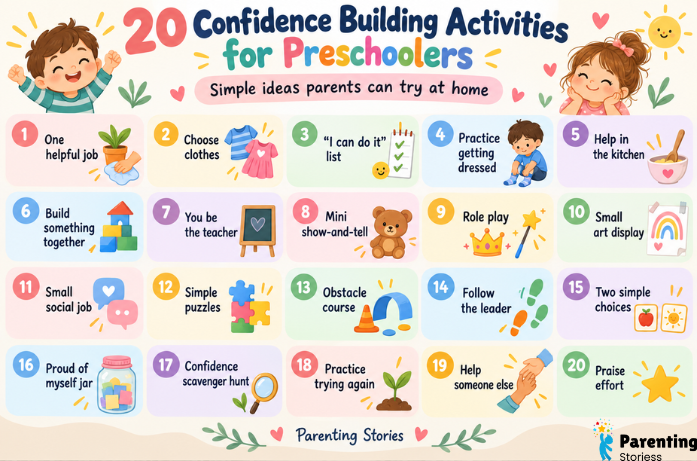
20 Confidence Building Activities for Preschoolers
You do not need to do all 20 ideas. Choose the ones that fit your child’s personality and daily routine.
1. Give Them One Helpful Job
Preschoolers often feel proud when they know their help matters.
Let your child water a plant, put napkins on the table, carry dirty clothes to the hamper, or feed a pet with supervision.
Choose a job they can actually manage. Small success helps children feel useful and capable.
2. Let Them Choose Their Clothes
Offer two or three weather-appropriate outfits and let your child choose.
Their clothes may not match perfectly, and that is okay.
Simple choices help preschoolers practice decision-making and trust their own preferences.
3. Make an I Can Do It List
Sit together and think about things your child can already do.
Maybe they can wash their hands, put on socks, build a tower, carry their backpack, or put toys away.
Write the ideas down or draw pictures. When something new feels difficult, remind them of skills they have already learned.
4. Practice Getting Dressed
Getting dressed is a simple way for children to see their own progress.
Start with one manageable step, such as pulling up pants, putting arms through sleeves, or taking off socks.
Give your child time before stepping in. A little patience can turn an ordinary routine into a confidence-building moment.
5. Let Them Help in the Kitchen
Children often love helping prepare food.
Preschoolers can wash fruit, stir ingredients, pour pre-measured items into a bowl, or place toppings on a pizza.
Stay close and choose safe tasks. The goal is not a perfect meal. It is helping your child feel proud that they contributed.
6. Build Something Together
Use blocks, cups, boxes, or magnetic tiles to build something.
Let your child decide what to make and how to do it.
If the tower falls, try not to fix it immediately. Give them time to rebuild and try another idea.
Learning that mistakes are part of the process is an important part of confidence.
7. Play You Be the Teacher
Ask your child to teach you something they know.
It might be a dance move, a song, a simple puzzle, or how to use a favorite toy.
Let them explain it in their own way.
Being the expert for a few minutes can help children feel capable and proud of what they know.
8. Have a Mini Show-and-Tell
Ask your child to choose a toy, book, drawing, or object and tell you something about it.
Keep it relaxed.
They can start by sharing with only you and later try with another family member if they want.
This helps children practice speaking and expressing their ideas without too much pressure.
9. Try Role Play
Pretend play can help preschoolers practice real-life situations in a safe way.
Play school, doctor, restaurant, grocery store, or library.
PBS KIDS for Parents recommends giving preschoolers chances to lead play and make decisions.
So sometimes let your child decide the roles, rules, or what happens next.
10. Create a Small Art Display
Choose a small space on the fridge or wall to display your child’s artwork.
Let them decide which piece they want to show.
Instead of saying everything is amazing, notice something specific, such as the colors they chose or how carefully they worked.
This helps children value effort and creativity.
11. Give Them a Small Social Job
When your child feels ready, encourage one simple social task.
They might hand something to a relative, say thank you to a cashier, return a library book, or tell a familiar adult what snack they want.
Do not force it if your child feels uncomfortable.
Small social steps are often better than pushing a shy child into a big situation.
12. Use Simple Puzzles
Choose a puzzle that is challenging but still manageable.
If your child gets stuck, offer a small clue instead of immediately completing it for them.
That gives them a chance to solve the problem themselves.
The feeling of finishing something after trying can be a wonderful confidence boost.
13. Make a Simple Obstacle Course
Use cushions, tape, boxes, or safe furniture to create a small movement course.
Your child might crawl under something, balance along a line, step over a pillow, or jump into a hoop.
The CDC recommends that children ages 3 to 5 stay physically active throughout the day.
Active play also gives children many chances to practice skills and notice themselves improving.
14. Play Follow the Leader
Start by being the leader and ask your child to copy simple movements.
Clap, stomp, hop, stretch, or walk like an animal.
Then switch roles and let your child lead.
Being the person in charge for a few minutes can feel especially empowering for young children.
15. Give Two Simple Choices
Too many choices can overwhelm preschoolers, but two options usually work well.
You might ask whether they want the red cup or blue cup, apple or banana, or story first or pajamas first.
Small choices help children practice decision-making while still keeping the routine manageable.
16. Start a Proud of Myself Jar
Keep a small jar or box for notes about things your child feels proud of.
It could be trying a new food, helping someone, finishing a puzzle, or putting on shoes alone.
Let your child decide what deserves a note whenever possible.
This encourages them to notice their own progress instead of depending only on adult praise.
17. Create a Confidence Scavenger Hunt
Make a short list of things for your child to find around the house or outside.
For example, find something red, something soft, something round, or something that makes a sound.
Let your child decide where to look and what counts as the answer.
This gives them a fun chance to think, choose, and solve small problems.
18. Practice Trying Again
When something does not work, give your child a moment before helping.
If they need support, help with only the hardest part and let them finish the rest.
Confidence grows when children experience the full process of trying, struggling, trying again, and finally making progress.
19. Let Them Help Someone Else
Helping another person can make children feel capable and important.
Your child might carry something light, bring a tissue, help pick up toys, or show a younger sibling how to do something.
These small moments help children see that they have something valuable to offer.
20. Praise Effort More Than Perfect Results
Try to notice the effort behind what your child is doing, not just whether they finished perfectly. You can point out when they kept trying, found another way to solve a problem, or managed more independently than before.
This kind of encouragement helps children understand that learning takes practice. It also shows them that mistakes are okay and that progress matters more than getting everything right the first time.
Try a Confidence Ladder for Shy or Cautious Children
Some preschoolers need more time before joining new situations.
Instead of asking them to take one big step, break the experience into smaller ones.
For example, if your child feels nervous about show-and-tell, you might start by having them show a toy to you, then another parent, then a grandparent, and later one familiar friend.
There is no need to rush.
Being quiet does not mean a child lacks confidence. Some children simply need more time to feel comfortable.
How Can I Tell If My Preschooler Is Becoming More Confident?
Confidence often shows up in small ways.
You may notice your child:
- trying something before asking for help
- making simple choices more easily
- joining play after watching for a while
- trying again after a mistake
- speaking up about what they want
- asking for help when they need it
- showing pride in something they made
Do not wait for one dramatic change. Confidence usually grows little by little.
What If My Child Gives Up Quickly?
Preschoolers can get frustrated quickly when a task feels too difficult. If this happens, try making the activity smaller and easier to manage.
A big puzzle can become one section at a time, or getting dressed can start with simply putting on socks.
Give a little help if needed, but let your child finish as much as they can on their own. Small successes can make them more willing to try again.
What Parents Should Avoid
Try not to compare your child with siblings, friends, or classmates. Every child develops confidence at a different pace.
Also avoid stepping in too quickly when they struggle. If the situation is safe, give them a little time to think and try before helping.
Specific encouragement usually works better than constant big praise. Notice effort, patience, and trying again instead of saying everything is perfect.
Confidence and Self-Esteem Are Not the Same Thing
Confidence is often connected to a certain skill or situation. A child may feel confident building with blocks but nervous around new people.
Self-esteem is more about how children feel about themselves overall.
Your child does not need to feel confident in every situation. What matters is helping them feel loved, capable of learning, and safe enough to make mistakes and try again.
Final Thoughts
The best confidence building activities for preschoolers are often the simple ones that fit naturally into everyday life. Small choices, helping with family tasks, solving little problems, and trying again after a mistake can all help children feel more capable.
Some days your child may be ready to try something new, while other days they may need a little more support. Both are completely normal.
Confidence grows little by little. With patience, encouragement, and space to practice, those small everyday wins can help your preschooler become more secure, independent, and willing to keep trying.
Frequently Asked Questions
1. How can I build confidence in my preschooler?
Give them small choices, simple jobs, and time to try things on their own.
2. What activities help preschoolers build confidence?
Puzzles, role play, helping at home, dressing independently, and simple physical activities can all help.
3. How can I help a shy preschooler?
Give them time to observe, start with small social steps, and avoid forcing them to join before they feel ready.
4. What if my child gives up quickly?
Break the task into smaller steps and encourage them to try again without doing everything for them.
5. Is it normal for preschoolers to lack confidence sometimes?
Yes. Confidence can change depending on the situation and usually grows slowly with practice and support.
For more simple, practical parenting tips, explore more helpful guides on Parenting Stories.