
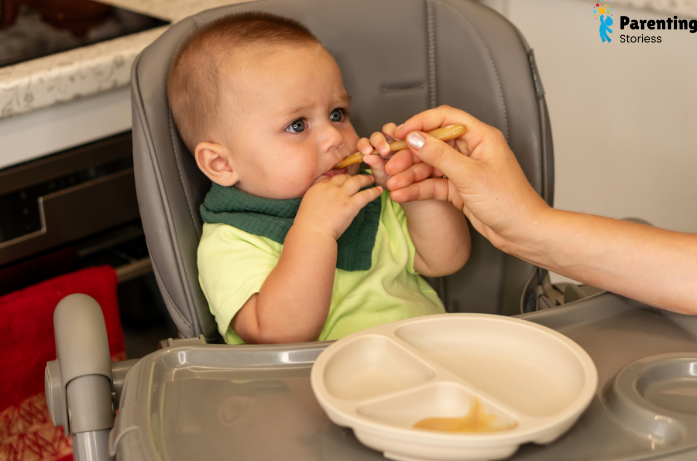
Watching a baby learn to use those tiny fingers is such a fascinating part of the first year. One day they are grabbing food with their whole hand, and not long after, they are carefully trying to pick up a tiny piece between the thumb and pointer finger.
So, when do babies develop pincer grasp? Most babies begin showing an early pincer grasp around 9 months, and it usually becomes more precise between 9 and 12 months.
This small movement is an important fine motor milestone because it helps babies become more independent with self-feeding, playing, and exploring objects. Still, every baby develops at their own pace, so a little earlier or later can be completely normal.
What Is a Pincer Grasp?
A pincer grasp is the ability to pick up a small object using the thumb and index finger. You can picture it as the same movement you use to pick up a tiny crumb from the table.
Before this skill develops, babies usually grab objects with their whole hand or use several fingers together. As their hand-eye coordination and finger control improve, their movements become more precise.
The baby pincer grasp is an important fine motor milestone because it supports everyday skills like self-feeding, turning book pages, playing with small toys, using utensils, fastening clothes, and later holding crayons or pencils.
It may look like a tiny movement, but it is actually an important step toward greater independence.
When Do Babies Develop Pincer Grasp?
Most babies start developing an early pincer grasp at around 9 months, although anywhere between roughly 9 and 12 months may be part of the normal developmental process.
The American Academy of Pediatrics parent resource, explains that babies generally don’t develop the thumb-and-index-finger pincer grasp until about 9 months. Before this, they tend to use broader mitten-like, claw-like or raking movements.
The CDC Developmental Milestones give parents another helpful picture. At 9 months, many babies use their fingers to rake food toward themselves. By 1 year, picking up small pieces of food between the thumb and pointer finger is listed as a common milestone.
So if your 9-month-old still scoops food toward their palm rather than neatly pinching each piece, don’t assume they’re behind.
The pincer grasp baby develops usually appears gradually rather than overnight.
How Baby’s Grasp Changes During the First Year
Understanding the steps before the pincer grasp can make this milestone much less stressful.
Around 4–6 Months: Whole-Hand Grasping
At this stage, your baby may grab a toy using most of the hand.
You might see them reach for rattles, hold toys in their palm and bring almost everything straight to their mouth.
These big, slightly clumsy movements are useful practice.
Around 6–9 Months: Raking and Transferring
As hand control improves, babies often begin transferring toys from one hand to another.
They may also spread their fingers and rake a piece of food toward their palm.
According to the CDC’s 9-Month Milestones, moving things between hands and raking food with the fingers are common skills around this age.
These movements are important stepping stones toward a more precise grasp.
Around 9–12 Months: Pincer Grasp Develops
Now you may notice your baby’s thumb and index finger working together.
At first, baby may use the side of the index finger rather than the fingertip. This is sometimes called an early or inferior pincer grasp.
As coordination improves, the tips of the thumb and index finger begin meeting more precisely.
Pathways describes this progression from a less refined pincer grasp to a more controlled fingertip grasp during roughly the 9-to-12-month stage.
That gradual change is completely normal.
Why Is the Pincer Grasp Important?
The pincer grasp is an important fine motor skill.
Fine motor skills involve the small muscles of the hands and fingers working together with the eyes and brain.
As these skills develop, your baby becomes more independent.
The pincer grasp can eventually help your child:
- feed themselves with their fingers
- pick up and explore small objects safely
- turn pages
- use spoons and forks
- stack and manipulate toys
- manage buttons and zippers
- hold crayons and pencils later on
It may only look like your baby picking up a tiny piece of banana today, but those same finger movements will support many everyday skills later.
Signs Your Baby Is Getting Ready for Pincer Grasp
You don’t need to formally test your baby for this skill. Most of the signs show up naturally during playtime and meals.
You may notice your baby reaching more accurately for toys, moving objects from one hand to the other, using the index finger to point or poke, or bringing the thumb into grasping more often. They may also start trying to pick up smaller pieces of food instead of using the whole hand.
Mealtime is often where parents notice these changes first. Your baby may spend a surprising amount of time trying to grab one tiny crumb from the high-chair tray.
And once those little fingers become more precise, don’t be surprised if your baby suddenly starts spotting tiny objects on the floor that you never even noticed!
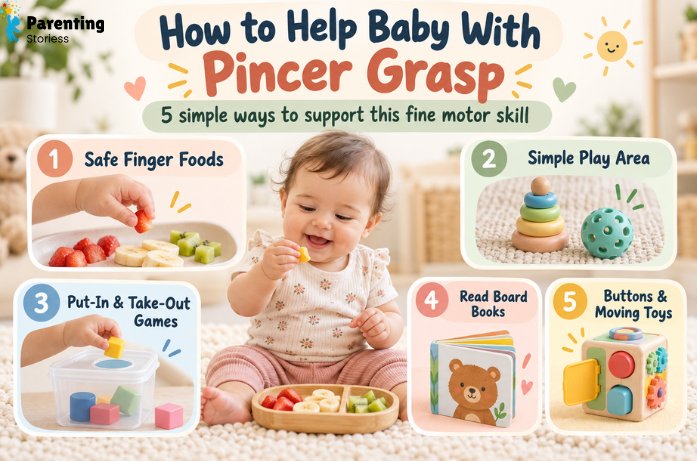
How to Help Baby With Pincer Grasp
If you’re wondering how to help baby with pincer grasp, you really don’t need complicated activities. Babies usually build this skill through simple everyday play, self-feeding, and repeated chances to pick up and release objects.
The goal is not to force the movement. Just give your baby safe opportunities to use the thumb and fingers in different ways and let the skill develop naturally.
1. Offer Safe Finger Foods
Once your baby is ready for finger foods, mealtime can be one of the easiest ways to practice pincer grasp. Place a few soft, age-appropriate pieces on the high-chair tray and let your baby try to pick them up independently.
The CDC notes that finger feeding can support fine motor development. Even if the food gets dropped or squashed, your baby is still practicing important hand and finger movements.
2. Keep the Play Area Simple
Instead of giving your baby many toys at once, try placing just one or two safe objects in front of them. Fewer items can make it easier to focus on reaching, grasping, and picking something up.
Give your baby a little time before stepping in to help. Those extra few seconds of trying can encourage better hand-eye coordination and more controlled finger movement.
3. Try Put-In and Take-Out Games
Give your baby a safe container and a few larger toys that are too big to become a choking hazard. Show them how to put an object inside, then let them take it out or tip the container over.
This simple game helps with grasping, releasing, reaching, and coordination. You don’t need special developmental toys; a safe household container and age-appropriate objects can work just as well.
4. Read Board Books Together
Board books are a simple way to support finger control while also building early language skills. Let your baby touch the pages, point at pictures, and try to turn the pages on their own.
Even if several pages turn at once, the movement still helps your baby practice using the fingers more independently. Pointing at pictures can also encourage better control of the index finger.
5. Offer Toys With Buttons and Moving Parts
Age-appropriate toys with large buttons, flaps, switches, or levers can encourage your baby to poke, press, pull, and grasp. These small movements support both finger strength and hand-eye coordination.
Keep the activity relaxed and short. If your baby loses interest, move on to something else, because pincer grasp practice works best when it feels like normal play rather than a lesson.
Don’t Force Baby’s Fingers Into Position
It may be tempting to place your baby’s thumb and index finger around an object to show them how a pincer grasp works, but this usually isn’t necessary. Babies learn these movements best by reaching, grabbing, dropping, and trying again on their own.
Some days your baby may use two fingers, and other days they may use three or even their whole hand. That’s part of normal learning, so focus on giving them plenty of safe opportunities rather than expecting a perfect grasp every time.
Pincer Grasp and Food Safety
Once your baby starts picking up small pieces of food, self-feeding can become much more exciting. But being able to pick up a food does not automatically mean it is safe to eat, so always consider your baby’s feeding skills, the food’s texture and size, and possible choking risks.
Keep your baby seated upright and supervised during meals, and check play areas regularly for tiny objects such as coins, beads, magnets, button batteries, or small toy pieces. A quick floor check from your baby’s level can help you spot things that are easy for adults to miss.
What If My 9-Month-Old Doesn’t Have a Pincer Grasp?
If your 9-month-old is still raking food with the fingers or using several fingers to pick things up, that can still be normal. The CDC lists raking food as a 9-month milestone, while a more precise thumb-and-pointer grasp is included among 1-year milestones.
Try to look at your baby’s overall progress instead of focusing on one skill alone. Reaching for toys, transferring objects between hands, exploring with the fingers, and becoming more coordinated are all encouraging signs, and babies born early may sometimes be assessed using corrected age when tracking development.
When Should You Talk to Your Pediatrician?
You can mention any developmental concern to your baby’s pediatrician whenever something worries you.
It’s especially worth asking for guidance if your baby has difficulty reaching or holding objects, rarely uses one hand, seems unusually stiff or floppy, loses a skill they previously had, or doesn’t seem to be making progress with hand movements.
If your baby is around 12 months and isn’t beginning to pick up small objects between the thumb and index finger, it’s reasonable to bring this up as well.
Pathways pincer grasp guidance also recommends talking with a healthcare provider if baby isn’t developing this skill by around the first birthday.
Talking to your pediatrician doesn’t mean something is definitely wrong.
Sometimes babies simply need more time. And if extra developmental support would help, getting guidance early is always useful.
FAQs
1. When do babies usually develop a pincer grasp?
Most babies begin developing it around 9 months, and it often becomes more precise by 12 months.
2. What does a pincer grasp look like?
It is when a baby picks up a small object using the thumb and index finger.
3. How can I help my baby practice this skill?
Offer safe finger foods, board books, simple toys, and easy put-in-and-take-out games.
4. Is it normal if my 9-month-old does not have a pincer grasp yet?
Yes. Some babies are still raking or using several fingers at 9 months.
5. When should I talk to a pediatrician?
Talk to your pediatrician if your baby is not making progress with hand skills, loses a skill, or you have any developmental concerns.
Final Thoughts
For many babies, this skill starts to appear around 9 months and becomes more precise over the next few months. Try not to worry about whether your baby is doing it perfectly or at exactly the same age as another child. Everyday moments like picking up soft foods, reaching for toys, and turning board-book pages all give those little fingers valuable practice.
What matters most is steady progress. One day your baby may still be grabbing with the whole hand, and soon after, you may notice the thumb and pointer finger working together more carefully. Enjoy those messy meals, dropped toys, and tiny attempts along the way, because each one is helping your baby build confidence, coordination, and independence.
Want more simple, reassuring parenting tips? Explore more helpful baby development guides on Parenting Stories.
Disclaimer
This article is for general educational purposes and should not replace medical or developmental advice from your child’s pediatrician or another qualified healthcare professional.