Written by a caring mom at Parenting Stories
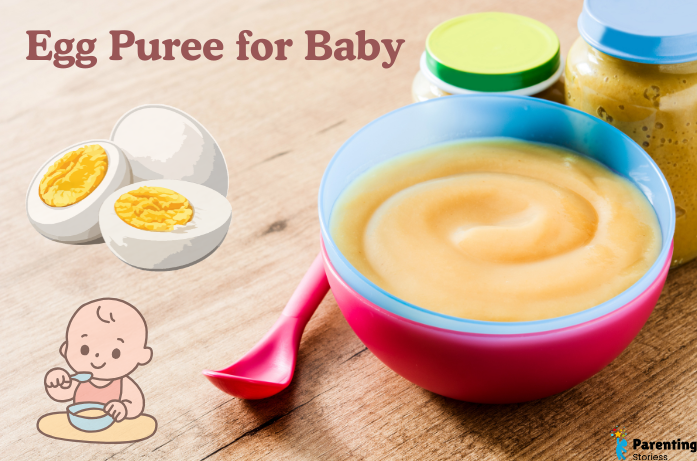
Most babies can try a small amount of fully cooked egg from around 6 months, once they show signs of readiness for solid foods. Mash the egg with breast milk, prepared formula, warm water, or a familiar puree until it is soft and moist. Offer it when your baby is well, start with a tiny taste, and watch for signs of an allergy.
Egg puree for baby is one of those wonderfully simple first foods that takes only minutes to make. It is soft, affordable, nourishing, and easy to adjust as your little one becomes more confident with textures. Still, the first spoonful can make any parent nervous. The reassuring truth is that you do not need a perfect recipe just a fully cooked egg, a safe texture, and a calm moment together.
When Can Babies Start Eating Eggs?
Most babies are ready to begin solid foods at about 6 months, although readiness matters more than reaching an exact date. Your baby should be able to sit with support, hold their head steady, bring objects toward their mouth, and swallow food instead of automatically pushing it out. The CDC and the American Academy of Pediatrics describe around 6 months as the usual time to begin complementary foods.
Current guidance does not recommend delaying egg simply because it is a common allergen. Once your baby is developmentally ready, well-cooked egg can usually be introduced in an age-appropriate texture. Delaying allergenic foods has not been shown to prevent food allergies.
Speak with your pediatrician before introducing egg if your baby has severe eczema, a known food allergy, previous reactions to food, feeding difficulties, or another medical condition. Your doctor may suggest a more specific plan or a supervised first feeding.
Why Egg Puree for Baby Can Be a Helpful First Food
Egg puree has a soft texture that is easy to adjust. You can make it very smooth for a new eater, then leave it slightly thicker as your baby learns to manage more texture. That flexibility can make eggs less intimidating for both baby and parent.
Egg puree for baby provides protein and nutrients such as choline, vitamin B12, riboflavin, and vitamin D. Choline supports normal brain and nervous-system function, and eggs are one natural food source. According to the NIH, complementary feeding also gives babies opportunities to explore new tastes and textures while receiving nutrients alongside breast milk or infant formula. Early meals are mostly gentle practice as your baby learns how to eat.
There is no need to create a perfect plate. One or two spoonfuls may be enough at first. Some babies need several pressure-free opportunities before they accept a new flavor, so a turned head or closed mouth does not mean you have failed.
How to Cook Egg for Baby First Time
Choose a day when your baby is healthy and you can remain nearby after the meal. Morning or lunchtime gives you time to watch for a possible reaction.
Use a fresh egg, wash your hands, and keep raw egg away from clean utensils and other foods. For young children, eggs should be thoroughly cooked unless your local food-safety authority specifically advises that a regulated egg product is safe lightly cooked. Undercooked eggs can carry harmful germs, including Salmonella.
Simple Boiled Egg Puree Recipe
Ingredients:
- 1 fresh egg
- 1 to 3 teaspoons of breast milk, prepared formula, warm water, or familiar vegetable puree
- A fork, masher, or small blender
Recipe
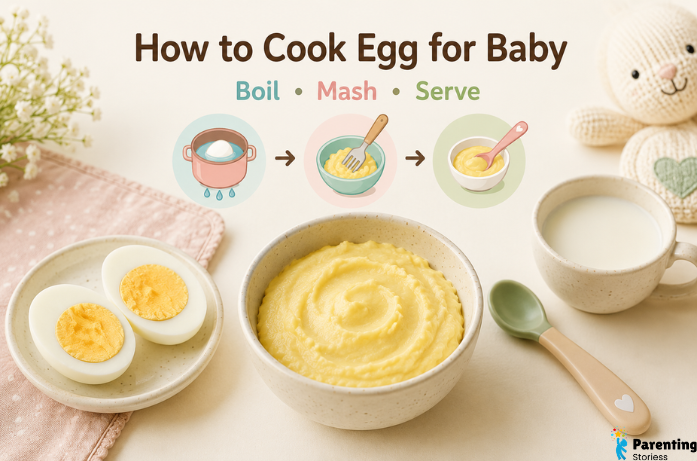
Place the egg in a saucepan, cover it with water, and boil until the white and yolk are completely firm. Cool it, remove the shell, and place a small amount in a bowl.
Mash or blend it with a teaspoon of liquid. Add more as needed until the egg is moist and slides easily from the spoon. Avoid serving a dry or sticky lump.
Offer a tiny taste first. You do not need to serve the whole egg. Let your baby decide whether to eat more, pause, turn away, or stop.
Do not add salt, stock cubes, sugar, or salty sauces. Simple food lets your baby discover the natural flavour.
Egg Yolk for Baby: Can You Start With Yolk?
Many families begin with egg yolk for baby because it becomes creamy when mashed. A fully cooked yolk can be blended with breast milk, formula, warm water, avocado, or a familiar vegetable puree.
However, offering only yolk does not introduce your baby to all the proteins found in a whole egg. Unless your pediatrician says otherwise, you can offer a small amount of fully cooked whole egg in a safe texture.
If the yolk feels dry or sticky, do not serve it as a crumbly lump. Add enough liquid or soft food to make it moist and easy to swallow.
Easy Egg Yolk Puree Combinations
Once your baby has tried the ingredients separately, you can mix cooked yolk with:
- Avocado
- Sweet potato
- Pumpkin
- Plain yogurt
- Soft-cooked peas
During the first egg introduction, avoid combining several unfamiliar ingredients. A simple meal makes it easier to identify the possible cause if a reaction occurs.
Introducing Egg Safely and Watching for Allergy Signs
Offer egg as the only new common allergen in the meal. Serve it with familiar foods, and avoid introducing egg, peanut, dairy, and wheat together. A simple meal makes a reaction easier to identify.
Possible allergy signs include hives, redness, swelling around the lips or face, vomiting, coughing, wheezing, or a sudden change in behaviour. Reactions often begin within minutes, although some can take longer.
Stop feeding the egg and contact your baby’s doctor if you notice a possible mild reaction. Seek emergency help immediately if your baby has difficulty breathing, swelling of the tongue or throat, becomes pale or floppy, or appears seriously unwell.
Most first egg meals are uneventful. Knowing the signs helps you feel prepared, not frightened.
What Texture Should Egg Puree Have?
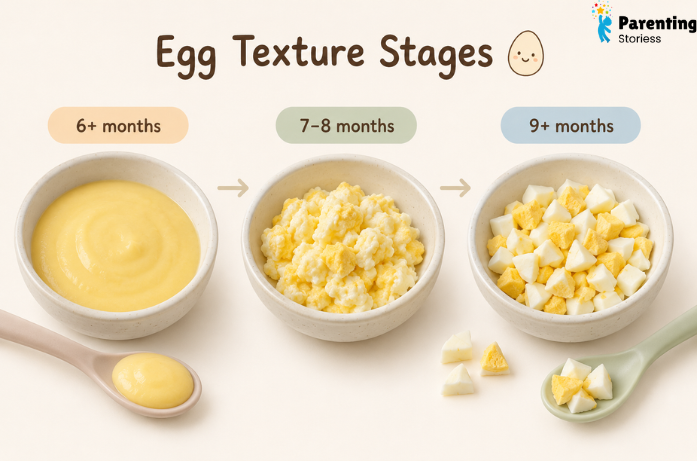
For a beginner, egg puree can be smooth and loose enough to fall easily from a spoon. As your baby becomes comfortable, use less liquid and leave the egg slightly mashed.
Babies can gradually explore thicker and lumpier textures as their eating skills develop. Whatever texture you choose, sit your baby upright, keep the meal calm, and supervise closely. The CDC advises serving food in developmentally appropriate textures and always watching young children while they eat.
Gagging can happen while babies learn to handle food and is different from choking. Gagging is usually noisy, while choking may be quiet and prevent breathing. Learning infant first aid can help you feel more prepared before beginning solids.
Scrambled Eggs for Baby
Scrambled eggs for baby are a lovely next step after puree. Whisk one egg with a teaspoon of water and cook it slowly in a lightly greased pan. Stir until fully cooked but still soft, not browned or rubbery.
Mash the curds for a younger baby. For self-feeding, offer soft pieces that break apart easily between your fingers. Do not add salt.
After the ingredients have been tried separately, scrambled egg can be combined with avocado, spinach, broccoli, tomato, or sweet potato.
Egg Muffins for Baby
Egg muffins for baby suit babies who can manage soft finger foods. They are easy to hold and a simple way to use familiar vegetables.
Soft Mini Egg Muffin Recipe
Whisk 2 eggs with 2 tablespoons of finely chopped, soft-cooked vegetables and 1 tablespoon of plain yogurt or water. Pour into a lightly greased mini-muffin tray.
Bake at 175°C/350°F for 10 to 15 minutes until fully set. Cool, cut into a suitable shape, and make sure it squashes easily between your fingers.
Refrigerate cooked egg promptly. Reheat only what you need until steaming hot, then cool it before serving. Clean hands, proper cooking, and prompt refrigeration help prevent food poisoning.
Easy Egg Puree Combinations
Once each ingredient has been introduced separately, try:
- Egg and avocado for a creamy puree
- Egg and sweet potato for a gentle, slightly sweet taste
- Egg and pumpkin for a smooth texture
- Egg and plain yogurt for extra creaminess
- Egg and broccoli for a thicker savoury mash
New tastes often need several tries to feel familiar.
Common Mistakes to Avoid
Serving Egg Too Dry
Cooked egg can become crumbly or rubbery. Add moisture, mash it well, and make sure the texture matches your baby’s abilities.
Offering Undercooked Egg
Runny whites or yolks may carry food-safety risks. Fully cooking the egg is the simplest cautious choice for a baby.
Feeding While Baby Is Reclined
Place your baby upright and stable for meals. Avoid feeding while your baby is lying back, crawling, playing, or riding in a moving car.
Pressuring Baby to Eat More
Turning away, closing the mouth, pushing the spoon, or becoming upset may mean your baby has had enough. Respecting these cues helps build a calmer relationship with food.
Frequently Asked Questions
Final Word
Introducing egg may feel like a big milestone, but it can begin with one tiny, well-cooked spoonful. Prepare a safe texture, stay nearby, and let your baby set the pace. Some little ones open their mouths eagerly; others need time to look, touch, squish, and taste.
Whether you begin with egg puree for baby, move on to soft scrambled eggs, or eventually bake mini egg muffins, the goal is not a perfect meal. The goal is a safe, loving experience that helps your child become comfortable with food.
Trust yourself, stay curious, and remember that slow progress is still progress. Every gentle meal you share is helping your baby learn not only how to eat, but also that the table is a warm and reassuring place to be.
Every baby learns at their own pace. Keep mealtimes calm, offer egg in a safe texture, and enjoy each little step of your baby’s food journey. Explore more gentle feeding tips on Parenting Stories.
Disclaimer: This article provides general feeding information and does not replace advice from your pediatrician or pediatric dietitian. Seek individual guidance if your baby has severe eczema, a known allergy, feeding difficulties, poor growth, or another medical condition.