
Written by a caring mom at Parenting Stories
Craving sweet food during pregnancy can feel surprisingly intense. One minute you are planning dinner, and the next you cannot stop thinking about chocolate, ice cream, or a warm slice of cake. As a mom, I know how quickly a craving can take over, especially when nausea, tiredness, and a changing appetite already make eating feel complicated.
The reassuring truth is that sweet cravings during pregnancy are common. Hormonal changes can affect taste and smell, while emotions, tiredness, and food habits can shape what feels comforting. You do not need to feel guilty for wanting something sweet. The aim is not to eat perfectly, but to enjoy treats thoughtfully while giving your body the nourishment it needs. The NHS recommends continuing to aim for a balanced diet when pregnancy cravings appear.
Why Am I Craving Sweet Food During Pregnancy?
There is no single reason every pregnant woman wants sweet foods. According to UNICEF, pregnancy hormones may sharpen your senses of taste and smell, while changing blood sugar levels, emotions, food habits, and cultural influences may also affect cravings.
Sometimes a sweet craving appears because you have gone too long without eating. Tiredness can also make sugary foods feel more appealing, especially when you are already dealing with pregnancy fatigue.
Pregnancy sugar cravings can also be connected to comfort. A biscuit may feel soothing after a tiring day, or ice cream may become your little evening treat. Food is emotional as well as nutritional, and that is completely human.
What matters most is your overall eating pattern. The American College of Obstetricians and Gynecologists recommends eating a variety of foods and choosing fewer foods high in added sugar. That still leaves room for enjoyment without making sweets your main source of energy.
Are Sweet Cravings in Early Pregnancy Normal?
Yes, sweet cravings in early pregnancy can be normal. Research published in the National Library of Medicine found that new food cravings during the first trimester were associated with changes in dietary intake. Foods you once loved may suddenly smell unpleasant, while cold, fruity, plain, or sweet foods may seem easier to tolerate.
If morning sickness makes full meals difficult, try eating smaller amounts more often. These protein-rich snacks may also help you stay nourished and satisfied.
Please do not judge yourself during this stage. Early pregnancy can be exhausting, and sometimes eating something manageable is better than forcing down a meal that makes you feel sick.
Speak with your doctor or midwife if nausea prevents you from keeping down food or fluids, you feel dehydrated, or you are losing weight.
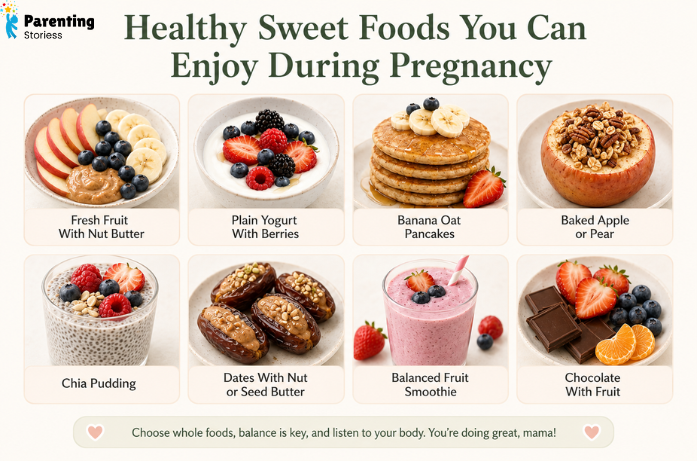
Healthy Sweet Foods You Can Enjoy During Pregnancy
You do not have to choose between ignoring a craving and eating a large amount of sugary food. Many naturally sweet options can satisfy the moment while also giving you fibre, protein, healthy fats, vitamins, or minerals.
1. Fresh Fruit With Nut Butter
Apple or pear slices with peanut, almond, or cashew butter make a simple and filling snack. The fruit provides natural sweetness and fibre, while the nut butter adds protein and healthy fats.
Choose a nut butter with little or no added sugar when possible. If you have a nut allergy, sunflower seed butter may be a useful alternative. A sprinkle of cinnamon can make this easy snack feel almost like dessert.
Apple or pear slices with peanut, almond, or cashew butter make a simple and filling snack. You can also explore these healthy summer pregnancy fruits for more naturally sweet ideas.
2. Plain Yogurt With Berries
A bowl of plain pasteurized yogurt with berries can feel creamy and sweet without needing much added sugar. Add sliced banana, mango, oats, chia seeds, or a small drizzle of honey if you want more sweetness.
Choose yogurt and other dairy products made with pasteurized milk during pregnancy. A fortified dairy-free yogurt can also work if it suits your diet.
3. Banana Oat Pancakes
Mash a ripe banana with oats and a well-cooked egg to make soft, naturally sweet pancakes. Serve them with fruit, plain yogurt, or a thin spread of nut butter.
These pancakes work well for breakfast or as an afternoon snack when pregnancy sugar cravings feel strongest. Make sure the egg is properly cooked before eating.
4. Baked Apple or Pear
A warm baked apple can give you the cosy feeling of pie without needing a rich dessert. Remove the core, add cinnamon, and bake the fruit until it becomes soft.
You can fill the centre with oats and chopped nuts, then add a spoonful of plain yogurt on top. This is especially comforting in the evening when you want something warm and calming.
5. Chia Pudding
Mix chia seeds with pasteurized milk or a fortified plant-based drink, then refrigerate the mixture until it becomes thick. Add mashed banana, berries, or a small amount of cocoa powder.
Prepare the chia seeds in liquid rather than eating a large spoonful dry. The finished pudding makes a convenient breakfast, snack, or light dessert.
6. Dates With Nut or Seed Butter
Dates are naturally very sweet, so one or two may satisfy a craving quickly. Split them open and add a small amount of peanut, almond, or sunflower seed butter.
Dates still contain concentrated natural sugar, so portion size matters, especially if you have gestational diabetes or have been advised to monitor your blood glucose.
7. A Balanced Fruit Smoothie
Blend whole fruit with pasteurized milk, plain yogurt, or an unsweetened fortified plant drink. Adding oats, chia seeds, or nut butter can make your smoothie more balanced and filling.
Try to use whole fruit rather than relying mainly on fruit juice. Whole fruit contains fibre and may keep you satisfied for longer.
The CDC recommends a balanced pregnancy diet that includes fruit, vegetables, whole grains, dairy, and lean protein while limiting foods and drinks high in added sugar.
8. Chocolate With Fruit
A few squares of chocolate with strawberries, orange slices, or banana can be enough to calm a chocolate craving. Pairing it with fruit makes the snack feel more generous without requiring a large portion.
Choose a chocolate you genuinely enjoy. There is no benefit in forcing yourself to eat an extremely bitter option that leaves you unsatisfied and searching for another dessert soon afterwards.
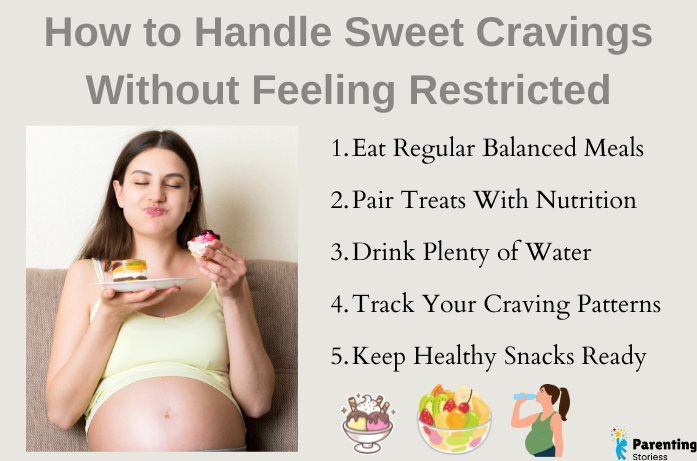
How to Handle Sweet Cravings Without Feeling Restricted
Strictly banning every sweet food can make cravings feel even louder. A kinder approach is to include sweet foods thoughtfully rather than treating them as something shameful.
Try not to wait until you are shaky, exhausted, or extremely hungry. Pregnancy, Birth and Baby recommends eating regular healthy meals, drinking enough water, and keeping nutritious snacks nearby to help manage pregnancy cravings.
1. Eat Regular Meals and Snacks
Try not to wait until you are shaky, exhausted, or extremely hungry. Regular meals and simple planned snacks may help you make calmer choices instead of grabbing the fastest sugary food available.
Include protein, fibre, and healthy fats when you can. Pair toast with egg, fruit with yogurt, or rice with vegetables and dal. A balanced meal often keeps you satisfied longer than a sweet snack eaten alone.
2. Pair Your Treat With Something Nourishing
When you want a sweet food, add something satisfying beside it. Have a small slice of cake with milk, fruit with nut butter, or chocolate with yogurt.
This is not about “canceling out” dessert. It simply gives you more nutrients and may help the snack keep you full for longer.
3. Drink Enough Water
Thirst, hunger, and tiredness can sometimes blur together. Keep water nearby and sip regularly throughout the day.
ACOG advises drinking around 8 to 12 cups of water daily during pregnancy, although individual needs may vary with the weather, activity level, health conditions, and medical advice.
4. Notice When Your Cravings Appear
Gently notice whether cravings come after poor sleep, a delayed meal, an afternoon energy dip, or a stressful moment. You do not need to track every bite. The goal is simply to understand your pattern.
Sometimes you may realise that you need a proper meal or a little rest. Other times, the answer will still be, “I truly want chocolate,” and it is perfectly okay to enjoy it.
5. Keep Easy Choices Ready
Pregnancy fatigue can make even simple food preparation feel like work. Wash fruit in advance, portion nuts into small containers, keep yogurt chilled, or prepare a few oat snacks.
When a nourishing option is easy to reach, you are more likely to eat before becoming overly hungry.
What If You Have Gestational Diabetes?
If you have gestational diabetes, general online snack ideas may not match your personal care plan. Carbohydrate portions, meal timing, blood glucose targets, and suitable foods can differ from one woman to another.
Gestational diabetes often has no obvious symptoms, which is why routine screening matters. Testing is commonly done between 24 and 28 weeks, although earlier testing may be recommended for women with certain risk factors.
Healthy eating is an important part of managing gestational diabetes. Many women manage their blood sugar with balanced nutrition, suitable physical activity, regular monitoring, and support from their healthcare team.
Being diagnosed does not mean you have failed or eaten too many sweets. Pregnancy hormones can make it harder for the body to use insulin effectively, and gestational diabetes can happen even when you have been trying your best to eat well.
Contact your maternity care provider if you feel unusually thirsty, are urinating much more than expected, experience blurred vision, or feel worried about any symptom. These signs do not automatically mean diabetes, but they deserve proper medical advice.
When Should You Talk to Your Doctor or Midwife?
Most sweet cravings are not an emergency. However, speak with your healthcare provider if cravings begin replacing balanced meals, feel impossible to control, cause distress, or are connected with binge eating, vomiting, or severe food restriction.
You should also seek advice if you crave or eat non-food substances such as dirt, clay, chalk, soap, paper, laundry starch, or large amounts of ice. This is called pica and may be linked with iron deficiency or another health concern.
The NHS advises discussing unusual non-food cravings with a doctor or midwife rather than trying to manage them alone.
Never feel embarrassed about mentioning a craving. Pregnancy care is not only about scans and measurements. It is also about helping you feel safe, nourished, understood, and supported.
A Gentle and Comforting Conclusion
There will be days when fruit and yogurt sound wonderful, and there will be days when only the brownie you have been thinking about will do. Both can fit into real-life pregnancy eating.
Your health is shaped by what you do most of the time, not by one snack, one celebration, or one tired evening. Choose nourishing sweet foods often, enjoy your favourite treats in comfortable portions, and try to eat regular, balanced meals.
Most importantly, be gentle with yourself. Craving sweet food during pregnancy does not make you careless or unhealthy. Your body is doing extraordinary work, and your appetite may change from one day to the next.
Listen to your body, stay connected with your doctor or midwife, and remember that balance does not need to look perfect. A loving approach to food, one that includes nourishment, pleasure, and flexibility, can support both you and your growing baby.
Frequently Asked Questions
For more warm, practical pregnancy and parenting guidance, explore Parenting Storiess and discover helpful tips made for real moms and growing families.
Disclaimer
This article is for general information only and does not replace medical advice. Always speak with your doctor or midwife about pregnancy cravings, diet changes, or health concerns.