Written by a caring mom at parenting stories
After giving birth, most of us expect the sleepless nights, soreness, and emotional ups and downs. What we do not always expect is how difficult something as simple as going to the bathroom can suddenly become. If you are dealing with constipation after c section or after a vaginal delivery, it can feel uncomfortable, frustrating, and even a little scary.
Pain medication, iron supplements, hormonal changes, dehydration, less movement, hemorrhoids, stitches, and fear of straining can all make those first bowel movements harder than usual. The good news is that postpartum constipation is common and, for most moms, temporary as the body gradually heals and normal eating, drinking, and movement return.
In this guide, I will explain why postpartum constipation happens, how long postpartum constipation lasts, what can make it worse after a C-section, and the gentle, practical steps that may help make bowel movements easier and more comfortable during recovery.
What Is Postpartum Constipation?
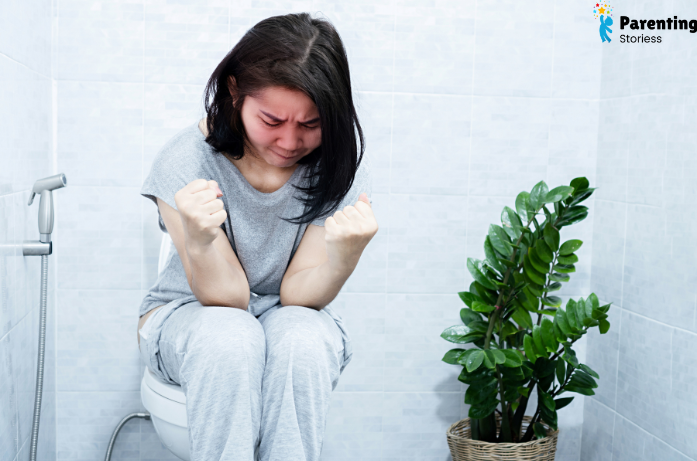
Postpartum constipation means having difficulty passing stool after giving birth.
You may notice:
- hard or dry stools
- fewer bowel movements than usual
- straining
- bloating or abdominal discomfort
- feeling like you have not emptied your bowels completely
- avoiding the toilet because you’re worried it will hurt
Some moms struggle immediately after delivery, while others notice constipation a few days later.
It can happen after both vaginal and cesarean births.
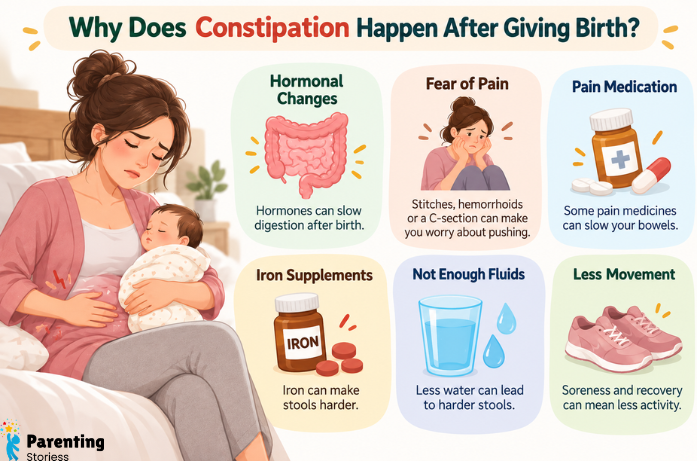
Why Does Constipation Happen After Giving Birth?
Postpartum constipation can happen for several reasons at the same time. Your body is still healing, your hormones are changing, and your usual eating, drinking, sleeping, and bathroom routine may look completely different after birth.
Hormonal Changes
After delivery, your digestive system may take a little time to return to its usual rhythm. Hormonal changes can slow digestion and make bowel movements feel less regular.
Broken sleep, stress, irregular meals, and changes in your daily routine can also affect how often you poop.
Fear of the First Bowel Movement
Many moms feel nervous about the first bowel movement after birth, especially if they have stitches, hemorrhoids, swelling, or a C-section incision.
That fear can make you tighten your pelvic muscles or hold in the urge. Waiting too long may make stool harder and more difficult to pass.
Pain Medication
Some pain medicines, especially opioid medications used after surgery, can slow the digestive system and cause constipation.
This is one reason constipation after c section may feel worse. If you think your medicine is contributing, speak with your doctor before making any changes.
Iron Supplements
Iron supplements can make stools harder for some women, especially when taken during postpartum recovery.
If you need iron because of anemia or blood loss after delivery, do not stop it on your own. Ask your healthcare provider whether another option or supportive treatment may help.
Not Drinking Enough Fluids
It is easy to forget about water when most of your day is spent feeding, changing, and soothing your baby.
Not drinking enough can make stool drier and harder to pass. Keeping a water bottle near your bed or feeding chair can make hydration easier.
Less Movement After Birth
You may naturally move less after delivery because of soreness, tiredness, or recovery from surgery.
Rest is important, but gentle movement can also support digestion. Once your healthcare provider says it is safe, even a short walk around the house may help.
Constipation After C Section: Why It Can Feel Worse
Constipation after c section can be especially uncomfortable because you’re recovering from abdominal surgery at the same time.
You may have several things working against you at once:
- pain medication
- less movement
- abdominal soreness
- fear of using your stomach muscles
- gas and bloating
- changes in eating and drinking
The first bowel movement postpartum may feel intimidating, but try not to force it. According to Cleveland Clinic, the first bowel movement may happen within a day or two after a vaginal birth, while after a C-section it can sometimes take three or four days because the bowels may need more time to start moving normally after surgery.
Sit comfortably, breathe slowly, support your feet, and allow your abdomen and pelvic floor to relax.
If you feel nervous about your incision, some moms find it comforting to hold a small pillow gently against their abdomen when coughing, standing, or sitting down.
Follow your doctor’s instructions about movement, lifting, and incision care.
How Long Does Postpartum Constipation Last?
A common question is, how long does postpartum constipation last?
There is no exact timeline.
Some women have a bowel movement within a couple of days after delivery and quickly return to normal. Others may struggle for several days or longer.
Constipation may last longer if you:
- had a C-section
- take opioid pain medication
- take iron supplements
- have hemorrhoids
- are dehydrated
- are eating less fiber
- are afraid to strain
- were already prone to constipation before pregnancy
What matters most is whether things are gradually improving.
If you’re becoming more uncomfortable, your constipation is not improving, or you have gone several days without a bowel movement, speak with your healthcare provider.
Gentle Ways to Make Postpartum Bowel Movements Easier
If you have been searching how to poop postpartum, you are probably hoping for simple tips that make the bathroom feel a little less stressful. A few small changes in position, breathing, and timing can make a noticeable difference.
1. Try a More Comfortable Toilet Position
Place your feet on a small stool so your knees sit slightly higher than your hips. Lean forward a little, rest your arms on your thighs, and let your belly relax.
This position can help your pelvic floor open more naturally and may make it easier to pass stool without pushing too hard.
2. Focus on Relaxing, Not Straining
Try not to hold your breath or force the bowel movement. Take a slow breath in, then gently breathe out while relaxing your lower belly and pelvic muscles.
If nothing happens after a few minutes, give yourself a break and try again later. Forcing it can make soreness, hemorrhoids, or pelvic discomfort worse.
3. Go When Your Body Gives You the Signal
With a newborn, it is easy to delay your own needs, but repeatedly ignoring the urge to poop can make stool harder and more difficult to pass.
When possible, use the bathroom when you first notice the urge. Even if the timing is not perfect, responding to your body’s signals can help make bowel movements easier and more regular.
Eat More Fiber Gradually
Fiber helps add bulk and softness to stool.
Helpful foods include:
- oatmeal
- pears and apples
- berries
- kiwi
- prunes
- vegetables
- lentils
- beans
- whole-grain bread
- whole-grain cereal
- chia seeds
- flaxseed
The important word here is gradually.
If you suddenly eat a large amount of fiber without enough fluid, you may feel more bloated.
Try adding one or two fiber-rich foods at a time and drinking water throughout the day.
Can Prunes Help With Postpartum Constipation?
Prunes can be a simple food to try when bowel movements feel hard or uncomfortable. They contain fiber and natural sorbitol, which may help soften stool and make it easier to pass.
You can try a few prunes or a small glass of prune juice. Start with a small amount, since too much may cause gas, cramping, or loose stools.
Keep Sipping Water Through the Day
You do not need to drink a large amount all at once. It is usually easier to sip water regularly throughout the day, especially when you are bu https://parentingstoriess.com/newborn-care-for-first-time-parents/sy with a newborn.
A simple habit is to drink some water whenever you feed your baby. Keeping a bottle near your bed or feeding chair can help, and foods like soup, smoothies, and fruit can also add extra fluids.
Add Gentle Movement When You Can
You do not need a full workout to support digestion after birth. Your body is still healing, so even a little movement can be enough.
If your healthcare provider has cleared you for activity, try short walks around the house or outside. After a C-section, increase movement slowly and follow the recovery advice given by your care team.
When a Stool Softener May Help
Sometimes hydration, fiber, and gentle movement are not enough to relieve postpartum constipation. In that case, your doctor may suggest a stool softener or another type of laxative.
A Cochrane review available through PubMed Central notes that fiber, fluids, stool softeners, and different types of laxatives are commonly considered for postpartum constipation, but high-quality research specifically comparing treatments in postpartum women is still limited.
The right option depends on your symptoms, medications, and recovery. If you are breastfeeding or taking other medicines, ask your doctor or pharmacist what is suitable for you and follow any instructions given at the hospital.
If You Have Stitches or a Tear
Many moms worry that having a bowel movement will pull on their stitches or make a tear worse. That fear can make you tense, which may make pooping even harder.
Try to keep your stool soft, avoid pushing too hard, and give yourself plenty of time. Some women feel more comfortable gently supporting the area with a clean pad or tissue. If pain is stopping you from using the bathroom, contact your healthcare provider.
When Should You Call Your Doctor?
Most postpartum constipation improves with time, but some symptoms deserve medical attention.
Contact your healthcare provider if constipation is persistent, very painful, or getting worse.
Seek prompt medical advice if you have:
- severe or worsening abdominal pain
- repeated vomiting
- a very swollen abdomen
- inability to pass gas
- heavy rectal bleeding
- fever
- severe rectal pain
- unusual stool leakage
- increasing pain after a C-section
You know your body.
If something feels more serious than ordinary constipation, do not keep trying home remedies for days without asking for help.
A Simple Postpartum Constipation Routine
When you’re exhausted, keeping things simple can make postpartum constipation feel much easier to manage. Start your day with water and a fiber-rich breakfast, then keep sipping fluids throughout the day, especially while feeding your baby.
Add a little gentle movement when you can, and try to use the bathroom when you first feel the urge. A small footstool, relaxed breathing, and avoiding hard straining can make bowel movements more comfortable.
If these steps are not helping or constipation is becoming painful, speak with your healthcare provider. They can advise whether a stool softener or another treatment may be appropriate for your recovery.
Final Thoughts
Postpartum constipation can be uncomfortable, frustrating, and sometimes surprisingly stressful, especially when your body is already healing from birth. Whether you are dealing with constipation after c section, stitches, hemorrhoids, or simply slower digestion, give yourself time and try not to force your body before it is ready.
Small habits can make a real difference. Drink regularly, add fiber gradually, move gently when you can, and respond to the urge to use the bathroom instead of holding it in. If constipation is painful, persistent, or simply does not feel right, reach out to your healthcare provider for support.
Motherhood comes with plenty of things nobody really prepares us for, and this is one of them. At Parenting Stories, we are here to make those real, everyday parts of postpartum recovery feel a little less confusing and a lot less lonely.
Want more simple, practical postpartum tips? Explore more guides on Parenting Stories to help you feel informed, supported, and more confident through every stage of recovery.
Disclaimer: This article is for general educational purposes and is not a substitute for medical advice. Contact your healthcare provider if constipation is severe, persistent, or accompanied by significant pain, vomiting, fever, abdominal swelling, inability to pass gas, bleeding, or any symptoms that concern you.