Written by a caring mom at Parenting Stories
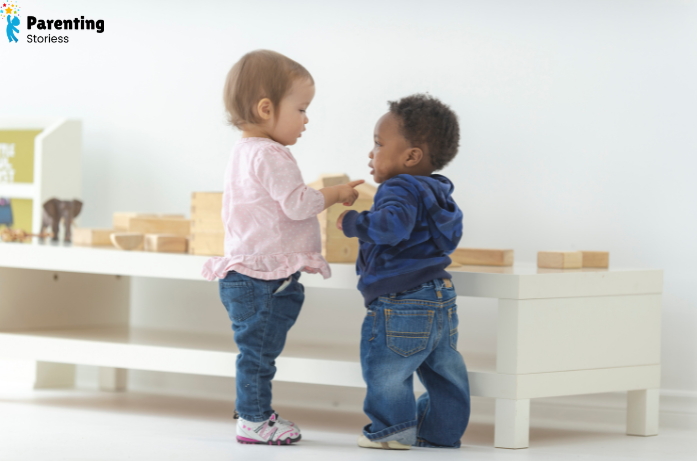
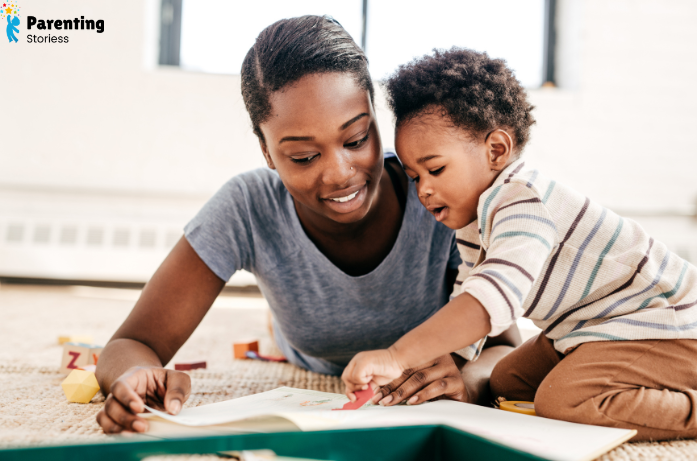
If you have a toddler repeating words again and again, it can be completely normal. Many toddlers repeat words while learning how language works, practicing new sounds, or trying to make sure you understand what they want to say.
Repetition can also occur because your toddler is in a happy mood, tired, and thinking about what to say next, or has a certain phrase stuck in their head because they don’t know how to express what they want right now. It is a normal part of language development for toddlers in many cases.
What matters the most is how your toddler communicates in general. If your toddler is also learning new words, showing you gestures, following simple instructions, and trying to communicate with you, it is less likely that repetition will be a problem. It is best to consult your pediatrician if your child still has difficulty with speech or develops any other concerning signs.
Is Toddler Repeating Words Normal?
Yes, repeating words can be a normal part of toddler language development. Young children often say the same word several times while practicing sounds, learning meaning, or building confidence with new vocabulary.
For example, your toddler may repeat truck when they see one because they are connecting the word with the object. A 2024 study available through PubMed also suggests that repetition in everyday caregiver-child speech may support early word learning.
What matters most is your toddler’s overall communication, including whether they are learning new words, understanding simple directions, and using gestures to express themselves.
Why Is My Toddler Repeating Words?
There are many simple reasons why toddlers repeat words. Most of the time, the reason becomes clearer when you notice what your child is doing, feeling, or trying to communicate at that moment.
They Are Practicing New Words
Toddlers learn through repetition. Just like they may ask for the same story every night or sing the same song many times, they may also repeat a new word again and again.
If your toddler keeps saying dog, you can gently add to it by saying the dog is running or the dog is brown. This gives them more language to hear without making them feel corrected.
They Are Excited
Sometimes toddlers repeat words simply because they are excited. Seeing an airplane, fire truck, animal, or favorite toy can make them want to say the word several times.
You can respond by adding a short sentence about what they noticed. This shows your child that you understand them and helps turn their excitement into a small learning moment.
They Want to Make Sure You Heard Them
Toddlers may repeat a request when they are not sure you heard them. This often happens when you are busy cooking, cleaning, working, or talking to someone else.
If your child keeps asking for water, calmly let them know that you heard them. A simple response can reassure them that their message reached you.
They Are Organizing Their Thoughts
Sometimes toddlers know what they want to say, but they need extra time to put the words together. You may hear the beginning of a sentence more than once before they finish it.
Try not to rush in and complete the sentence for them. Giving your child a few extra seconds can help them find the words and finish their thought on their own.
They Enjoy the Sound of Certain Words
Some words are just fun for toddlers to say. Words with playful sounds or rhythms, such as bubble, banana, dinosaur, or beep, can quickly become favorites.
If your toddler is happy, learning new words, and communicating in other ways, this kind of repetition is usually nothing to worry about. It can simply be part of exploring and enjoying language.
Toddler Repeating the Same Thing Over and Over: Is It Echolalia?
Not always. A toddler repeating the same thing over and over may simply be repeating their own request, thought, or favorite idea. For example, they might keep asking for a snack, wanting to go outside, or talking about something that feels exciting to them.
Echolalia is a little different. According to Cleveland Clinic, it means repeating words or phrases that were originally said by someone else. A toddler may copy a question you just asked or repeat a phrase they heard earlier from a parent, teacher, book, or television show.
Echolalia can be part of early language development, but in some children it may continue alongside other communication or developmental differences. That is why it is more helpful to look at your toddler’s overall communication, including how they use gestures, understand language, and express their own needs.
Immediate and Delayed Echolalia
Echolalia usually happens in two forms: immediate and delayed. The difference is mainly about when your toddler repeats the words they heard.
Immediate Echolalia
Immediate echolalia happens when a toddler repeats words or part of a sentence soon after hearing them. For example, you may ask if they want milk, and instead of answering, they repeat part of your question.
This can happen because your child is still processing what was said or is borrowing your words while they work out how to respond. For some toddlers, repeating the sentence is part of figuring out the meaning.
Delayed Echolalia
Delayed echolalia happens when a child repeats a phrase they heard earlier, sometimes hours or even days later. The words may come from a parent, teacher, book, song, or favorite show.
The American Speech-Language-Hearing Association explains that repeated language can sometimes have a real communication purpose. A familiar phrase may help a child ask for something, express a feeling, protest, or join in a conversation.
So even when a repeated phrase seems out of place, it may still be your toddler’s way of trying to communicate something.
Try to Understand What the Repetition Means
Instead of counting how many times your toddler repeats a word or phrase, pay attention to what is happening around them. Their body language, facial expression, tone, and what they are looking at can give you useful clues.
You may notice that certain phrases come up when your child is tired, excited, hungry, unsure, or trying to ask for help. Once you spot the pattern, it becomes much easier to understand what your toddler may be trying to communicate.
Why Does My Toddler Repeat Herself Over and Over?
Sometimes toddlers repeat the same question even after you have answered it because they are looking for reassurance. Young children may do this when something feels exciting, important, or a little uncertain.
Toddlers can also find words like later, soon, or tonight hard to understand. Instead of repeating the same answer, try linking it to something familiar, such as Grandma will come after lunch or after nap time. This can make the timing easier for your child to understand.
Why Toddlers Repeat Phrases From Shows or Books
You may notice that your toddler repeats phrases from cartoons, books, songs, or videos. Children often remember language that is rhythmic, emotional, or repeated many times.
These phrases are not always random. Your toddler may use a familiar line to show excitement, ask for something, or connect the words with a situation they recognize.
If your toddler mostly uses memorized phrases and rarely creates their own words or sentences, it is worth mentioning to your pediatrician.
Keep a Simple Repetition Diary
If you are not sure why certain words keep coming up, watch the pattern for a few days. A quick note on your phone is enough.
Write down what your toddler said, what happened just before it, and what happened next. You may notice repetition is more common when they are tired, excited, hungry, or asking for help.
These patterns can help you understand the behavior better and can also be useful to share with a pediatrician or speech-language pathologist.
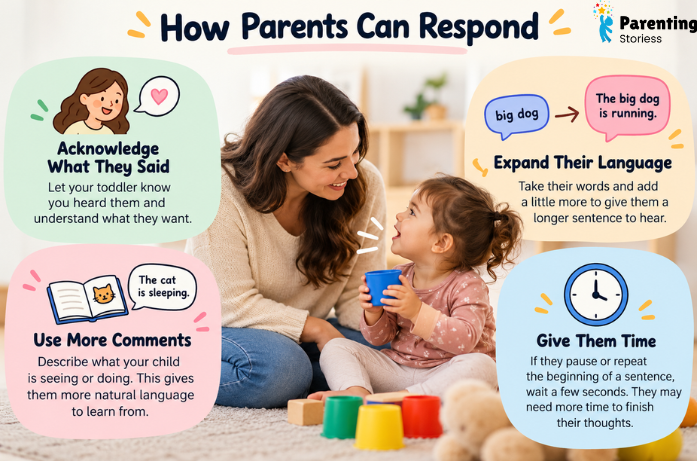
How Parents Can Respond
You usually do not need to stop your toddler from repeating words. A calm response can help them feel understood while also supporting their language development.
Acknowledge What They Said
Let your toddler know you heard them. If they keep asking for the blue cup, simply say that you understand what they want.
Sometimes being clearly heard is enough to reduce the need to keep repeating the same request.
Expand Their Language
Take your toddler’s words and gently add a little more. If they say big dog, you can say the big dog is running.
If they say baby sleep, you can respond that the baby is sleeping. This gives them a slightly longer sentence to hear without making them repeat it back.
Use More Comments
It is easy to ask toddlers lots of questions during the day. Questions are useful, but too many can sometimes make conversation feel like a test.
Try adding simple comments too. Describe what your child is seeing or doing, such as the truck is loud or the cat is sleeping.
This gives your toddler more natural language to learn from.
Give Them Time
If your toddler repeats the beginning of a sentence, wait a few seconds before helping.
They may simply need more time to organize their thoughts and find the right words. A short pause can help them finish the sentence on their own.
Does Repeating Words Mean Autism?
No. Repeating words alone does not mean your toddler is autistic. Echolalia can appear in autistic children, but it can also happen during normal language development.
Professionals look at the full picture, including eye contact, gestures, play, social interaction, understanding, and how a child uses language to communicate.
What Communication Skills Should Parents Watch?
Look at your toddler’s overall progress rather than one behavior. Helpful signs include learning new words, combining words, following simple directions, pointing, using gestures, and trying to share needs or interests.
The Centers for Disease Control and Prevention provides age-based developmental milestones that parents can use as a general guide.
When Should Parents Ask for Help?
Talk with your pediatrician if your toddler loses words they previously used, rarely communicates needs, struggles to understand familiar language, or mostly repeats phrases without developing more flexible speech.
A hearing check or speech-language evaluation may sometimes be recommended. Early guidance can help parents understand whether their child simply needs more time or extra support.
Final Thoughts
Having a toddler repeating words is often part of learning how language works. Repetition can help children practice sounds, express excitement, organize thoughts, or make sure they are understood.
Pay attention to how your toddler communicates overall. Keep talking, reading, playing, and giving them time to respond, and speak with your pediatrician if you notice language loss or ongoing communication concerns.
FAQs
1. Is it normal for toddlers to repeat words?
Yes. Repeating words can be part of normal language learning, especially when toddlers are practicing new sounds and vocabulary.
2. Why does my toddler repeat the same phrase?
They may be excited, seeking reassurance, practicing language, or trying to make sure you understand them.
3. What is echolalia in toddlers?
Echolalia is when a child repeats words or phrases they have heard from someone else, either right away or later.
4. Does repeating words mean autism?
No. Repetition alone does not mean autism. Doctors look at a child’s overall communication, social interaction, play, and development.
5. When should I talk to a pediatrician?
Speak with your pediatrician if your toddler loses words, struggles to understand language, rarely communicates needs, or mostly relies on repeated phrases.
Want more simple, practical parenting guidance? Explore more helpful toddler development and parenting tips on Parenting Stories.
Disclaimer
This article is for general informational purposes only and is not a substitute for medical advice, diagnosis, or treatment. If you have concerns about your child’s speech, language, or development, please speak with your pediatrician or a qualified speech-language pathologist.