Written by caring mom at Parenting stories
If you are wondering do babies need to go barefoot for brain development, the answer is no they don’t have to be barefoot for their brain to develop normally. But giving your baby some safe barefoot time can still be helpful, especially as they start sitting, crawling, standing, and taking those first little steps.
Being barefoot lets babies feel the floor more clearly, move their toes freely, and adjust their feet as they practice balance and coordination. It can also give them extra sensory feedback while they explore how their body moves.
As a mom, I think the most important thing to remember is that barefoot time is helpful, not mandatory. You don’t need to worry if your baby wears socks or shoes when needed. What matters most is giving them safe chances to move, explore, and develop at their own pace.
Do Babies Need to Go Barefoot for Brain Development?
No. Babies do not need to be barefoot for their brains to develop normally.
Your baby’s brain grows through everyday experiences such as hearing your voice, watching your face, reaching for toys, rolling, crawling, touching different textures, and moving their body. Barefoot play can be one small part of this sensory learning, but it is not a requirement for healthy brain development.
As babies begin pulling up, standing, and walking, their feet help them notice pressure, texture, and contact with the ground. This sensory feedback can support balance, coordination, and body awareness while they practice new movements.
The American Academy of Pediatrics explains that young babies generally do not need shoes until they begin walking outdoors and need protection.
So, while barefoot time can be helpful for natural movement and sensory exploration, there is no need to worry if your baby wears socks or properly fitting shoes when needed. What matters most is giving them plenty of safe opportunities to move, play, and explore.
How Barefoot Time Helps Babies Explore
Babies learn through movement long before they take their first steps. They kick, grab their toes, push against surfaces, roll, crawl, pull themselves up, and eventually cruise along furniture. These simple movements help them understand how their bodies work.
When your baby’s bare feet touch the floor, they can directly feel differences in texture, firmness, pressure, and temperature. This sensory feedback is one reason barefoot baby development is often linked with body awareness, balance, and natural movement.
You do not need special sensory mats or expensive equipment. Safe, supervised floor time on everyday surfaces such as carpet or smooth flooring can give your baby plenty of opportunities to move, feel, and explore.
Benefits of Babies Going Barefoot
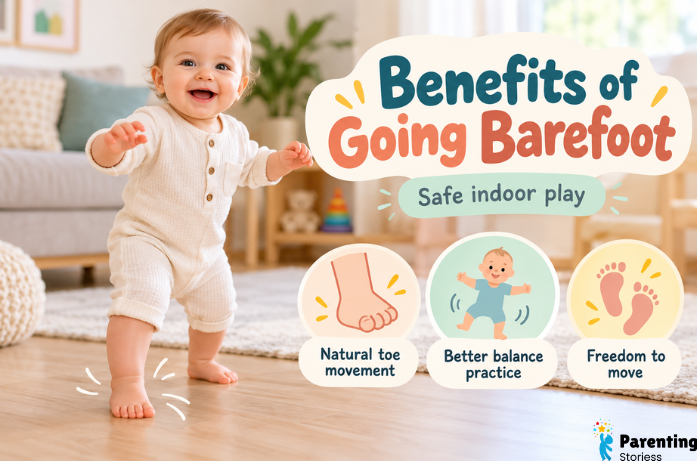
There are several practical benefits of babies going barefoot, especially when they are playing, standing, or learning to walk indoors. Bare feet allow babies to move more naturally and feel the surface beneath them without unnecessary restriction.
1. Allows Natural Foot and Toe Movement
A baby’s feet are still developing, and going barefoot gives the toes room to spread, curl, and move freely. This can be especially useful when babies are pulling themselves up or taking early steps because their feet are constantly making small adjustments.
The American Academy of Pediatrics explains that babies generally do not need shoes until they begin walking outdoors. Indoors, bare feet or comfortable socks are usually enough when the environment is safe.
2. Helps Babies Practice Balance
Standing and walking require babies to coordinate their muscles, vision, balance, and body position. When their feet are bare, they can feel the floor directly and respond to changes in the surface beneath them.
The NHS Children’s Health guidance recommends allowing babies to learn to walk barefoot at home when it is safe, as feeling the floor can help with stability and balance.
3. Gives Growing Feet Freedom to Move
Shoes are important when babies need protection outdoors, but heavy or stiff footwear is usually unnecessary during safe indoor play. Flexible movement gives growing feet space to work naturally while babies crawl, stand, cruise, and walk.
When shoes are needed, look for lightweight, flexible footwear with enough room for the toes. The goal is to protect your baby’s feet without squeezing or unnecessarily limiting their natural movement.
What Barefoot Time Really Does for the Brain
This is where online information can sometimes become confusing.
You may see claims that barefoot babies develop better intelligence, language, focus, or emotional skills.
Those claims go further than current evidence supports.
Barefoot movement does provide sensory input to the nervous system. That sensory information can be involved in balance, body awareness, coordination, and movement.
But that is not the same as saying babies need bare feet for healthy brain development.
Your baby’s brain is also developing while they listen to you talk, reach for a toy, laugh during peekaboo, crawl toward you, splash in the bath, and explore objects with their hands.
Barefoot time is helpful, but it is only one small part of a much bigger developmental picture.
Barefoot Babies Before Walking
Babies can enjoy barefoot time long before they take their first steps. During tummy time, floor play, rolling, crawling, and sitting, their feet are already an important part of how they explore and move.
You may notice your baby pushing their feet against the floor, rubbing them together, grabbing their toes, or using their legs to shift their body. These simple movements help them become more aware of their body and build confidence with movement.
If your home feels cold, comfortable socks are perfectly fine. Barefoot time should be a gentle opportunity for natural movement, not something that makes your baby uncomfortable.
Can Babies Wear Socks While Learning to Walk?
Yes, babies can wear socks while learning to walk. Socks themselves do not interfere with normal development, but the type of socks you choose can make a difference.
On smooth floors, regular socks may be slippery, which can make it harder for a new walker to keep their balance. If your home is cold, choose soft, well-fitting socks with nonslip grips, or let your baby practice barefoot for short periods when the room is warm and safe.
It is also a good idea to check the fit regularly. Socks that are too tight around the toes can feel uncomfortable and may limit natural foot movement.
When Should Babies Start Wearing Shoes?
There is usually no need to rush into proper walking shoes the moment your baby starts pulling up.
Shoes become more useful once your baby begins walking outside.
Look for shoes that are:
- lightweight
- flexible
- comfortable
- nonslip
- roomy around the toes
- secure without being tight
- suitable for the surface and weather
The purpose of early shoes is protection, not teaching your baby how to walk.
Your baby’s muscles, nervous system, balance, and practice are doing that work naturally.
How Much Barefoot Time Does a Baby Need?
There is no exact amount of time a baby needs to spend barefoot each day. You do not need to follow a schedule or worry about reaching a certain number of minutes.
A better approach is to let your baby go barefoot during safe, comfortable moments at home, such as floor play, crawling, pulling up, or practicing early steps. This gives their feet a chance to move freely and feel the surface beneath them.
If the floor is cold, rough, or unsafe, socks or suitable footwear are completely fine. Comfort and safety matter more than trying to meet a daily barefoot goal.
Simple Ways to Encourage Safe Barefoot Play
Barefoot play can easily become part of your baby’s normal routine. A few simple habits can keep it safe and enjoyable:
- Choose safe indoor surfaces: Let your baby play barefoot on a clean carpet, play mat, or smooth floor where there are no sharp or rough objects.
- Offer different textures: Older babies and toddlers may enjoy supervised time on soft grass, sand, or other safe natural surfaces.
- Check the area first: Look for splinters, broken pieces, tiny objects, pet waste, or anything else that could hurt your baby’s feet.
- Watch the temperature: Avoid very hot pavement, cold floors, or surfaces that may feel uncomfortable on delicate skin.
- Stay close during outdoor play: Supervision is especially important when your baby is exploring unfamiliar surfaces.
The goal is to give your baby freedom to move and explore while keeping their feet protected and comfortable.
Don’t Turn Barefoot Time Into Another Parenting Pressure
As moms, it is easy to feel like every small choice could affect our baby’s development. One day we hear that something will “boost the brain,” and the next we are warned that doing the wrong thing could somehow hold our baby back.
The truth is, babies do not need every part of their day planned for development. They are learning all the time through ordinary moments hearing your voice, reaching for a toy, crawling across the room, laughing with you, exploring food, and getting back up after a little tumble.
Barefoot time can be a lovely part of that learning, but it is only one small piece. What matters most is giving your baby a safe, loving environment where they can move, explore, and grow at their own pace.
Final Thoughts
Barefoot time can be a simple and helpful part of your baby’s everyday movement and exploration. It gives their feet freedom to move, feel different surfaces, and practice balance as they grow.
When your baby is playing safely indoors, going barefoot can be a comfortable option. When their feet need protection outside, soft, flexible, well-fitting shoes are more suitable.
Most importantly, try not to worry about getting every small choice exactly right. Babies learn and develop through everyday play, movement, interaction, and loving care.
Give your little one a safe space to explore, plenty of encouragement, and time to grow at their own pace. Those tiny feet will find their way naturally, one step at a time.
FAQs
1. Is it okay for babies to be barefoot every day?
Yes. Babies can spend time barefoot every day as long as the surface is safe, clean, and comfortable.
2. Should babies wear shoes while learning to walk?
Indoors, babies can usually practice walking barefoot. Shoes are more useful outdoors when their feet need protection.
3. Can babies wear socks while learning to stand?
Yes. Choose well-fitting socks, and use nonslip socks on smooth floors to reduce slipping.
4. Does going barefoot help babies with balance?
Bare feet can help babies feel the floor more directly, which may support balance and body awareness while they practice standing and walking.
5. When should babies start wearing proper shoes?
Babies generally need proper shoes once they begin walking outdoors and need protection from rough, hot, cold, or unsafe surfaces.
For more simple, reassuring parenting tips and baby development guides, explore more helpful articles on Parenting Stories.
Disclaimer
This article is for general informational purposes only and is not a substitute for professional medical advice. If you have concerns about your baby’s development, feet, balance, or walking, speak with your pediatrician or another qualified healthcare professional.