
There’s something about toddlerhood that keeps us moms constantly on our toes, one day it’s picky eating, the next it’s a mysterious tummy ache that leaves us guessing. I remember sitting beside my little one, rubbing his belly, wishing I could fix everything with a simple hug. That’s when I first started learning about toddler probiotics, as a gentle way to support his growing body from the inside out.
If you’ve been wondering whether probiotics are right for your child, or how to even begin choosing one, you’re not alone. Let’s walk through this together in a calm, practical, and reassuring way.
What Are Toddler Probiotics?
Toddler probiotics are gentle, child-friendly supplements (or foods) that contain live “good” bacteria designed to support your little one’s developing digestive system. While the word bacteria can sound worrying, but not all bacteria are bad. In fact, our bodies, and our toddlers’ bodies, depend on the good kind to function well.
In toddlers, this balance is especially important because their digestive and immune systems are still maturing. A toddler probiotic is carefully made with safe strains and the right dosage for young children, so it supports their needs without overwhelming their system.
Think of probiotics like tiny helpers quietly working behind the scenes, supporting digestion, strengthening immunity, and keeping everything running smoothly.
Why Gut Health Matters So Much in Toddlers
As moms, we often connect gut health only with digestion, but it goes far beyond that.
Your toddler’s gut is closely linked to:
- Their immune system
- Nutrient absorption
- Mood and behavior
- Overall energy levels
When the gut is balanced, you may notice your child is happier, more comfortable, and even less prone to frequent illnesses.
But when that balance is off, due to antibiotics, illness, or diet changes, it can show up as constipation, diarrhea, or even irritability.
That’s where probiotics for toddler health can offer gentle support. Research from Johns Hopkins Health suggests that probiotics may play a role in supporting child development and health outcomes, especially in growing years.
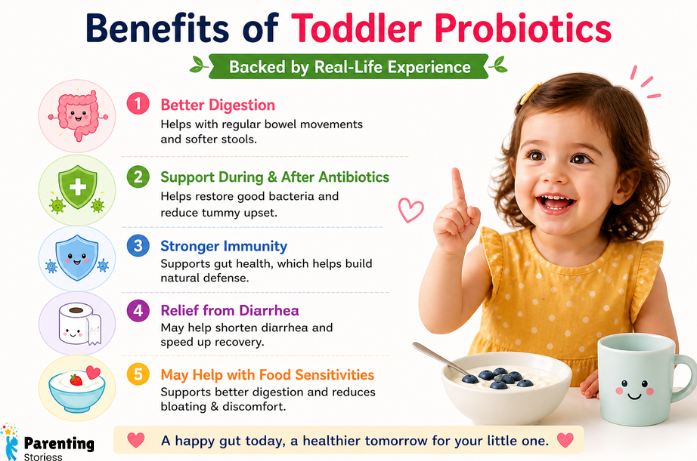
Benefits of Toddler Probiotics (Backed by Real-Life Experience)
Let’s talk about the benefits, not in a clinical way, but in a real, mom-life way. A study available on National Institutes of Health highlights how probiotics can support gut health and may help reduce issues like diarrhea in children.
1. Easier, More Comfortable Digestion
If your toddler has ever struggled with constipation, you know how heartbreaking it can be. The discomfort, the tears, the helpless feeling, we’ve all been there.
Probiotics can help regulate bowel movements by improving the balance of gut bacteria. Many moms notice softer stools and more regular bathroom habits after introducing a probiotic for toddler use.
2. Support During and After Antibiotics
Antibiotics are sometimes necessary, but they don’t just remove harmful bacteria, they wipe out the good ones too.
After a course of antibiotics, a probiotics toddler supplement can help restore that lost balance, making recovery smoother and reducing the chances of digestive upset.
3. Stronger Immunity (Especially in Growing Years)
Toddlers seem to catch everything, don’t they? One week it’s a cold, the next it’s a stomach bug.
Since a large portion of the immune system is connected to the gut, supporting gut health with a probiotic toddler routine may help your child build better resilience over time.
4. Relief from Occasional Diarrhea
Whether it’s caused by infection or food sensitivity, diarrhea can quickly drain a toddler’s energy.
Probiotics have been shown to help shorten the duration of diarrhea and support quicker recovery, something every mom can appreciate during those tough days.
5. May Help with Food Sensitivities
Some toddlers are more sensitive to certain foods, leading to bloating or discomfort.
While probiotics aren’t a cure, they can support better digestion and help your toddler’s system handle foods more comfortably.
Signs Your Toddler Might Need a Probiotic
Not every child needs a probiotic daily, and that’s perfectly okay. But here are a few signs that your toddler might benefit from one:
- Frequent constipation or irregular stools
- Repeated episodes of diarrhea
- Tummy pain or bloating after meals
- Recent antibiotic use
- Frequent colds or infections
- Fussiness linked to digestion
If you’ve noticed a pattern, it might be worth exploring a toddler probiotic, with your pediatrician’s guidance.
Are Probiotics Safe for Toddlers?
This is one of the biggest concerns for parents, and rightly so.
The reassuring answer is: yes, probiotics are generally safe for healthy toddlers when used appropriately.
According to pediatric guidance shared on Healthy Children, probiotics may help with certain digestive issues in children, but they should always be used thoughtfully and with a doctor’s advice.
Always Choose Age-Specific Products
A probiotic made for adults isn’t suitable for toddlers.
Introduce Gradually
Start with a small amount to allow your child’s body to adjust.
Watch for Mild Changes
Some toddlers may experience slight gas or changes in stool initially. This usually settles within a few days.
Consult Your Pediatrician
Especially if your child has a medical condition or a weakened immune system.
How to Choose the Best Toddler Probiotics
Standing in the supplement aisle can feel overwhelming, I’ve been there. So let me simplify it for you.
1. Focus on Proven Strains
Look for strains that are commonly used in children, such as:
- Lactobacillus rhamnosus
- Bifidobacterium lactis
- Lactobacillus reuteri
These are gentle and well-researched for young digestive systems.
2. Check the CFU Count (But Don’t Overthink It)
CFU simply means the number of live bacteria. For toddlers, a moderate dose is enough, more isn’t always better.
3. Pick a Toddler-Friendly Format
This matters more than we think!
- Powders (easy to mix into food)
- Liquid drops
- Chewables (for older toddlers)
Choose what your child will actually take without a struggle.
4. Avoid Unnecessary Ingredients
Look for products that are:
- Free from added sugars
- Free from artificial colors or flavors
- As simple and clean as possible
5. Storage Convenience
Some probiotics require refrigeration, while others don’t. Pick one that fits your routine so you don’t forget it.
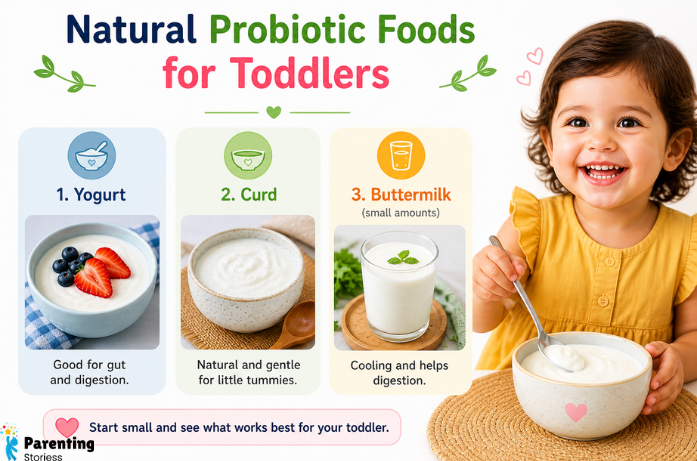
Natural Probiotic Foods for Toddlers
Before supplements, don’t forget the power of food. Sometimes, simple kitchen staples can do wonders.
You can introduce:
- Fresh yogurt with live cultures
- Homemade curd
- Buttermilk (in small amounts for older toddlers)
Start small and see how your toddler responds. These are gentle, natural ways to include probiotics for toddler nutrition.
When and How to Give Probiotics
There’s no strict rule, but here are some practical ways to approach it:
During Digestive Issues
Use probiotics when your toddler is experiencing constipation or diarrhea.
After Antibiotics
Help restore gut balance.
As Short-Term Support
Some moms use probiotics for a few weeks rather than long-term daily use.
Simple Ways to Give Probiotics:
- Mix powder into yogurt or mashed fruit
- Add drops to milk or water
- Give chewables as a treat (for older toddlers)
The key is to make it stress-free, for both you and your child.
Common Mistakes Parents Make (And It’s Okay!)
We’re all learning as we go, so here are a few things to watch out for:
Expecting Instant Results
Probiotics work gradually, not overnight.
Switching Products Too Quickly
Give it time before deciding if it’s working.
Ignoring Diet and Hydration
Probiotics help, but they’re not a replacement for balanced meals and water.
When to Talk to Your Doctor
While probiotics are safe in most cases, always seek medical advice if:
- Symptoms persist or worsen
- Your toddler has severe digestive issues
- There’s blood in stool
- Your child isn’t gaining weight properly
It’s always better to ask than to worry quietly.
Final Thoughts
Navigating your toddler’s health can sometimes feel overwhelming, especially with so many options and opinions out there. Toddler probiotics can be a gentle, supportive tool for gut health, but they’re just one small part of the bigger picture. What truly makes the difference is a balanced diet, a nurturing environment, and the love you pour into your child every single day.
So take a deep breath, trust your instincts, and move forward with confidence. There’s no perfect roadmap to parenting only what feels right for you and your little one. With patience, care, and small thoughtful choices, you’re already giving your toddler the best possible start.
Found this helpful? Share it with another mom and explore more simple parenting tips on Parenting Stories.
FAQs
1. Are toddler probiotics safe for daily use?
Yes, toddler probiotics are generally safe for daily use in healthy children when given in the right dose. However, it’s always a good idea to check with your pediatrician before starting any supplement regularly.
2. When should I give probiotics to my toddler?
Probiotics can be given during digestive issues, after antibiotics, or as short-term support. Some parents also use them daily, but it depends on your child’s needs and your doctor’s advice.
3. How long does it take for probiotics to work?
Probiotics don’t work instantly. You may start noticing small improvements in digestion within a few days to a couple of weeks, depending on your toddler.
4. Can I give probiotics through food instead of supplements?
Yes, natural foods like yogurt or homemade curd are great sources of probiotics and can be a gentle way to support your toddler’s gut health.
5. Do all toddlers need probiotics?
Not necessarily. Many toddlers get enough good bacteria through a balanced diet. Probiotics are helpful in certain situations but aren’t required for every child.
Disclaimer: This article is for general information only and not a substitute for medical advice. Always consult your pediatrician before giving probiotics to your toddler.