Pregnancy often makes any physical sensation give rise to concerns about whether you are okay. While sitting on your couch or going through your routine activities, you will suddenly find your belly hard, tense, or stretched. If your pregnancy belly feels tight, it’s natural to wonder what’s causing it and whether your baby is okay.
The positive point is that tightening of the belly in pregnancy happens commonly. Your uterus could grow, your baby’s position could change, or you might suffer from Braxton Hicks contractions. Even gas and bloating could make your abdomen hard sometimes.
However, some occasional tightenings should be taken care of. You should be able to distinguish the causes of your tightened belly during pregnancy and figure out what you should do. This article discusses the causes of a tightened belly in pregnancy, measures for relief, and when to see a doctor
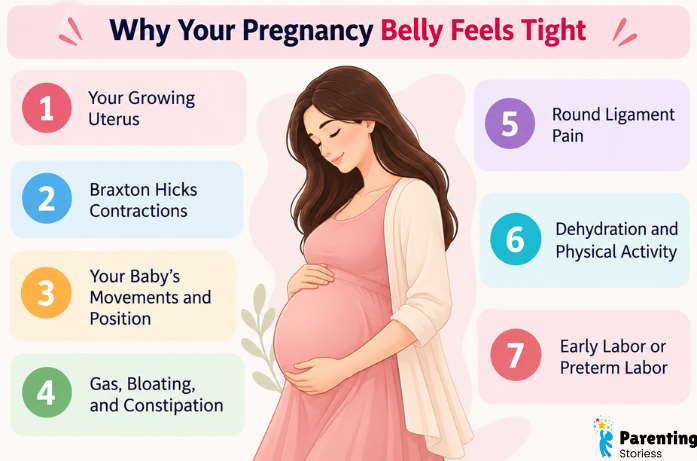
Why Your Pregnancy Belly Feels Tight
During pregnancy, your uterus grows, your muscles stretch, and hormonal changes affect digestion. These changes can sometimes make your belly feel hard, stretched, or uncomfortable.
Here are seven possible reasons for belly tightening during pregnancy and what each one means.
1. Your Growing Uterus
As your baby grows, your uterus expands and stretches the surrounding muscles and tissues. This can cause mild tightness or a pulling sensation, especially during the second and third trimesters.
You may notice it more when standing for long periods or changing positions.
2. Braxton Hicks Contractions
Braxton Hicks are practice contractions that usually become more noticeable in the second and third trimesters. They make your belly suddenly feel hard before relaxing again.
Unlike real labor contractions, they are usually irregular and don’t become progressively stronger. Drinking water, resting, or changing positions may help.
According to ACOG, Braxton Hicks contractions do not cause the progressive cervical changes associated with true labor.
3. Your Baby’s Movements and Position
As your baby grows, their kicks, stretches, and position changes may make certain areas of your belly feel firm.
Sometimes, one side feels harder than the other because your baby’s body is pressing against the uterine wall. This firmness may disappear when your baby changes position.
4. Gas, Bloating, and Constipation
Pregnancy hormones, especially progesterone, slow digestion. This can lead to trapped gas, bloating, and constipation, making your stomach feel swollen or tight.
The discomfort may be more noticeable after eating and often improves after passing gas or having a bowel movement.
5. Round Ligament Pain
Round ligaments support your uterus and stretch as your pregnancy progresses. This may cause sudden sharp or pulling pain in the lower belly or groin.
It is common during the second trimester and may happen when standing quickly, coughing, or rolling over in bed. Round ligament pain is common during the second trimester. According to MedlinePlus’s pregnancy aches and pains guide, it often occurs around 18–24 weeks, and moving slowly or changing positions may help relieve discomfort.
Unlike contractions, the pain usually affects a specific area rather than your entire belly.
6. Dehydration and Physical Activity
Dehydration, prolonged walking, or physical activity can sometimes trigger Braxton Hicks contractions, making your belly feel tight.
A full bladder may also contribute to tightening. If symptoms are mild and irregular, drinking water, emptying your bladder, and resting may help.
7. Early Labor or Preterm Labor
Regular belly tightening that becomes stronger, longer, and closer together may indicate labor. You may also experience lower back pain, pelvic pressure, or menstrual-like cramps.
Before 37 weeks, frequent or regular tightening can be a sign of preterm labor, even without significant pain. Contact your maternity team promptly rather than waiting for symptoms to worsen.
What Does Tummy Tightening During Pregnancy Feel Like?
Not every mom experiences tightening in the same way.
For some women, tummy tightening during pregnancy feels like a gentle squeezing sensation.
Others describe their belly becoming suddenly hard, followed by a slow release.
You might notice:
- Your whole belly becoming firm for a short time
- Mild pressure or squeezing around your bump
- A stretching sensation across your abdomen
- Tightening that comes and goes
- A hard area on one side when your baby moves
One helpful detail to notice is whether your whole uterus tightens and relaxes or whether only one small area feels firm.
A localized hard spot may be related to your baby’s position, while a wave of firmness across the uterus may be a contraction.
However, you cannot reliably diagnose the cause by touch alone.
Belly Tightness During Different Stages of Pregnancy
Belly tightness can feel different in each trimester as your uterus grows and your body adjusts to pregnancy. Here’s what you may notice at each stage.
1. First Trimester (1–13 Weeks)
During early pregnancy, hormonal changes can slow digestion, causing gas, bloating, and constipation. Your growing uterus may also cause mild cramping or a pulling sensation in your lower abdomen.
However, severe abdominal pain, vaginal bleeding, dizziness, or one-sided pain should be checked immediately, as these can sometimes indicate an early pregnancy complication.
2. Second Trimester (14–27 Weeks)
As your baby grows, your uterus expands and stretches the surrounding muscles and ligaments. This may cause mild tightness, especially when standing up or changing positions.
Some moms also begin experiencing Braxton Hicks contractions, which make the belly temporarily hard before relaxing again.
If your tummy feels tight during pregnancy repeatedly, especially with back pain, pelvic pressure, or unusual discharge, contact your maternity team promptly.
3. Third Trimester (28 Weeks Until Birth)
During the third trimester, belly tightening becomes more noticeable as your baby grows and Braxton Hicks contractions may occur more frequently. According to the Mayo Clinic’s third-trimester pregnancy guide, Braxton Hicks contractions may become more frequent and noticeable as your due date approaches.
These practice contractions are usually irregular and may ease with rest or changing positions.
However, regular tightening that becomes stronger and closer together may indicate labor. If this happens before 37 weeks, contact your maternity team immediately, even if the contractions are not painful.
Braxton Hicks vs. Real Labor: How Can You Tell?
One of the biggest questions moms have is whether their tightening is simply practice or the beginning of labor.
Here is a simple comparison.
| Braxton Hicks | Real labor |
| Usually irregular | Generally develops a regular pattern |
| Do not steadily become stronger | Usually become stronger over time |
| May settle after rest or changing positions | Usually continue despite changing positions |
| Often feel like pressure or tightening | Often become increasingly painful |
| Do not cause progressive cervical changes | Cause the cervix to change |
These differences can help, but they aren’t a perfect home test.
Early labor can be irregular, and Braxton Hicks contractions can sometimes be uncomfortable.
If you are unsure, especially before 37 weeks, call your maternity team.
Why Is My Pregnant Belly Sometimes Hard and Sometimes Soft?
It’s common for your belly to feel hard one moment and soft the next during pregnancy. This often happens because your uterus is a muscle that tightens and relaxes.
During Braxton Hicks contractions, your belly may become firm for a short time before softening again. Your baby’s movements and position can also make one side of your bump feel harder than the other.
These changes are usually normal, especially in the second and third trimesters. However, if the tightening becomes regular, painful, or doesn’t go away, contact your healthcare provider. Regular tightening before 37 weeks needs prompt medical advice, even if it isn’t painful.
What to Do When Your Belly Suddenly Feels Tight
If your pregnancy belly feels tight occasionally without pain or other warning signs, a few simple steps may help you feel more comfortable.
1. Drink Enough Water
Dehydration can sometimes trigger Braxton Hicks contractions. Drink a glass of water and stay hydrated throughout the day, especially during hot weather or after physical activity.
2. Change Your Position
If you’ve been standing or walking for a long time, try sitting or lying down. If you’ve been sitting, gently walk around or change positions. This may help ease mild tightening.
3. Empty Your Bladder
A full bladder can sometimes trigger uterine contractions. Try using the bathroom when you notice tightening and see whether the discomfort improves.
4. Take a Short Rest
Your body works hard during pregnancy, so don’t ignore signs of tiredness. Lie comfortably on your side, relax your muscles, and take slow, gentle breaths. Rest may help reduce occasional Braxton Hicks contractions.
5. Track the Tightening
If your belly keeps tightening, note how often it happens and how long each episode lasts. Time from the start of one tightening to the start of the next. This information can help your doctor determine whether you’re experiencing practice contractions or possible labor.
Important: These tips are only for mild, occasional tightening. If contractions become regular or painful, or you notice bleeding, leaking fluid, or reduced baby movements, contact your maternity team immediately. Regular tightening before 37 weeks also needs prompt medical advice, even without pain.
A Simple Belly Tightening Tracker for Moms
One thing I think can be genuinely helpful is writing down what you notice instead of trying to remember everything later.
You don’t need a special pregnancy app. A small note on your phone is enough.
| What to notice | Example |
| Pregnancy week | 30 weeks |
| When it started | 4:15 PM |
| How long it lasted | About 40 seconds |
| How often it happened | Three times in 20 minutes |
| Other symptoms | Mild backache |
| Did it settle? | Still happening |
These are example entries, not a guide to what is safe.
The purpose is to help you describe your symptoms clearly when speaking with your maternity team.
If you have warning signs, call promptly rather than waiting to collect more entries.
When Should You Worry About a Tight Belly During Pregnancy?
Occasional mild tightening may be harmless, but some symptoms need prompt attention.
Contact your maternity team urgently if you experience:
- Regular or frequent contractions before 37 weeks
- Tightening that becomes progressively stronger or more painful
- Vaginal bleeding or spotting with abdominal pain
- A gush or continuous trickle of fluid from the vagina
- Persistent lower back pain, pelvic pressure, or menstrual-like cramps
- Reduced or changed baby movements once you are regularly feeling them
- Severe headache, vision changes, or pain high in the abdomen, particularly under the right ribs
These symptoms can sometimes indicate preterm labor or other pregnancy complications. The CDC’s urgent maternal warning signs also explain why symptoms such as severe abdominal pain, vaginal bleeding, and changes in your baby’s movements should never be ignored.
Seek emergency medical care for severe constant abdominal pain, heavy bleeding, fainting, or other severe symptoms.
You never need to wait until symptoms become unbearable before asking for help.
Questions Moms Often Ask About Belly Tightening
1. Is it normal for my pregnant belly to feel tight every day?
Occasional belly tightening can be normal, especially in late pregnancy. However, frequent, painful, or regular tightening should be checked by your doctor.
2. Why does my belly get hard at night during pregnancy?
Braxton Hicks contractions may feel more noticeable at night. Dehydration, tiredness, or a full bladder can also contribute.
3. Can baby movements cause belly tightening?
Yes, your baby’s kicks, stretches, or position changes can make certain areas of your belly feel temporarily hard.
4. How long does pregnancy belly tightening last?
Braxton Hicks contractions often last about 30 seconds to 2 minutes. Tightening that persists or becomes regular needs medical attention.
5. Can a tight belly mean labor is near?
Yes, especially if contractions become stronger, more regular, and closer together. Occasional tightening alone doesn’t mean labor is starting.
Final Thoughts
If your pregnancy belly feels tight, there’s usually no need to worry. It may simply be your growing uterus, your baby’s movements, or Braxton Hicks contractions.
Pay attention to how often the tightening happens, how long it lasts, and whether it improves with rest. If it becomes regular, painful, or comes with other unusual symptoms, contact your healthcare provider. Frequent tightening before 37 weeks also needs prompt medical advice.
Remember, every pregnancy is different, and it’s okay to have questions about the changes you’re experiencing. Never hesitate to ask your doctor for reassurance.
At Parenting Stories, we believe every mom deserves clear information, gentle reassurance, and a little more confidence during pregnancy.
Medical Disclaimer: This article is for educational purposes only and does not replace professional medical advice. Always contact your healthcare provider about concerning pregnancy symptoms, especially regular contractions before 37 weeks, bleeding, fluid leakage, severe pain, or changes in your baby’s movements.