
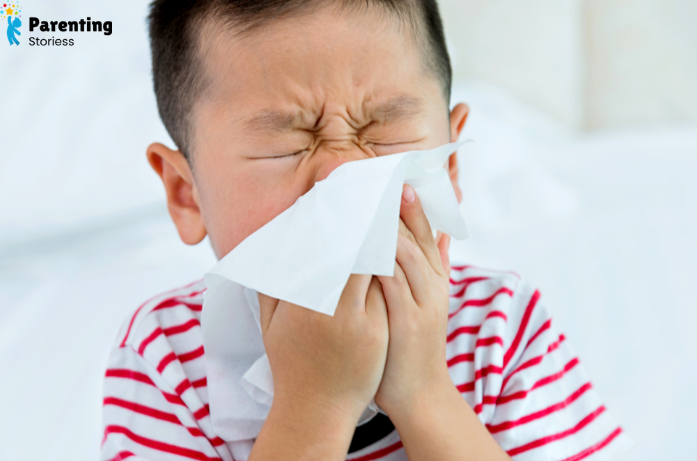
Written with care by a loving mom at Parenting Stories
Every parent knows the struggle your child has a runny nose, keeps sniffing endlessly, wipes everything on their sleeve, and refuses to blow their nose no matter how many times you explain it. If you’ve been searching for how to teach kids to blow their nose, you’re definitely not alone. For many toddlers and preschoolers, nose blowing feels confusing, uncomfortable, or even a little scary at first.
What seems simple to adults is actually a tricky skill for little kids to learn. They need to understand how to control airflow, coordinate breathing, and get used to the strange feeling of mucus leaving their nose. The good news is that with patience, playful practice, and gentle encouragement, most children can learn this important self-care skill without stress or tears.
Why Teaching Nose Blowing Matters
Nose blowing may seem like a tiny milestone, but it actually plays a big role in your child’s comfort, hygiene, sleep, and health.
When children learn to clear their nose properly, it can help:
- Reduce congestion discomfort
- Improve sleep during colds
- Prevent constant sniffing
- Lower irritation around the nose
- Support easier breathing
- Build independence and confidence
It also makes life much easier for parents during cold and flu season.
But unlike eating or walking, nose blowing isn’t something children naturally figure out on their own. It usually needs to be taught patiently and repeatedly.
Why Kids Struggle to Blow Their Nose
Before learning how to help child blow nose, it helps to understand why many children struggle with it in the first place.
1. They Don’t Understand the Concept
Young children often don’t understand that air can be pushed through the nose intentionally. Many toddlers only know how to breathe naturally.
2. Coordination Is Hard
Blowing the nose requires:
- Closing the mouth
- Using nasal muscles
- Pushing air outward
- Managing pressure gently
That’s a lot for a small child’s developing brain and body.
3. The Feeling Can Be Strange
Some children dislike the sensation of mucus moving or the sound of blowing. Others feel nervous because it’s unfamiliar.
4. They Panic When Congested
When kids already feel sick, tired, or cranky, learning a new skill becomes even harder.
Understanding these challenges helps parents approach the process with empathy instead of frustration.
Best Age to Start Teaching Kids to Blow Their Nose
Most children begin learning between ages 2 and 4, although every child develops differently.
Some toddlers understand quickly around age two, while others may not fully master it until preschool years.
There’s no “perfect” age.
Instead of focusing on timelines, watch for readiness signs such as:
- Copying actions
- Following simple directions
- Blowing bubbles or candles
- Tolerating tissues near the face
- Showing awareness of a runny nose
If your child isn’t ready yet, that’s completely okay.
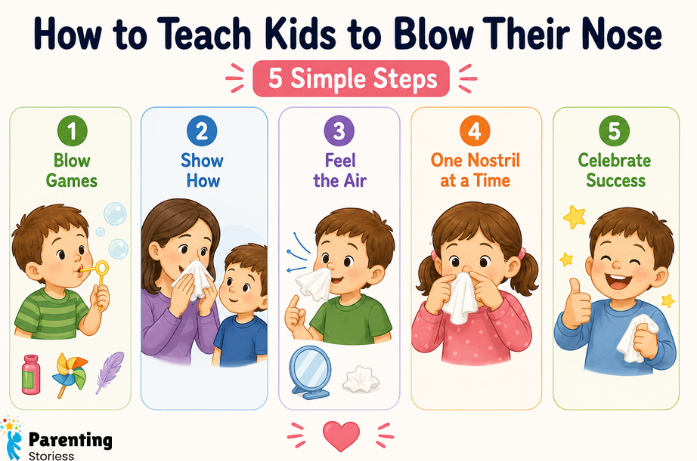
How to Teach Kids to Blow Their Nose Step by Step
The best way to teach this skill is slowly, gently, and without pressure. Small playful steps can make learning much easier for kids.
Step 1: Start With Mouth-Blowing Activities
Before kids learn nose blowing, they first need to understand how to blow air outward. Start with fun games like blowing bubbles, candles, feathers, whistles, or pinwheels.
These simple activities help children practice airflow control while keeping learning fun and stress-free.
Step 2: Demonstrate Nose Blowing Clearly
Children learn best by watching parents. Sit with your child and slowly show them how to blow their nose using a tissue.
Close your mouth and gently blow through your nose. You can even make it playful by saying, “Look! Mommy’s nose is making wind!”
Step 3: Teach Nose Air Awareness
Help your child understand how to push air through their nose only. Hold a tissue under their nose and ask them to make it move.
You can also try fogging up a mirror or blowing tiny paper pieces with nose air. These activities make the skill easier to understand.
Step 4: Practice One Nostril at a Time
Once your child understands nose airflow, gently press one nostril closed and encourage them to blow softly through the other side.
Remind them to keep their mouth closed. Gentle blowing works better than hard blowing, so keep practice calm and patient.
Step 5: Celebrate Small Successes
Even tiny progress deserves praise. If your child manages a small puff of air, celebrate warmly with encouraging words.
Positive reactions help children feel confident and motivated to keep practicing without fear or frustration.
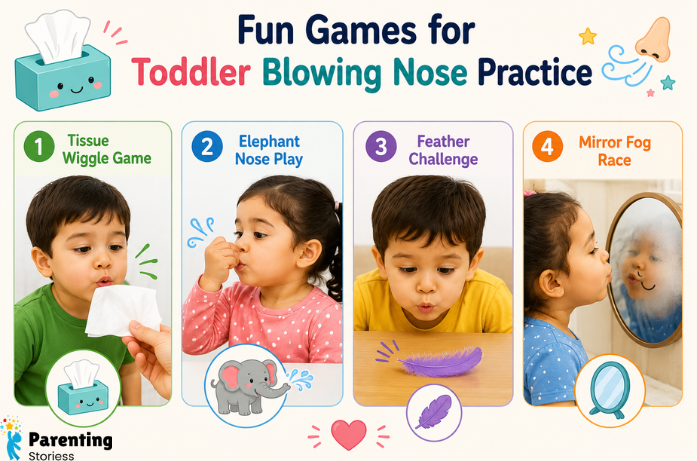
Fun Games for Toddler Blowing Nose Practice
When it comes to toddler blowing nose skills, playful learning works wonders.
1. The Tissue Wiggle Game
Hold a tissue under your child’s nose and ask them to move it using nose air only.
Kids love seeing immediate results.
2. Elephant Nose Pretend Play
Pretend your noses are elephant trunks blowing powerful air.
Imaginative play keeps practice fun and pressure-free.
3. Feather Challenge
Place a feather under the nose and try moving it without using the mouth.
This strengthens airflow awareness gently.
4. Mirror Fog Race
See who can fog up the mirror fastest using only their nose.
Toddlers especially enjoy competition-based games.
Nose Blowing Tips for Kids That Actually Work
Parents often search endlessly for realistic nose blowing tips for kids that work during real-life parenting chaos.
Here are the most helpful ones.
1. Practice When Your Child Is Healthy
Trying to teach nose blowing during a miserable cold often leads to frustration.
Practice during calm, healthy moments too.
2. Use Saline Spray First
Saline spray loosens mucus and makes nose blowing much easier for children.
It can dramatically reduce discomfort.
3. Keep Instructions Short
Young children process simple directions better.
Instead of long explanations, try:
- “Close your mouth.”
- “Blow softly.”
- “Push air from your nose.”
4. Let Them Choose Tissues
Fun tissues with favorite characters can surprisingly motivate children.
Small choices help kids feel more involved.
5. Stay Calm During Resistance
Some kids refuse completely at first.
Avoid pressure or criticism.
The calmer you stay, the safer and easier learning becomes.
Common Mistakes Parents Should Avoid
Even loving parents accidentally make the process harder sometimes.
Expecting Quick Results
Nose blowing is a learned coordination skill.
Some children need repeated practice over weeks or months.
Turning It Into a Battle
Pressure and frustration can create anxiety around nose blowing.
Keep the experience light and supportive.
Asking for Hard Blowing
Too much force can hurt little ears and noses.
Gentle blowing is safer and more effective.
Practicing Only During Illness
Healthy practice sessions often work much better than teaching during congestion and exhaustion.
How to Help Child Blow Nose During a Cold
Sick children are often emotional, tired, and uncomfortable. During illness, focus more on comfort than perfection.
1. Create a Calm Environment
Sit close, cuddle, and reassure them gently.
Your calm energy matters more than perfect technique.
2. Try Steam or Humidity
Warm baths or humidifiers can loosen mucus naturally before practice.
3. Demonstrate Together
Sometimes children cooperate better when parents blow their own nose alongside them.
Make it feel like teamwork.
4. Take Breaks If Needed
If your child becomes upset, pause and try later.
Forcing practice usually makes resistance stronger.
What If My Child Still Won’t Blow Their Nose?
Some children strongly dislike nose blowing because of sensory sensitivity or emotional reasons.
If your child refuses:
- Stay patient
- Keep practicing playfully
- Use saline spray
- Try humidifiers
- Use nasal aspirators when needed
Remember: refusing today doesn’t mean they’ll never learn.
Most children eventually master this skill naturally with maturity and gentle repetition.
When to Talk to a Pediatrician
Usually, delayed nose blowing skills are completely normal.
However, speak with your pediatrician if:
- Your child struggles past age 5
- Congestion is constant
- Frequent ear infections occur
- Breathing seems difficult
- There are speech or motor concerns
Sometimes allergies, enlarged adenoids, or other issues may make nose blowing harder.
Emotional Reassurance for Parents
Teaching your child to blow their nose may feel frustrating at times, but you’re doing better than you think. Every gentle reminder, cuddle, and patient moment is helping your child learn and feel supported.
One day, your little one will confidently grab a tissue and do it on their own. And those small parenting moments will become memories you’ll always treasure.
Final Thoughts
Learning how to teach kids to blow their nose takes patience, practice, and plenty of encouragement. Every child learns at their own pace, so don’t worry if it takes a little longer than expected. Keeping the process playful, calm, and pressure-free can make a huge difference in helping your child feel confident and comfortable.
If you are dealing with endless sniffles, tissue struggles, or frustrating sick days, remember this you are not doing anything wrong. You’re teaching your child with love, supporting them through little challenges, and helping them grow one small step at a time. And honestly, that’s what great parenting is all about.
Need more simple parenting tips and real-life mom advice? Follow Parenting Stories for gentle, practical support through every little parenting milestone.
FAQs
1. At what age can kids learn to blow their nose?
Most children start learning between ages 2 and 4, but every child develops at their own pace.
2. Why does my toddler refuse to blow their nose?
Many toddlers find nose blowing confusing or uncomfortable at first. Patience, practice, and playful activities can help.
3. How can I make nose blowing easier for my child?
Using saline spray, humidifiers, and fun blowing games can make the process easier and less stressful.
4. Is it normal if my child only sniffs instead of blowing?
Yes, it’s very common. Many children naturally sniff because they haven’t yet learned how to control airflow through their nose.
5. Should I worry if my child still can’t blow their nose?
Usually, there’s no need to worry. However, if your child struggles beyond age 5 or has constant congestion, talk to your pediatrician.