

Written by a caring mom at Parenting Stories
If your toddler suddenly begins resisting going to bed, having trouble sleeping, or needing you within five minutes after you have just put them to sleep, it could be the sleep regression of the 2-year-old. As a mother, I understand how challenging it is to experience this phase. You just get used to your child sleeping well when suddenly he needs another glass of water, another hug, another bedtime story, and, of course, yet another moment to leave the bed.
However, it is good to know that this phase is only temporary because a lot of development occurs at once in the 2-year-old’s life emotional, physical, and mental.
Recognizing what might be happening may help you react appropriately and make some small changes to encourage proper sleep.
What Is the 2 Year Old Sleep Regression?
The 2 year old sleep regression is a period when a toddler who previously slept fairly well suddenly starts struggling with naps, bedtime, or nighttime sleep.
You might notice bedtime resistance, early waking, skipped naps, nighttime crying, or your toddler suddenly needing much more reassurance.
At two, children are learning new words, developing stronger emotions, becoming more independent, and discovering that they can say a very powerful word: “No.”
Unfortunately, bedtime can become one of their favorite times to practice it.
The important thing to remember is that your toddler isn’t necessarily going backward. Their sleep may simply be adjusting while they move through a busy developmental stage.
Common Signs of a Sleep Regression in a 2 Year Old
Toddler sleep problems can seem to appear almost overnight.
Common signs include:
- Suddenly refusing bedtime
- Taking much longer to fall asleep
- Waking several times overnight
- Waking unusually early
- Refusing or shortening naps
- Becoming clingy before bed
- Asking repeatedly for water, toys, snacks, or stories
- Wanting Mom or Dad to stay until they fall asleep
- Getting out of a toddler bed repeatedly
- Acting tired or cranky during the day
Not every toddler will experience all these changes.
Sometimes the only sign is that a bedtime routine that once took 15 minutes suddenly takes 45.
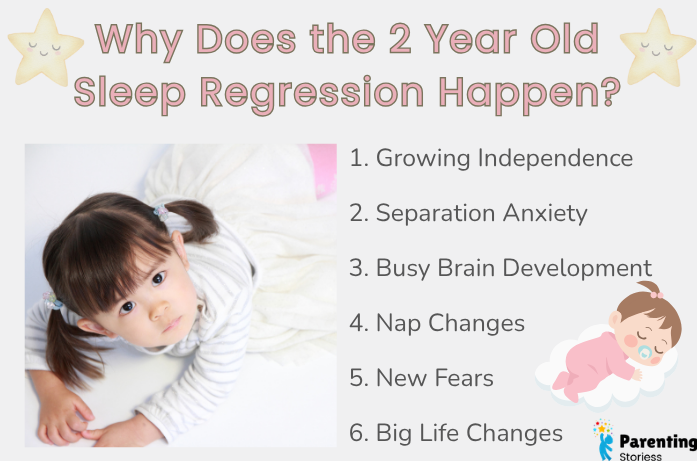
Why Does the 2 Year Old Sleep Regression Happen?
There usually isn’t one single cause. At this age, several developmental changes may affect sleep at the same time.
1. Growing Independence
Two-year-olds are discovering that they have opinions.
They want a certain cup, specific pajamas, and absolutely don’t want you cutting their banana the wrong way.
Bedtime means stopping an enjoyable activity and separating from you, so naturally some toddlers resist.
Offering simple choices can help. Instead of asking, “Do you want to go to bed?” try, “Do you want the bunny pajamas or the star pajamas?”
Your child gets a little control, while bedtime itself stays non-negotiable.
2. Separation Anxiety
Even toddlers who previously went to sleep happily can suddenly become worried about Mom or Dad leaving.
They may cry when you walk toward the door or repeatedly call you back.
Try adding a little extra connection before bedtime. Ten quiet minutes of cuddling, talking about the day, or reading together can make separation feel easier.
3. Busy Brain Development
A two-year-old’s brain is incredibly active.
New words, memories, pretend play, problem-solving, and imagination are developing quickly. Their body may be tired while their brain still feels ready to go.
A calm, predictable bedtime routine helps signal that daytime excitement is ending and sleep is coming.
The CDC explains that ages two to three bring big changes in independence, emotions, learning, and communication. All this development can help explain why your toddler may suddenly seem more opinionated or unsettled around bedtime.
4. Nap Changes
Nap timing can strongly affect nighttime sleep.
Many two-year-olds still need one daytime nap. However, a nap that ends too late may make bedtime difficult.
Skipping a needed nap can cause the opposite problem. An overtired toddler may become emotional, energetic, and surprisingly determined not to sleep.
Finding the right balance sometimes requires small adjustments.
5. New Fears
As imagination develops, toddlers may suddenly become frightened of darkness, shadows, noises, or being alone.
Instead of dismissing the fear, offer simple reassurance.
A night-light, familiar stuffed animal, or gentle phrase such as, “You’re safe, Mommy is nearby,” can help your toddler feel secure without turning bedtime into a long conversation.
6. Big Life Changes
Toddlers notice changes more than we realize.
Starting daycare, potty training, traveling, welcoming a new sibling, moving home, or changing from a crib to a toddler bed can temporarily disturb sleep.
During changes, keeping the bedtime routine familiar gives your toddler something predictable to depend on.
What Should a 2 Year Old Sleep Schedule Look Like?
A consistent 2 year old sleep schedule can make bedtime easier, but there isn’t one perfect schedule for every family.
Your child’s wake time, nap length, natural sleep needs, and family routine all matter.
A sample schedule could look like:
- 7:00 a.m. — Wake up
- 12:30 p.m. — Nap
- 2:00 p.m. — Wake from nap
- 7:15 p.m. — Start bedtime routine
- 7:45–8:00 p.m. — Bedtime
Use this as a starting point rather than a strict rule.
If your toddler happily talks or plays in bed for a long time, bedtime may be slightly too early. If they’re having huge meltdowns before dinner, they may actually need an earlier bedtime.
According to Nemours KidsHealth, toddlers around this age usually need about 11–14 hours of total sleep each day, including naps. They also recommend keeping bedtime routines simple and consistent, which can help toddlers settle more easily.
Creating a Sleep Schedule for a 2 Year Old
When creating a sleep schedule for 2 year old children, watch your child rather than copying another family’s routine.
Keep wake-up, nap, and bedtime fairly consistent for several days and observe what happens.
If bedtime is suddenly taking forever, try moving the nap slightly earlier or shortening it a little.
Make one change at a time. If you change nap length, bedtime, routine, and wake time all at once, it becomes difficult to know what actually helped.
And remember, consistency doesn’t mean perfection. Birthday parties, car naps, vacations, and late family dinners happen.
One unusual day won’t destroy your toddler’s daily sleep routine.
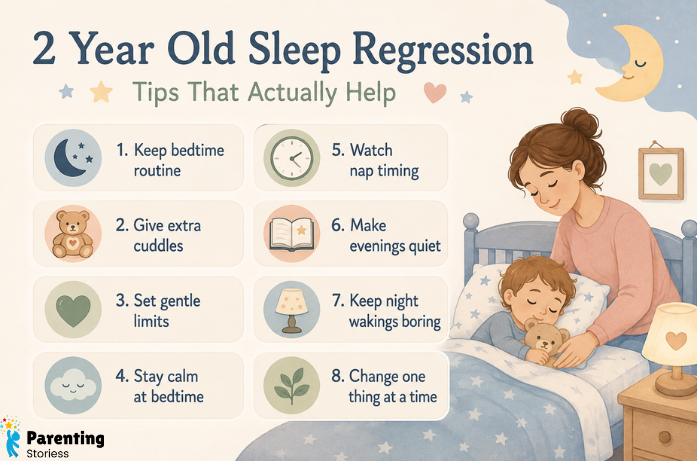
Tips That Actually Help During the 2 Year Old Sleep Regression
You don’t need ten complicated sleep tricks. Simple habits that you can repeat consistently are usually easier for both you and your toddler.
1. Keep Bedtime Predictable
Toddlers feel safer when they know what happens next.
Your routine might simply be: Bath, pajamas, brush teeth, two books, cuddle, bed.
Following roughly the same order every evening helps your toddler understand that sleep is coming.
Healthy Children also encourages parents to keep bedtime calm and consistent. Simple routines and clear expectations can make bedtime feel more predictable for both toddlers and parents.
2. Give Connection Before Bed
Sometimes bedtime resistance is partly a request for more connection.
Toddlers spend their day hearing instructions: put your shoes on, don’t climb that, finish your lunch, come over here.
Before bed, slow down.
A cuddle, quiet conversation, back rub, or favorite story gives your child a few peaceful minutes of your attention before saying goodnight.
3. Set Gentle but Clear Boundaries
Toddlers are very creative bedtime negotiators.
One drink becomes two. One story becomes three. Suddenly a stuffed animal urgently needs finding.
Set expectations before the requests begin.
You might say, “We’ll read two books, have a cuddle, then it’s sleep time.”
Your toddler may still protest. That’s okay. You can be loving while keeping the boundary consistent.
4. Don’t Turn Bedtime Into a Battle
Long explanations can accidentally make bedtime more interesting.
Keep your response calm and predictable.
Something as simple as, “It’s sleep time now. I love you. I’ll see you in the morning,” may work better than starting another discussion.
5. Watch the Afternoon Nap
If bedtime suddenly gets very late, look at daytime sleep.
A long or late nap may mean your child isn’t sleepy enough at bedtime.
Before dropping the nap completely, experiment with making it slightly earlier or shorter.
Many two-year-olds still need daytime rest, and removing it too soon can create an overtired toddler by evening.
6. Make the Last Hour Calmer
Toddlers can struggle to jump straight from wild play into sleep.
During the hour before bedtime, slowly shift toward quieter activities such as books, puzzles, cuddling, coloring, or gentle pretend play.
The house doesn’t need to become completely silent. You’re simply helping your child’s body slow down.
7. Keep Night Wakings Boring
If your toddler wakes overnight, keep the room dark and your response calm.
Give reassurance and make sure they’re comfortable, but try not to turn nighttime into playtime, snack time, or a long conversation.
A consistent nighttime response can gradually make returning to sleep easier.
8. Change One Thing at a Time
When you’re exhausted, it’s tempting to change everything.
Instead, pick the biggest problem first.
Adjust the nap, bedtime, or bedtime routine and give the change a little time before trying something else.
One difficult night doesn’t mean your new routine has failed.
What About the 2.5 Year Old Sleep Regression?
Some families get through age two smoothly and notice new sleep struggles several months later.
Parents often call this the 2.5 year old sleep regression.
Around this age, toddlers may have stronger language skills, bigger imaginations, changing nap needs, more independence, and very impressive bedtime negotiation skills.
Instead of simply crying, your toddler may now explain exactly why they cannot possibly sleep.
They need water. Their sock feels funny. Bear fell over. They forgot to tell you something about the truck they saw this morning.
The same gentle approach usually helps: connection, a predictable routine, appropriate naps, and clear bedtime boundaries.
A Simple 2.5 Year Old Sleep Schedule
A 2.5 year old sleep schedule might look like:
- 7:00 a.m. — Wake
- 1:00 p.m. — Nap or quiet time
- 2:00–2:30 p.m. — Wake
- 7:30 p.m. — Start bedtime routine
- 8:00 p.m. — Bedtime
Some toddlers begin needing shorter naps around this stage, while others still sleep happily for an hour or two.
Let your child’s mood and nighttime sleep guide you.
What If Your 2 Year Old Suddenly Refuses to Nap?
Nap refusal doesn’t always mean your toddler is finished with naps.
Sometimes playing simply feels more exciting.
Continue offering quiet rest around the usual nap time. Dim the room, read together, cuddle, or allow quiet play.
If sleep happens, great. If not, your toddler still gets some downtime.
On no-nap days, moving bedtime a little earlier may prevent an overtired evening meltdown.
When Should Parents Ask for Extra Help?
Most toddler sleep disruptions improve with time, patience, and consistent routines.
However, talk with your child’s pediatrician if sleep problems continue for a long time, your toddler seems uncomfortable, snores heavily, appears to have trouble breathing during sleep, frequently wakes in pain, or you have concerns about their health or development.
Not every sleep problem should automatically be blamed on regression.
Sometimes illness, discomfort, or another sleep issue may need extra attention.
Final Thoughts
The 2 year old sleep regression can make bedtime feel exhausting, but a few difficult nights don’t mean you’ve done anything wrong. A simple routine, the right nap timing, extra connection, and gentle boundaries can make a real difference.
Your toddler is growing through a big stage of independence, emotions, and imagination. Keep offering warmth and consistency, and with time, those difficult nights can settle into peaceful bedtimes again.
FAQs
1. How long does the 2 year old sleep regression last?
It varies from child to child, but many sleep disruptions improve within a few weeks with a consistent routine and gentle bedtime boundaries.
2. Why is my 2 year old suddenly fighting bedtime?
Growing independence, separation anxiety, new fears, nap changes, or a busy developmental stage can all make bedtime harder.
3. Should I stop naps during the 2 year old sleep regression?
Not necessarily. Many two-year-olds still need a daytime nap. Try adjusting the nap time or length before removing it completely.
4. What time should a 2 year old go to bed?
There is no perfect bedtime for every toddler. Many families aim for around 7:30–8:00 p.m., depending on wake time, nap length, and the child’s individual sleep needs.
5. Is a 2.5 year old sleep regression normal?
Sleep struggles around two and a half can happen as independence, imagination, language, and nap needs continue changing.
Every toddler’s sleep journey is different. Explore more real-life parenting tips and gentle guidance on Parenting Stories to make these little stages feel a bit easier.