Written by a Caring Mom at Parenting Stories
If you are wondering when do newborns recognize mom, the sweet answer is: your baby begins recognizing parts of you from the very first days of life. Your voice and scent may already feel familiar, while recognition of your face becomes clearer over the first few weeks and months.
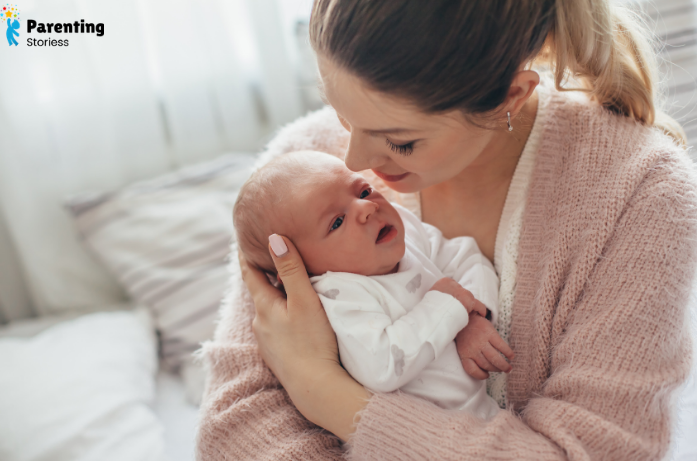
You may notice your newborn calming when you speak, relaxing against your chest, staring closely at your face, or turning toward your voice. These tiny reactions can be some of the earliest signs that your baby knows you.
By around 2 months, recognition often becomes easier to notice through smiles, eye contact, and excitement when you come close. So even before your baby can smile and show it clearly, Mom may already be one of the most familiar and comforting people in their little world.
Table of Contents
- When Do Newborns Recognize Mom?
- Your Baby May Know Your Voice First
- How Does a Newborn Recognize Mom?
- Newborn Recognition Timeline
- Signs Your Newborn Recognizes You
- Recognition Is Different From Attachment
- Easy Ways to Help Your Baby Learn You
- When Do Babies Start Missing Mom?
- Frequently Asked Questions
- Final Thoughts
When Do Newborns Recognize Mom?
Newborns can become familiar with Mom from the first days of life.
Your baby may already know your voice because they heard it during pregnancy. They can also become familiar with your scent and touch very quickly.
Facial recognition takes a little longer because newborn vision is still developing.
By around 2 months, many babies start looking closely at familiar faces, smiling during interaction, and calming when someone they know holds or talks to them.
By 2 to 4 months, it may become much more obvious that your baby recognizes you. According to Pathways, babies may begin recognizing familiar faces at around 2 months, while voice and scent can feel familiar even earlier.
Your Baby May Know Your Voice First
Your baby heard your voice for months before birth.
That is why your voice may already feel comforting after delivery.
You may notice your newborn becoming quieter when you speak, turning slightly toward you, or opening their eyes when they hear you.
These reactions may be tiny, but they can be early signs of familiarity.
So keep talking during feeds, diaper changes, and cuddles.
You do not need perfect songs or special baby talk. Your natural voice is enough.
How Does a Newborn Recognize Mom?
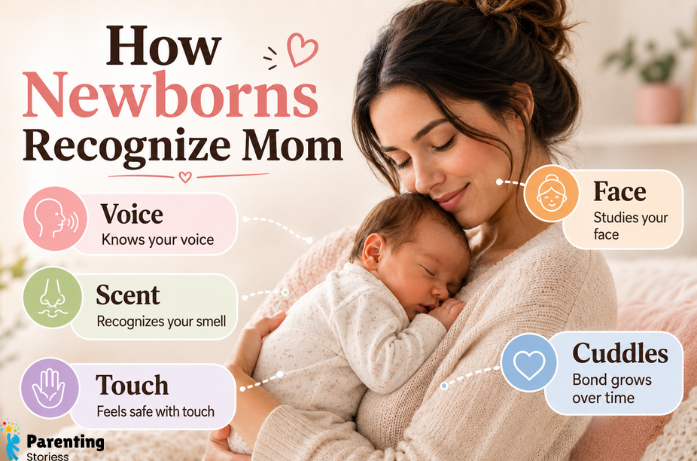
A newborn does not recognize Mom in only one way.
Your baby slowly learns you through:
- your voice
- your scent
- your face
- your touch
- your warmth
- the way you hold them
- feeding and cuddle time
All these experiences slowly become connected with you.
Your Smell Feels Familiar
Newborns have a strong sense of smell.
Your natural scent can become connected with feeding, warmth, and comfort.
That may be why some babies relax quickly when resting against Mom’s chest.
Your Face Becomes Familiar
Newborns see nearby faces better than distant objects.
That is perfect because your face is close during feeding, cuddling, burping, and talking.
Your baby may stare at your eyes, mouth, or expressions.
Those long newborn stares are helping them learn your face. A study available through PubMed Central found that babies become better at recognizing their mother’s face as they grow during the first year.
Your Touch Matters Too
Every time you hold, feed, rock, change, or comfort your baby, they become more familiar with you.
Your newborn does not understand the word “Mom” yet.
But they can learn that your touch often means comfort and care.
Newborn Recognition Timeline
Every baby is different, but this simple timeline can help.
Birth to 2 Weeks
Your baby may already recognize your voice, scent, and warmth.
Facial recognition is still developing.
You may notice them settling against your chest or becoming calmer when you talk.
2 to 6 Weeks
Your newborn may spend more time looking at your face.
They may stare at you during feeds or become more alert when you speak.
This is often when moms start thinking, I think my baby knows me.
Around 2 Months
Recognition usually becomes easier to see.
Your baby may:
- smile when you talk
- look closely at your face
- calm when you pick them up
- seem happier when you approach
3 to 4 Months
By this stage, many babies show clearer excitement.
They may smile, kick, coo, wave their arms, or follow you with their eyes.
This is often when parents asking when does newborn recognize mom finally feel they have a clear answer.
Signs Your Newborn Recognizes You
Recognition is not always a big smile.
Look for small signs too.
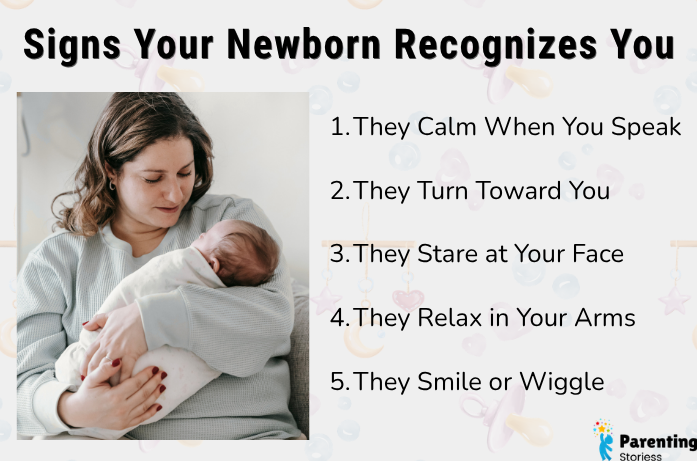
They Calm When You Speak
Your baby may slow their crying or become quieter when they hear your voice.
They Turn Toward You
Some babies move their head or eyes toward a familiar voice.
It may not happen every time, especially when they are hungry or tired.
They Stare at Your Face
Long eye contact can be one of the earliest signs that your baby is learning your face.
They Relax in Your Arms
Your newborn may stop squirming, loosen their fists, or become sleepy when you hold them.
They Smile or Wiggle
As babies get older, they may smile, kick, wave their arms, or make happy sounds when you come close.
Their whole body may show excitement before they can ever say “Mama.”
Recognition Is Different From Attachment
Recognizing Mom and forming an attachment to Mom are closely connected, but they are not quite the same thing.
Your baby may recognize your voice, scent, face, and touch very early. Attachment, however, grows slowly through everyday care and comfort.
Each time you feed your baby, pick them up when they cry, cuddle them, or simply stay close, you are helping them feel safe and secure with you.
And don’t worry about doing everything perfectly. Motherhood comes with sleepless nights, messy diapers, crying, and plenty of moments when nothing seems to work.
A strong bond is built through all those small, ordinary moments of love and care.
What If My Baby Does Not Seem to Recognize Me?
Do not compare your baby too closely with other babies.
Some newborns are very expressive.
Others are quiet and serious.
Your baby may recognize your voice or scent before they give you a clear smile or facial reaction.
Development happens at different speeds.
A serious little baby can still know Mom very well.
What If My Baby Calms Better for Dad or Grandma?
This can happen, and yes, it may hurt a little.
You might spend what feels like forever rocking, shushing, and walking around with your fussy baby. Then Dad or Grandma takes them, and somehow they settle within minutes.
It does not mean your baby loves them more or feels less connected to you.
Sometimes a different voice, a new way of holding them, or even a slightly different rocking rhythm is enough to calm an overtired baby. And sometimes, they were simply ready to settle at that exact moment.
Your baby can feel safe and comfortable with several loving people. Their bond with Dad or Grandma does not take anything away from the special familiarity and comfort they already have with Mom.
Can Newborns Recognize Dad Too?
Yes. Babies can become familiar with Dad and other regular caregivers.
Holding, feeding, rocking, changing, talking, and cuddling all help babies learn another person’s voice, face, scent, and touch.
Your baby can have a special relationship with Mom while also feeling safe with other people.
What About Premature Babies?
If your baby was born early, some milestones may be considered using corrected age.
That means looking at development based on your baby’s original due date.
A premature baby may reach some social milestones later than a full-term baby.
Your pediatrician can help you understand what timeline is right for your baby.
Easy Ways to Help Your Baby Learn You
You do not need special toys or activities.
Simple everyday interaction is enough.
1. Talk to Your Baby
Chat during diaper changes, feeds, and cuddles.
Your baby does not understand the words yet, but they recognize the sound and rhythm of your voice.
2. Keep Your Face Close
Let your baby look at you during calm awake time.
Smile, make gentle expressions, and give them time to study your face.
3. Copy Their Sounds
If your baby makes a little sound, try copying it back.
These small back-and-forth moments help build early communication.
4. Enjoy Skin-to-Skin Time
Skin-to-skin contact brings together warmth, scent, touch, and voice.
It can be a lovely way to bond with your newborn.
5. Read or Sing
Your baby does not care what you are reading or whether you sing perfectly.
They simply enjoy hearing you.
When Do Babies Start Missing Mom?
Babies usually recognize Mom before they actually start missing her.
As memory and attachment grow, many babies begin noticing separation more during the second half of the first year. They may cry when Mom leaves the room or seem unsure around unfamiliar people.
This is often part of normal separation anxiety and shows that your baby is becoming more aware of familiar caregivers.
When Should You Talk to the Pediatrician?
Babies develop at different speeds.
Still, talk with your pediatrician if you are worried about your baby’s response to:
- sounds
- faces
- voices
- movement
- smiling
- hearing
- vision
One missing behavior does not automatically mean something is wrong.
Your doctor can look at your baby’s overall development.
Frequently Asked Questions
Final Thoughts
If you are wondering when do newborns recognize mom, remember that recognition often begins before your baby can clearly show it.
Your voice, scent, touch, and face slowly become familiar during those early weeks. By around 2 months, you may start noticing more obvious signs like longer eye contact, smiles, or a calmer reaction when you come close.
Every baby is different, so don’t worry if these signs take a little longer to appear.
For now, enjoy the small moments the quiet cuddles, the sleepy looks, and the way your baby settles in your arms.
Your little one may not be able to say “Mom” yet, but they are already learning that you are someone familiar, comforting, and safe.
Every little smile, cuddle, and glance is part of your baby learning who you are. Keep enjoying those small bonding moments, and explore more newborn tips and parenting guides on Parenting Stories.
Disclaimer
This article is for general informational purposes only and is not a substitute for professional medical advice. If you have concerns about your baby’s development, hearing, vision, or behavior, speak with your pediatrician or healthcare provider.
About the Author
Geeta Yogi is a parenting writer who shares warm and practical guidance about newborn development, early bonding, baby communication, milestones, and everyday parenting. Her writing focuses on helping parents understand the small ways babies learn familiar voices, faces, touch, and loving relationships during the earliest months of life.