Written by a Caring Mom at Parenting Stories
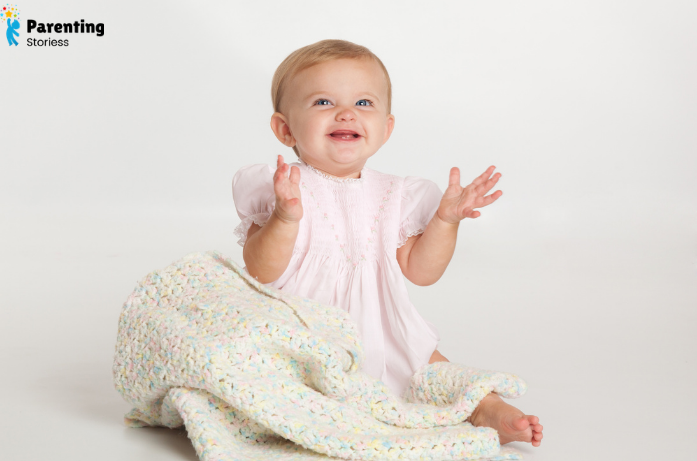
The first time your baby brings those tiny hands together can feel like such a big moment. If you are wondering when do babies start clapping, many babies begin trying somewhere in the later part of the first year, often around 8 to 10 months. Some start earlier, while others take a little longer.
What looks like a simple clap actually takes quite a bit of coordination. Your baby needs to watch you, bring both hands toward the middle of the body, copy the movement, and eventually understand that clapping can be part of play and communication.
And once they discover it, don’t be surprised if suddenly everything deserves applause.
Table of Contents
- When Do Babies Start Clapping?
- Clapping Usually Starts Before the Perfect Clap
- Why Is Clapping an Important Baby Skill?
- Signs Your Baby May Be Getting Ready to Clap
- Simple Ways to Encourage Your Baby to Clap
- What If My Baby Is 9 Months and Not Clapping?
- What About Babies Born Prematurely?
- Clapping, Waving and Pointing: Which Comes First?
- When Should I Mention Clapping to the Pediatrician?
- Frequently Asked Questions
When Do Babies Start Clapping?
Most babies start trying to clap somewhere between 8 and 12 months, but there really isn’t one perfect age for it.
Some little ones figure it out around 7 or 8 months, while others take their time and start closer to their first birthday. That can still be completely normal.
In the beginning, the clap may look a little funny. Your baby might tap one hand against the other, bring their fists together, or miss completely. Those tiny attempts are still part of learning.
So if another baby is already clapping and yours isn’t, try not to worry too much. Babies pick up new skills at their own pace, and sometimes they are busy working on something else first.
Babies develop different skills at different speeds.
Clapping Usually Starts Before the Perfect Clap
Clapping usually develops little by little rather than appearing perfectly all at once. At first, your baby may simply bring both hands toward the middle of their body, tap one hand against the other, or make a clapping-like movement without really meaning to.
As their coordination improves, they often start watching your hands more closely and trying to copy what you do. You may notice them attempting a clap during songs, games like pat-a-cake, or when everyone around them is cheering.
Later, clapping becomes more purposeful. Your baby may clap when they feel excited, hear “yay,” or see someone else clapping. This shows growing hand coordination, imitation, and social communication, because they are starting to understand that gestures can have meaning.
According to Pathways, clapping can be part of a baby’s growing motor coordination, imitation, and social interaction as they learn to copy the people around them.
Why Is Clapping an Important Baby Skill?
Clapping isn’t just cute.
It brings together several developing abilities.
Your baby uses:
- Hand-eye coordination
- Both sides of the body together
- Imitation
- Attention
- Social interaction
- Early communication
To clap, your baby first has to notice what you’re doing.
Then they have to figure out how to make their own hands copy that movement.
When you smile, clap back, or cheer, your baby also learns that actions can get a response from other people.
That makes clapping both a motor and social skill.
When Do Babies Learn to Clap?
If you’re wondering when do babies learn to clap, the learning begins long before the first clear clap.
Around 4 to 6 Months
Your baby may spend a lot of time discovering their hands.
They may grab toys, bring their hands to their mouth, reach for objects, or hold something with both hands.
Around 6 to 8 Months
Coordination often becomes stronger.
You may notice your baby banging toys together or bringing both hands toward the middle of the body.
This is wonderful preparation for clapping.
Around 8 to 12 Months
Many babies become more interested in copying gestures and playing simple social games.
This is often when clapping, waving, pointing, and similar movements begin to appear.
There is still plenty of variation, though.
Signs Your Baby May Be Getting Ready to Clap
Before the first real clap, you may notice a few little clues.
Your baby might:
- Bang two toys together
- Slap both hands on a table
- Bring their hands together at the middle
- Watch you clap closely
- Copy simple movements
- Reach for your hands
- Enjoy songs with gestures
- Wave or attempt other hand movements
These signs don’t mean your baby must start clapping immediately.
They simply show that some of the skills needed for clapping are developing.
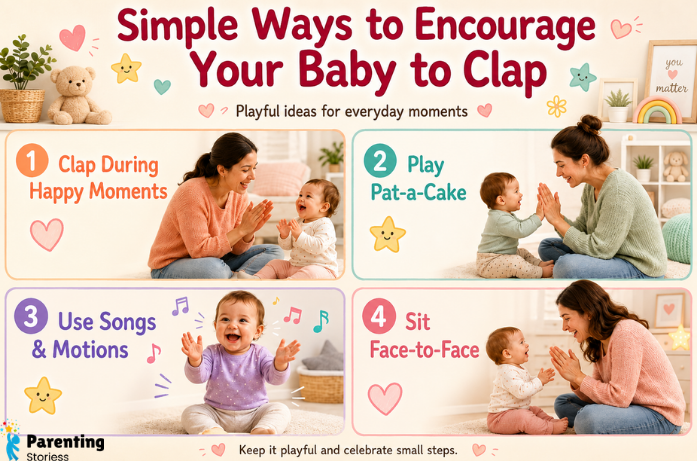
Simple Ways to Encourage Your Baby to Clap
You don’t need special toys or formal lessons to help your baby learn to clap. Most babies pick up this skill through simple, everyday play and by watching the people around them.
The more relaxed and fun the moment feels, the more likely your baby is to stay interested and try copying you.
Clap During Happy Moments
Clap when something fun happens, like when your baby finds a toy, finishes a little game, or makes you laugh. Smile and say something simple like, “Yay!”
This helps your baby connect clapping with excitement and positive attention. Over time, they may start trying to copy the movement on their own.
Play Pat-a-Cake
Sit facing your baby and slowly clap while singing or saying pat-a-cake. Keep your movements easy to follow so your baby can clearly watch what your hands are doing.
If they seem interested, you can gently bring their hands together once or twice. Keep it playful and stop if they pull away or lose interest.
Use Songs With Hand Movements
Songs with clapping and simple hand gestures are a fun way to encourage imitation. Babies often enjoy rhythm and repetition, even if they don’t copy you right away.
Your baby may simply watch at first, and that is still learning. After hearing and seeing the same movements many times, they may suddenly surprise you with their own little clap.
Sit Face-to-Face
Sit close to your baby so they can clearly see your face and hands. Clap slowly and say, “Clap, clap,” while smiling and making eye contact.
After a few claps, pause and give your baby time to respond. That quiet moment gives them a chance to process what they saw and try the movement themselves.
When Do Babies Clap Their Hands on Purpose?
If you’re asking when do babies clap their hands intentionally, it often happens after some early accidental or copied movements.
You might notice the difference when your baby begins clapping in certain situations.
Maybe they clap after you say “good job.”
Maybe they clap during a favorite song.
Or perhaps they clap because everyone else around them is doing it.
At this point, your baby is beginning to understand that gestures can have meaning.
What If My Baby Claps With One Hand?
Early clapping can look very uneven.
One hand may stay almost still while the other moves toward it.
Your baby may also clap with curled fingers, fists, or the sides of the hands.
That is usually part of learning the movement.
Coordination becomes smoother with practice.
However, if you notice your baby consistently avoids using one hand or one side of their body for many activities, mention it to your pediatrician.
What If My Baby Claps but Makes No Sound?
That can be completely normal.
A baby’s first clap doesn’t have to make a loud sound.
Their palms may barely touch, their hands may meet at an angle, or their fingers may still be curled.
The important part is that they are learning to bring both hands together.
The familiar clapping sound often comes later as coordination improves.
What If My Baby Is 9 Months and Not Clapping?
If your 9-month-old isn’t clapping yet, it doesn’t automatically mean something is wrong. Babies often focus on different skills at different times, and clapping may simply come a little later.
Instead of looking at clapping alone, notice your baby’s overall development. Are they reaching for toys, using both hands, making sounds, smiling at you, or trying to copy simple movements?
Your baby may also be putting most of their energy into learning to crawl, sit, or pull themselves up. Development rarely follows the exact same order for every baby, so a little variation is completely normal.
What About Babies Born Prematurely?
If your baby arrived early, milestone timing may look a little different.
Doctors often use corrected age during the first couple of years when thinking about development.
For example, if your baby was born two months early and is 10 months old by birth date, their corrected developmental age may be closer to 8 months.
That can make comparisons with full-term babies confusing.
Your pediatrician can help you understand which age is most useful when looking at milestones.
Clapping, Waving and Pointing: Which Comes First?
There is no fixed order.
One baby may wave first.
Another may clap constantly but show no interest in waving.
Pointing may develop later as communication becomes more purposeful.
The important thing is that your baby gradually becomes more interested in interacting, copying, and communicating with the people around them.
Everyday Activities That Build Clapping Skills
You can support hand coordination through regular play.
Try activities such as:
- Banging soft blocks together
- Passing toys between hands
- Playing peekaboo
- Rolling a ball
- Singing action songs
- Splashing both hands in bathwater
- Playing pat-a-cake
- Letting baby copy your movements
Simple activities are often enough.
Your baby doesn’t need expensive milestone toys.
Your hands, voice, face, and attention are already wonderful learning tools.
When Should I Mention Clapping to the Pediatrician?
Not clapping by one specific month usually isn’t the main thing to watch.
It is more useful to look at your baby’s overall development. The CDC also recommends looking at a child’s overall social, communication, movement, and learning skills rather than focusing on one milestone alone.
Speak with your child’s healthcare provider if your baby has lost skills they previously had, rarely uses gestures or social interaction, isn’t using both sides of their body similarly, or if something about their development simply concerns you.
You don’t need to wait until you are sure something is wrong.
Parents notice small changes in their babies every day, and asking questions is part of good care.
Frequently Asked Questions
Final Thoughts
So, when do babies start clapping? Many babies begin experimenting with it during the later part of the first year, often somewhere around 8 to 10 months, while others take a little longer.
Try not to turn one tiny milestone into a deadline.
Your baby might be busy learning to crawl, babble, wave, pull up, or explore every object within reach.
Keep singing, playing, smiling, and clapping together.
And when those tiny hands finally meet and your baby looks incredibly proud of themselves, enjoy it.
These little moments happen quickly, and somehow they become some of the sweetest memories of the baby stage.
Want more simple baby milestone guides and everyday parenting tips? Explore more helpful stories and advice at Parenting Stories.
Disclaimer
This article is for general informational purposes only and is not a substitute for professional medical advice. If you have concerns about your baby’s development, speak with your pediatrician or healthcare provider.
About the Author
About the Author
Geeta Yogi is a parenting writer who shares practical and easy-to-understand guidance about baby milestones, early development, play, communication, and everyday parenting. Her writing focuses on helping parents understand their baby’s changing skills while enjoying the small developmental moments that make the first years so special.