
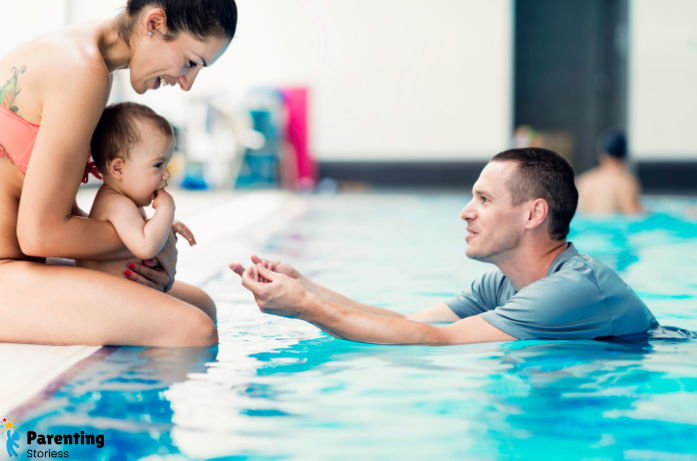
Written by a Caring Mom at Parenting Stories
That first pool day can feel like such a sweet milestone tiny swimsuit, little kicks, and maybe a surprised face when your baby first touches the water. But along with the excitement, it’s normal to wonder when can an infant go in a pool and whether your little one is truly ready.
For many families, around 6 months old is a comfortable time to start regular pool visits. Some younger healthy babies may also have a short dip in warm, clean water, as long as they are closely supervised and kept comfortable.
There isn’t one perfect age for every baby. Your baby’s health, the water temperature, how long you stay in, and how relaxed they seem in the pool all matter just as much as age.
When Can an Infant Go in a Pool?
For many parents asking when can an infant go in a pool, around 6 months old is a practical starting point.
At this age, babies are generally stronger, more alert, and better able to cope with temperature changes than newborns. Many also have improved head and neck control, which can make holding them in the water easier.
Cleveland Clinic also recommends waiting until around 6 months for a baby’s first pool experience, noting that better head control and improved temperature regulation can make swimming safer and easier to manage.
However, being ready to enter a pool and being ready for formal swim lessons are not exactly the same thing. Some younger babies may briefly enter a warm, clean pool with close adult supervision, while structured swimming lessons are usually introduced later.
If your baby was born prematurely, has health concerns, recently had an illness, or you are unsure they are ready, speak with your pediatrician first.
Pool Time and Swim Lessons Are Different
Holding your baby in warm pool water for a few minutes is very different from teaching them to swim.
Babies may kick, splash, or make natural movements in water, but this does not mean they can protect themselves from drowning.
Baby swimming classes are mainly about getting comfortable in water, enjoying movement, bonding with a parent, and slowly building confidence.
Even if your little one seems very comfortable in the pool, they still need close supervision every second.
When Can Babies Go in the Pool Before 6 Months?
Parents often ask when can babies go in the pool before six months because of summer holidays, vacations, or family pool days.
If your baby is younger, one of the biggest concerns is temperature. Very young babies lose body heat faster than adults, so a pool that feels refreshing to you may feel much colder to them.
Choose a warm, clean, properly treated pool and keep the visit short. Support your baby’s head and neck if needed and watch their reaction carefully.
If they begin shivering, seem unusually quiet, become fussy, or their skin feels cold, take them out and wrap them in a warm towel.
How Warm Should the Pool Be?
Warm water is usually best for babies.
Baby or teaching pools are usually a better choice for young infants because the water is often warmer than in large recreational pools. A temperature of around 31°C to 34°C (87°F to 94°F) is commonly used for baby swimming sessions and can help your little one stay comfortable for longer.
Even in a warm pool, keep an eye on how your baby is reacting. Babies can lose body heat quickly, so signs like shivering, cool or pale skin, bluish lips, unusual tiredness, or sudden fussiness can mean they are getting too cold.
If you notice any of these signs, take your baby out of the water, dry them well, and wrap them in a warm towel.
How Long Should a Baby Stay in the Pool?
For a baby’s first swim, 10 to 15 minutes may be enough.
Some babies love the water immediately, while others need a few visits to feel comfortable.
Do not measure success by how long you stay. A happy ten-minute swim is better than keeping a tired baby in the water for too long.
Pools can also be very stimulating because of splashing, noise, bright reflections, and lots of movement. If your baby starts rubbing their eyes, becoming clingy, fussing, or losing interest, it is probably time to get out.
When Can a Baby Go in a Pool Safely?
If you are wondering when can a baby go in a pool, think about your baby’s overall condition that day, not only their age.
Before entering the water, check that:
- Your baby is healthy and comfortable
- The pool is clean and well maintained
- The water is warm enough
- You can stay close and hold your baby
- Your baby is rested and calm
- You have dry clothes and towels ready
If your baby is sick, very tired, hungry, or having a difficult day, it is fine to try again another time.
Be Careful With Baby Floats
Baby floats can look convenient, but they may give parents a false sense of security.
A float should never be treated as something that allows you to step away. According to the American Academy of Pediatrics, babies should always have close, hands-on supervision around water because even a small amount of water can be dangerous for an infant.
For a first swim, your arms are often the most reassuring place for your baby anyway. Hold them against your chest while entering the water and let them adjust slowly.
Talk softly, smile, and keep movements gentle. Babies often take emotional cues from us, so staying calm can help them feel safer too.
What Should My Baby Wear in the Pool?
A proper swim diaper is usually essential.
Regular diapers absorb water and quickly become heavy and uncomfortable.
Swim diapers are made for the pool, but they are not completely leak-proof. They may help contain solid waste for a short time, but germs can still enter the water.
Check the diaper regularly and change it in a proper changing area.
If your baby has diarrhea, skip swimming that day.
A comfortable swimsuit or rash guard is also useful, especially outdoors.
Rinse Before and After Swimming
A quick rinse before entering the pool helps wash away sweat, dirt, lotions, and oils.
After swimming, rinse your baby’s skin again with clean water to remove pool chemicals.
Pat their skin dry gently and apply their usual mild moisturizer if needed.
When Can Infants Go Swimming in Public Pools?
Parents asking when can infants go swimming in public pools should also look at the quality of the swimming facility.
The CDC also reminds families that recreational water can carry both illness and injury risks, so choosing a well-maintained pool and following healthy swimming habits are important parts of keeping little swimmers safe.
Before going, check:
- Whether babies are allowed
- Whether a warm baby pool is available
- Swim-diaper requirements
- Changing facilities
- Pool cleanliness
- Whether quieter family sessions are offered
A quieter session can be helpful for the first visit because busy pools may feel overwhelming to a baby.
What About Kiddie Pools at Home?
Small inflatable pools may look safer because they are shallow, but they still require constant supervision.
They can also become dirty quickly because many do not have filtration or proper disinfection.
Empty the water after use, clean the pool, rinse it, and let it dry.
Do not leave a filled kiddie pool sitting in the yard when nobody is using it.
What About Beaches, Lakes, and Rivers?
Natural water needs extra caution.
At a beach, lake, or river, you also need to think about waves, currents, water quality, changing depth, rocks, cold temperatures, and weather conditions.
Keep your baby very close and avoid rough or cold water.
Never encourage them to drink or swallow natural water.
Protect Your Baby From the Sun
Outdoor swimming means thinking about sun protection too.
Whenever possible, use shade and avoid long periods in strong midday sun.
A long-sleeved rash guard or UV-protective swimsuit can provide extra coverage, and a sun hat is helpful when your baby is out of the water.
For very young babies, shade and protective clothing should be the main protection. Follow your pediatrician’s guidance about sunscreen for your baby’s age.
Do Not Take a Sick Baby Swimming
Skip the pool if your baby has:
- Fever
- Vomiting
- Diarrhea
- Significant tiredness
- An illness causing discomfort
- An open wound that cannot be properly covered
Diarrhea is especially important because germs can spread through pool water even when a swim diaper is being used.
There will always be another swimming day.
What to Pack for Baby’s First Swim
A simple swim bag can include:
- Two or more swim diapers
- Baby swimsuit or rash guard
- Two towels
- Dry diaper
- Full change of clothes
- Wet bag
- Feeding supplies
- Changing mat
- Sun hat
- Familiar toy
- Baby moisturizer if normally used
Keep the dry clothes somewhere easy to reach so you can warm your baby quickly after swimming.
How to Make the First Swim Easier
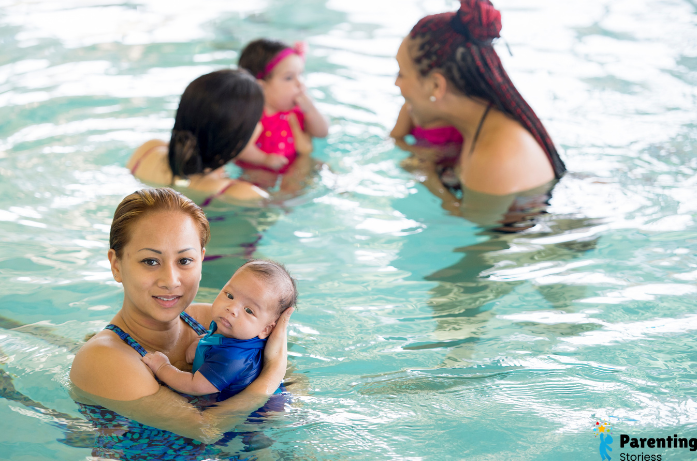
Take things slowly. Hold your baby against your chest as you enter the water. Let their feet touch the water first and give them time to look around.
You can gently splash their legs, sway from side to side, or quietly talk to them.
Do not rush into floating exercises or putting water over their face.
If your baby becomes upset, hold them close. If they keep crying, get out and try again another day.
A difficult first swim does not mean your child will always dislike water.
Can Babies Learn to Swim?
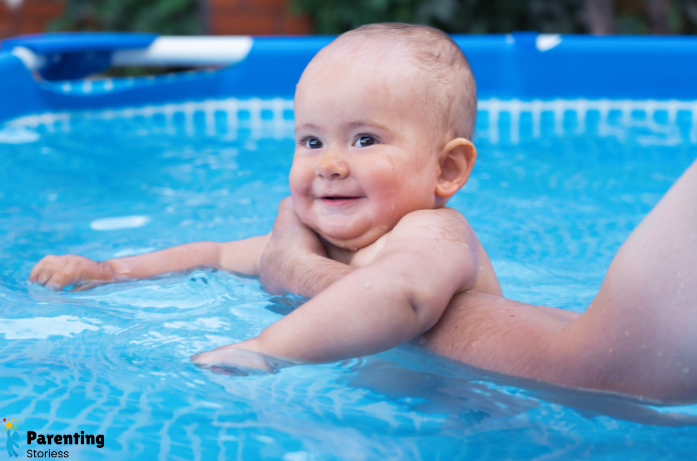
Babies can become familiar with water, but they cannot be considered independent swimmers.
Swimming lessons may help build confidence, comfort, and basic water awareness, but they do not make a baby drown-proof.
Parents should continue using the same level of supervision regardless of how many swimming classes their child has attended.
During infancy, the main goals are simple: comfort, bonding, gentle movement, and positive experiences around water.
Final Thoughts
For many families, around 6 months old is a comfortable time to begin regular pool visits or baby swimming activities. Younger healthy babies may sometimes have a short experience in warm, clean water, but they need extra care with temperature and time in the pool.
Start slowly, keep your baby close, choose warm water, and stay within arm’s reach.
Do not worry if the first visit lasts only a few minutes. Some babies kick and splash immediately, while others would much rather stay wrapped in a towel in Mom’s arms.
Both reactions are perfectly normal.
There will be plenty of swimming days ahead. For now, keeping your baby safe, warm, comfortable, and close to you is more than enough.
FAQs
1. When can an infant go in a pool?
Many families start regular pool visits around 6 months old, though some healthy younger babies may have a short swim in warm, clean water with close supervision.
2. How long can a baby stay in a pool?
For a first swim, 10 to 15 minutes is often enough. Take your baby out sooner if they seem cold, tired, or fussy.
3. What temperature should a baby pool be?
Warm water around 31°C to 34°C (87°F to 94°F) is generally more comfortable for young babies.
4. Do babies need a swim diaper?
Yes. A proper swim diaper is better than a regular diaper because it does not become heavy with pool water.
5. Can babies use floats in the pool?
Floats can be used carefully, but they should never replace adult supervision. Always stay close enough to reach your baby immediately.
Explore more gentle, practical parenting tips at Parenting Stories to make every new milestone feel a little easier.
Disclaimer
This article is for general information only and is not a substitute for medical advice. Always speak with your pediatrician if you have concerns about your baby’s health or readiness for swimming.