

Written by a Caring Mom at Parenting Stories
A baby neck rash usually happens when drool, milk, sweat, or moisture gets trapped inside those soft little neck folds. The skin can turn red, bumpy, or sore, especially when the area stays damp for too long. In many cases, keeping the neck clean, dry, and cool can help, but if the rash is spreading, oozing, painful, or just not getting better, it is a good idea to call your pediatrician.
I remember noticing a red patch under my baby’s chin and thinking, how did I not see that earlier? Those tiny folds can hide milk and spit-up so easily, especially when babies are still too little to hold their heads up for long.
A rash on baby neck can have a few different causes, like drooling, heat, sensitive skin, eczema, or sometimes yeast. The good thing is that once you know what to look for, it becomes much easier to care for the skin gently and avoid making it more irritated.
Table of Contents
- What Does a Baby Neck Rash Look Like?
- Common Causes of Rashes on Baby’s Neck
- Quick Baby Neck Rash Guide
- How to Care for Baby Neck Rash at Home
- What Can I Put on Baby Rash on Neck?
- How Can I Prevent Rash Under Baby Neck?
- When Should I Call the Pediatrician?
- How Long Does Baby Neck Rash Take to Improve?
- Frequently Asked Questions
- Final Thoughts
What Does a Baby Neck Rash Look Like?
A neck rash may appear as pink or red patches, tiny bumps, rough skin, or moist-looking irritation inside the neck creases.
On darker skin tones, inflammation may look darker, purple, grayish, or simply different from the surrounding skin rather than bright red.
Also pay attention to how your baby feels. A small rash in an otherwise happy baby is different from one accompanied by fever, poor feeding, swelling, or unusual sleepiness.
Common Causes of Rashes on Baby’s Neck
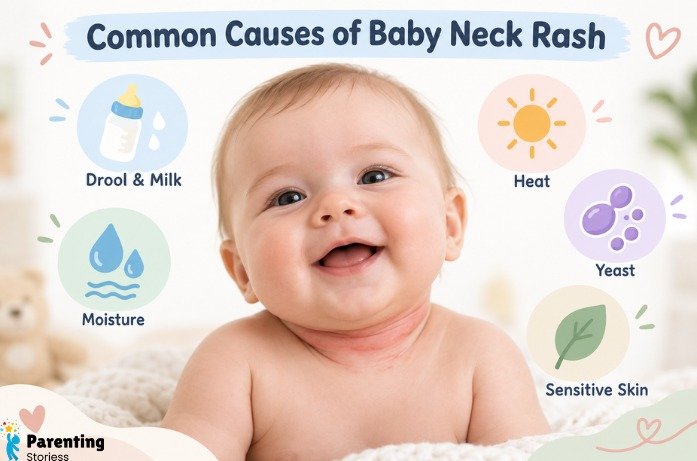
A baby’s neck can become irritated for several reasons, and sometimes more than one thing is involved at the same time. The most common triggers are moisture, heat, friction, sensitive skin, and occasionally yeast.
Baby rashes can have many different causes, from simple skin irritation to eczema or infection, so the appearance alone does not always tell you exactly what is going on. The Cleveland Clinic’s guide to skin rashes in children explains some of the common types parents may come across.
Drool, Milk, and Spit-Up
Drool is one of the most common causes of rashes on baby’s neck, especially during stages when babies are drooling more than usual.
Saliva, breast milk, formula, and spit-up can easily run under the chin and collect inside the neck folds. When that moisture stays against the skin, it may cause redness, small bumps, or a sore-looking patch.
If your baby drools heavily or spits up often, gently check the neck after feeds and pat away any moisture rather than rubbing the skin.
Moisture and Friction
A rash under baby neck can also happen when damp skin repeatedly rubs against another skin fold.
This type of irritation is often called intertrigo. It tends to develop in warm, moist areas and may make the skin look red, tender, shiny, or slightly raw.
Keeping the area clean and dry can help mild irritation, but if the skin becomes very sore, cracked, or does not improve, it is best to speak with your baby’s doctor.
Heat Rash
Babies can overheat more easily than adults, especially during hot weather or when they are wearing too many layers.
Sweat may collect around the neck and block tiny sweat ducts, causing small bumps known as heat rash. You may also notice similar bumps on the chest, back, or around the hairline.
Lightweight clothing, a comfortable room temperature, and keeping sweaty folds dry can help reduce irritation.
The Mayo Clinic’s guide to common baby rashes also recommends keeping babies cool and using lightweight clothing when heat rash is a concern.
Yeast Infection
Warm, damp neck folds can sometimes allow yeast to grow, particularly when the area stays moist for long periods.
A yeast rash may look bright red, shiny, or irritated and can sometimes have smaller spots around the edges of the main rash.
Because a yeast rash can look similar to ordinary moisture irritation, it is better not to diagnose it from photos online.
If the rash keeps spreading, has an unusual smell, becomes very sore, or does not improve, ask your pediatrician to check it.
Eczema or Sensitive Skin
A rash on baby neck can sometimes be linked to eczema or naturally sensitive skin.
Eczema often causes dry, rough, itchy, or scaly patches and may also appear on the cheeks, arms, legs, or other areas of the body.
Sweat, drool, fragranced soaps, laundry detergents, and rough fabrics can all make sensitive skin more irritated.
Keeping baby skincare simple can help too. Johns Hopkins Medicine’s newborn skin guide recommends fragrance-free, hypoallergenic products and avoiding unnecessary perfumes and dyes on delicate newborn skin.
If the rash appeared after you started using a new product, think back to what changed recently. Sometimes switching back to a gentler, fragrance-free product can help you identify the trigger.
Quick Baby Neck Rash Guide
| What You Notice | Possible Cause |
| Red, damp skin inside folds | Moisture and friction |
| Tiny bumps after sweating | Heat rash |
| Redness around chin and neck | Drool irritation |
| Dry or rough patches | Eczema or sensitive skin |
| Bright red or shiny rash with small surrounding bumps | Possible yeast |
| Oozing, crusting, swelling, or sores | Possible infection |
This is only a general guide. Baby rashes can look alike, so speak with your pediatrician if you are unsure.
How to Care for Baby Neck Rash at Home
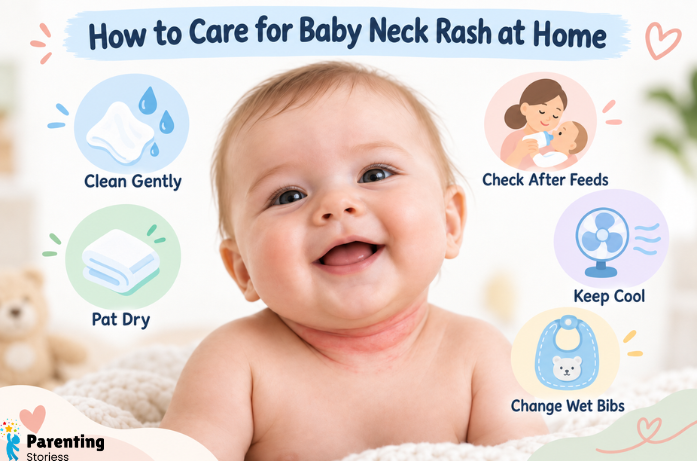
If the rash looks mild and your baby seems otherwise well, gentle skin care is usually a good place to start. The main goal is to keep the area clean, dry, cool, and free from extra rubbing.
Gently Clean the Neck Folds
Use lukewarm water and a soft, clean cloth to remove drool, milk, spit-up, or sweat from your baby’s neck.
There is no need to scrub the skin, even if dried milk has collected in the folds. Rubbing can make irritated skin feel more sore.
If you use a cleanser, choose a mild, fragrance-free baby wash and use only a small amount.
Pat the Skin Completely Dry
After cleaning, make sure the folds are fully dry.
Moisture can stay hidden deep inside the creases, even when the skin around the neck already feels dry.
Use a soft towel and gently pat the area instead of rubbing. Taking a few extra seconds to dry each fold can help prevent the rash from staying damp.
Check the Neck After Feeding
Milk and spit-up can easily run under your baby’s chin without you noticing.
After feeds, especially if your baby drools heavily or spits up often, take a quick look inside the neck folds.
Wipe away any moisture, pat the skin dry, and change a damp bib or outfit if needed. This simple habit can reduce how long moisture sits against the skin.
Keep Your Baby Cool and Comfortable
Heat and sweating can make a neck rash worse.
Dress your baby in soft, lightweight, breathable clothing and avoid adding too many layers.
If your baby’s neck feels sweaty, gently clean and dry the folds. A few minutes of supervised airflow after a bath or clothing change can also help the area stay dry.
Change Wet Bibs Often
Bibs are useful for catching drool and milk, but once they become damp, they can keep moisture pressed against the skin.
Change wet bibs regularly and choose soft, absorbent fabrics when possible.
Also remove bibs before naps and nighttime sleep for safety.
What Can I Put on Baby Rash on Neck?
What you put on a baby rash on neck depends on what is causing it, so it is best not to reach for the strongest cream first.
For mild drool or moisture irritation, a pediatrician may recommend a thin layer of a simple barrier ointment to help protect the skin from saliva, milk, and friction. Fragrance-free products made for sensitive baby skin are usually the gentler choice.
Heat rash is a little different. Thick or greasy creams can sometimes trap more heat and sweat, so keeping your baby cool and the skin dry may be more helpful than adding ointment.
For heat-related rashes, Medline Plus recommends a cooler, less humid environment and notes that heavy creams or ointments may trap warmth and block the pores.
I would also avoid using steroid, antifungal, or antibiotic creams unless your baby’s healthcare provider has recommended them for that specific rash.
If you are not sure what kind of rash your baby has, start with the basics: gently clean the folds, pat them dry, reduce moisture, and watch for improvement. If the area becomes more red, painful, weepy, or keeps getting worse, let your pediatrician take a look.
What Should I Avoid?
Baby skin is delicate, especially when it is already irritated.
Avoid harsh soaps, heavily fragranced lotions, essential oils, vigorous rubbing, strong wipes, and trying several new products at once.
I would also avoid using talcum or baby powder around your baby’s neck because airborne powder can be inhaled.
“Natural” does not always mean safe for sensitive or broken baby skin.
Keeping things simple is usually best.
How Can I Prevent Rash Under Baby Neck?
You may not be able to prevent every rash under baby neck, but a few small habits can lower the chance of irritation.
Check the neck folds after feeding, bathing, heavy drooling, or sweating, and gently remove any milk, spit-up, or moisture that has collected there.
Change damp bibs and clothing quickly, dress your baby in soft, breathable fabrics, and avoid overdressing, especially in warm weather.
If your baby has sensitive skin, fragrance-free soaps, lotions, and laundry products may be less irritating.
The easiest rule to remember is: Keep the area clean, dry, cool, and gentle.
What If the Rash Keeps Coming Back?
If a neck rash baby develops repeatedly, look for a pattern.
Does it appear after feeding? During hot weather? After wearing a certain outfit? Did it begin after changing detergent or lotion?
Noticing these small details can help identify the trigger.
Recurring rashes are also worth mentioning to your pediatrician, especially if your baby has other areas of dry or irritated skin.
When Should I Call the Pediatrician?
Contact your baby’s healthcare provider if:
- the rash keeps getting worse
- it spreads beyond the neck
- the skin becomes swollen or painful
- you see pus, sores, blisters, or yellow crusting
- there is an unusual smell
- your baby feeds poorly or seems unusually sleepy
- the rash keeps returning
- it does not improve with gentle care
Seek prompt medical advice if your baby develops a fever, especially if they are younger than 3 months.
A temperature of 38°C (100.4°F) or higher in a baby under 3 months needs prompt medical evaluation.
Seek urgent help if your baby has trouble breathing, becomes difficult to wake, or develops sudden swelling around the mouth or throat.
How Long Does Baby Neck Rash Take to Improve?
A mild rash caused by drool, heat, or trapped moisture may start improving once the skin stays cleaner and drier.
Rather than watching the calendar, look for improvement.
The redness should gradually decrease, the irritated area should become smaller, and your baby should seem comfortable.
If the rash continues getting worse or does not improve after a few days of gentle care, have it checked instead of repeatedly trying different creams.
Frequently Asked Questions
Final Thoughts
A baby neck rash can look worrying, but mild irritation is very common because those tiny folds easily hold milk, drool, sweat, and moisture.
Start with gentle care: keep the area clean and dry, change wet bibs, avoid overheating, and use mild products.
If the rash becomes painful, spreads, keeps returning, or your baby seems unwell, contact your pediatrician.
Those little neck folds can hide more than we realize. A quick daily check and some gentle care may be all your baby’s skin needs to feel comfortable again.
If this guide helped you, explore more gentle baby-care tips on Parenting Stories to make everyday parenting a little easier.
Disclaimer
This article is for general educational purposes only and does not replace professional medical advice, diagnosis, or treatment. Contact your pediatrician or another qualified healthcare professional if you are concerned about your baby’s skin or health.