Written by a caring mom at parenting stories
Teaching children to care for the environment doesn’t have to start with big lessons or complicated science projects. Simple everyday activities like planting seeds, exploring nature, recycling household items, and saving water can help kids understand how their actions affect the world around them.
As a mom, I believe children learn best when they can explore, ask questions, and discover things for themselves. That’s why environmental activities for kids are a wonderful way to build curiosity, encourage responsibility, and develop a love for nature from an early age.
Whether you have a backyard, a small balcony, or a nearby park, there are plenty of fun, affordable ways to introduce environmental learning at home. In this guide, I’m sharing 15 easy and engaging activities that help children learn about nature, practice eco-friendly habits, and enjoy meaningful family time while caring for our planet.
Why Are Environmental Activities Important for Kids?
Children understand the world best through hands-on experiences. When they plant a seed or watch a butterfly, environmental learning becomes something they can see and enjoy.
These activities help children:
- Develop curiosity about plants, animals, and nature.
- Learn simple habits like recycling and saving water.
- Build responsibility and problem-solving skills.
- Develop kindness toward living things.
- Spend more time outdoors and away from screens.
The goal isn’t to make children worry about environmental problems. It’s to help them appreciate nature and understand that small actions matter.
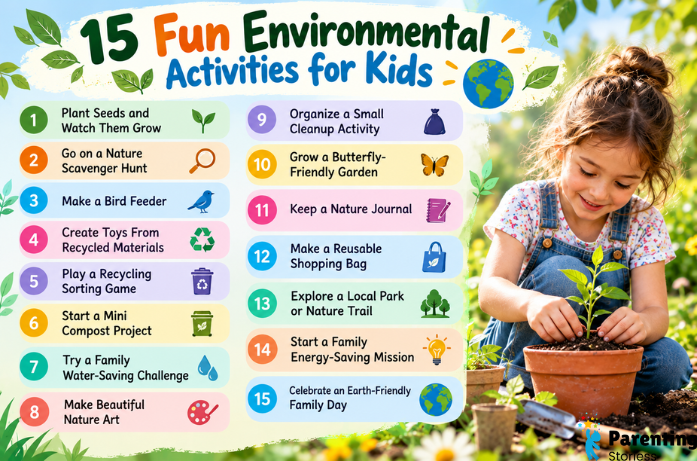
15 Fun Environmental Activities for Kids
Teaching children about the environment can be fun and simple. These environmental activities for kids help little ones explore nature, understand the importance of protecting our planet, and develop eco-friendly habits through everyday experiences.
1. Plant Seeds and Watch Them Grow
Best for: Ages 3 and up
Planting seeds is a simple way to teach children how plants grow. Give your child a small pot, soil, and seeds like beans or sunflowers. Let them plant the seeds, water the soil, and place the pot in a suitable sunny spot.
Encourage your child to check the plant regularly and notice new leaves. This activity teaches patience, responsibility, and the importance of sunlight and water for plant growth.
2. Go on a Nature Scavenger Hunt
Best for: Ages 3–10
Turn a regular outdoor walk into a fun learning adventure. Make a small list of natural things for your child to find, such as colorful leaves, flowers, birds, smooth stones, or butterflies.
Encourage your child to observe different shapes, colors, and textures without disturbing plants or animals. This is one of the easiest nature activities for kids to develop curiosity and observation skills.
3. Make a Bird Feeder
Best for: Ages 5 and up
Making a bird feeder helps children learn about local birds and their feeding habits. Reuse a clean container to create a simple feeder, with an adult handling any cutting. Fill it with food suitable for local birds and place it somewhere safe.
Let your child watch visiting birds and notice their colors and behavior. Clean the feeder regularly and follow local wildlife guidance, as feeding wild birds isn’t recommended everywhere.
4. Create Toys From Recycled Materials
Best for: Ages 3–9
Instead of throwing away cardboard boxes, paper tubes, and clean packaging, encourage your child to turn them into creative toys. They can make a toy car, robot, dollhouse, or pretend shop using simple household materials.
These eco friendly activities for kids encourage imagination and teach children how reusing old materials can reduce unnecessary waste.
5. Play a Recycling Sorting Game
Best for: Ages 4–10
Make recycling interesting by turning it into a sorting game. Collect clean paper, cardboard, and empty plastic containers, then prepare separate boxes labeled according to your local recycling rules.
Ask your child to sort each item into the correct box. Explain why certain materials can be recycled and how proper waste sorting helps keep reusable resources out of the rubbish.
6. Start a Mini Compost Project
Best for: Ages 6 and up
Composting is a wonderful way to show children how natural waste breaks down. Set up a small compost container and add dry leaves, vegetable scraps, and shredded plain cardboard. Avoid meat, dairy, and oily foods.
Let your child observe how the materials change over time. Explain that tiny organisms help break down organic matter, eventually producing compost that can improve garden soil.
7. Try a Family Water-Saving Challenge
Best for: Ages 3 and up
Teach children the importance of conserving water through simple daily habits. Encourage them to turn off the tap while brushing their teeth, report leaking faucets, and use only the water plants need.
Create a small weekly chart to celebrate their efforts. For more educational ideas, parents can explore the EPA’s Kids’ Corner, which offers resources about water conservation and protecting the environment.
Create a small weekly chart to celebrate their efforts. This activity helps children understand that clean water is valuable and that everyday choices can help conserve it.
8. Make Beautiful Nature Art
Best for: Ages 3–8
Nature offers wonderful materials for creative activities. Take your child outside to collect a few fallen leaves, twigs, or safe natural objects where collecting is allowed. Use them to create flowers, animals, or colorful pictures.
You can also try leaf rubbing with paper and crayons. This activity develops creativity while helping children appreciate the different colors, shapes, and textures found in nature.
9. Organize a Small Cleanup Activity
Best for: Ages 6 and up
A neighborhood cleanup is a practical way to teach children about litter and pollution. Choose a safe area near your home or a local park, and bring gloves and rubbish bags.
Let children collect only safe litter under close adult supervision. Never allow them to handle broken glass, sharp objects, or unfamiliar waste. Explain how keeping public spaces clean helps protect wildlife and the environment.
10. Grow a Butterfly-Friendly Garden
Best for: Ages 4 and up
Creating a butterfly-friendly garden helps children understand the importance of pollinators. Choose flowering plants native to your area and let your child help plant and water them in a garden or suitable pots.
As butterflies and bees visit, encourage your child to observe them from a safe distance. Explain how pollinators help many plants produce seeds and fruits.
11. Keep a Nature Journal
Best for: Ages 5–12
Give your child a notebook to record interesting things they notice outdoors. They can draw birds, insects, flowers, or trees and write simple observations about the weather or changing seasons.
Encourage them to revisit the same outdoor space each week. This activity improves observation skills and helps children understand how nature changes over time.
12. Make a Reusable Shopping Bag
Best for: Ages 6 and up
Turn an old cotton T-shirt into a reusable shopping bag instead of throwing it away. Help your child make a simple no-sew bag, handling the cutting yourself, and let them decorate it with fabric markers.
Encourage your child to use their handmade bag for carrying lightweight shopping items. This teaches them how reusing everyday materials can help reduce waste.
13. Explore a Local Park or Nature Trail
Best for: All ages
A family nature walk is an easy way to introduce children to the environment. Visit a nearby park, garden, or nature trail and encourage your child to observe birds, insects, trees, and flowers.
Ask simple questions about where animals live or how plants grow. These outdoor experiences build curiosity, encourage physical activity, and help children develop respect for nature.
14. Start a Family Energy-Saving Mission
Best for: Ages 4–10
Help children understand energy conservation by involving them in simple household habits. Encourage them to switch off unnecessary lights, turn off the television when nobody is watching, and use natural daylight when possible.
Make it a fun family challenge and explain that saving electricity can help reduce the resources needed to power our homes. Adults should always handle electrical plugs and appliances.
15. Celebrate an Earth-Friendly Family Day
Best for: All ages
Choose one day each month to enjoy simple environmental activities as a family. You could plant flowers, repair old toys, create crafts from reused materials, or explore a nearby nature trail.
Let your child choose an activity and talk about what they learned afterward. This family tradition makes environmental learning enjoyable and encourages children to develop caring habits over time.
Environmental Activities for Children by Age
Choosing age-appropriate activities makes learning easier and more enjoyable.
| Age group | Recommended activities |
| Toddlers (2–3 years) | Watering plants, observing birds, exploring safe natural textures |
| Preschoolers (4–5 years) | Planting seeds, leaf art, scavenger hunts, simple sorting games |
| Kids (6–9 years) | Recycling projects, composting, nature journals, supervised cleanups |
| Older kids (10–12 years) | Wildlife observation, energy-saving projects, family conservation activities |
Every child develops differently, so adjust activities to their interests and abilities. Always supervise activities involving water, tools, small objects, or unfamiliar outdoor materials.
How to Teach Kids to Care for the Environment Every Day
Teaching children to care for the planet starts with simple everyday habits. Small actions at home can help kids understand environmental responsibility naturally.
1. Lead by Example
Children learn by watching their parents. Use reusable bags, save water, and avoid wasting food. Explain these choices in simple words so your child understands why they matter.
2. Make Environmental Learning Fun
Turn everyday lessons into enjoyable activities like recycling games, gardening, or nature walks. Encourage questions and let your child explore at their own pace.
3. Build Small, Consistent Habits
Start with simple tasks like turning off lights, saving water, or reusing paper. Appreciate your child’s efforts and gradually introduce new habits to help them develop lasting eco-friendly routines.
Frequently Asked Questions
1. What are easy environmental activities for kids?
Planting seeds, nature walks, recycling games, leaf art, and water-saving challenges are simple activities children can enjoy at home.
2. How can I teach preschoolers about the environment?
Use hands-on activities like watering plants, observing insects, and sorting recyclable materials. Keep explanations short and playful.
3. What are some indoor eco-friendly activities for kids?
Children can create toys from cardboard, make reusable crafts, play recycling games, or grow small indoor plants.
4. How can children help protect the environment?
Children can save water, reduce waste, reuse materials, care for plants, and participate in safe, supervised cleanup activities.
Final Thoughts
Teaching children to care for the environment doesn’t have to be difficult. Simple activities like planting seeds, recycling, saving water, and exploring nature can help kids understand why protecting our planet matters.
Through fun environmental activities for kids, we can encourage curiosity, responsibility, and eco-friendly habits from an early age.
Remember, you don’t need expensive supplies or perfect plans. Start with small activities, follow your child’s interests, and celebrate their efforts.
At Parenting Stories, we believe that little lessons today can inspire children to become caring and responsible adults tomorrow.