
Written By a caring mom at Parenting Stories
Already 6 weeks pregnant? It’s a thrilling stage, but there must be many questions floating around in your mind regarding your body. At six weeks in pregnancy, your little baby is as big as a little pea and organs such as the brain and heart are developing.
You might begin experiencing some early pregnancy signs such as nausea, fatigue, sore breasts or bloating. Alternatively, you may not experience any symptoms and be curious whether it’s normal or not. Well, every pregnancy is unique and symptoms differ from one woman to another.
In this article at Parenting Stories, we will discuss everything you should know regarding your baby’s development, pregnancy symptoms, six week ultrasound and ways to feel comfortable.
What Happens at 6 Weeks in Pregnancy?
At six weeks pregnant, you’re in your second month and still in the first trimester. Your baby was likely conceived about four weeks ago, as pregnancy is counted from the first day of your last period.
During pregnancy week 6, your baby’s brain, spinal cord, and heart are developing rapidly. Meanwhile, rising pregnancy hormones like hCG and progesterone may cause nausea, tiredness, tender breasts, and mood changes.
Your uterus is also beginning to grow, although it’s too early for a visible baby bump. You may notice some bloating or mild cramping, but remember, every pregnancy is different, and having fewer symptoms can be completely normal.
Baby Development at 6 Weeks Pregnant
Your little one is still called an embryo, but some amazing changes are already happening.
How Big Is Your Baby?
At six weeks, your baby typically measures around 2–6 millimeters long, depending on the exact stage of development.
That’s approximately the size of a tiny pea.
Your baby has a curved, C-shaped body, with a relatively large head area and small structures that will eventually become arms and legs. According to Nemours KidsHealth, your baby’s brain and nervous system are developing rapidly at six weeks, while tiny limb buds and early facial structures are beginning to form.
Your Baby’s Heart Is Developing
One exciting milestone during week 6 of pregnancy is the development of early heart activity.
The heart begins as a simple tube and gradually becomes more complex.
Around this stage, cardiac activity may be visible during a transvaginal ultrasound.
However, if cardiac activity isn’t visible at exactly six weeks, it doesn’t automatically mean something is wrong. Your pregnancy may simply be earlier than expected.
Your healthcare provider may recommend another scan to check development.
Brain, Face, and Tiny Limbs
Your baby’s brain and spinal cord are developing rapidly.
Small structures that will become the eyes and ears are beginning to form, and tiny limb buds mark the early development of arms and legs.
The digestive and respiratory systems are also starting to develop.
It’s incredible how much happens before you can even feel your baby move.
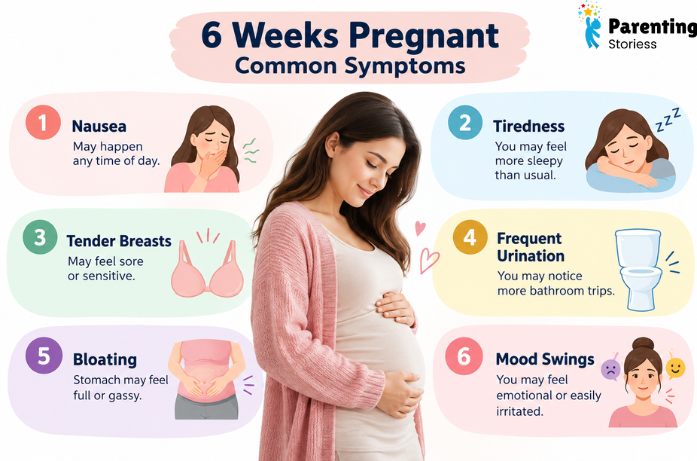
6 Weeks Pregnant Symptoms: What You Might Experience
At six weeks pregnant, rising hormone levels can bring noticeable changes to your body. Some moms experience several symptoms, while others barely notice anything. Both can be normal during early pregnancy.
The American Pregnancy Association explains that breast tenderness, swelling, heartburn, and occasional light spotting are among the changes some women may notice during the sixth week of pregnancy.
Here are six common 6 weeks pregnant symptoms and simple ways to manage them.
1. Morning Sickness and Nausea
Feeling sick to your stomach is common during week 6 of pregnancy, and it doesn’t always happen in the morning. You may feel nauseous at any time, especially when your stomach is empty or you’re around strong smells.
Eating small, frequent meals, keeping plain crackers nearby, and sipping water throughout the day may help settle your stomach. Ginger may also provide some relief. If you’re vomiting repeatedly or cannot keep fluids down, contact your healthcare provider.
2. Extreme Tiredness
Feeling exhausted even after a good night’s sleep? Early pregnancy fatigue is common because rising progesterone levels can make you sleepy, while your body works hard to support your growing baby.
Try going to bed a little earlier, taking short breaks, and eating balanced meals to maintain your energy. Don’t feel guilty about resting when your body needs it.
3. Tender or Swollen Breasts
Your breasts may feel heavier, sore, or more sensitive than usual. You might also notice darker areolas or more visible veins as pregnancy hormones prepare your breasts for breastfeeding.
Wearing a soft, supportive bra and avoiding tight clothing can make you more comfortable. Breast tenderness often becomes less noticeable as pregnancy progresses.
4. Frequent Urination
Are you suddenly making more bathroom trips? During early pregnancy, hormonal changes and increased blood flow to your kidneys cause your body to produce more urine.
Continue drinking enough water throughout the day, and avoid holding your urine for too long. If you notice burning, pain, or fever, contact your doctor, as these may indicate a urinary tract infection.
5. Bloating and Mild Cramping
You may notice your stomach feeling unusually full or tight, even though your baby is still tiny. Rising progesterone slows digestion, which can lead to gas, bloating, and constipation. Mild cramping can also occur during early pregnancy.
Drinking water, eating fiber-rich foods, having smaller meals, and taking gentle walks may ease discomfort. However, severe, worsening, or one-sided abdominal pain needs urgent medical attention.
6. Mood Swings and Food Aversions
One moment you’re excited about your pregnancy, and the next you’re feeling emotional or irritated. You might also suddenly dislike foods or smells you normally enjoy. These changes are often linked to fluctuating pregnancy hormones.
Give yourself time to rest, talk about your feelings with someone you trust, and choose nutritious foods you can comfortably tolerate. Remember, it’s okay to have emotional days during pregnancy.
Is It Normal to Have No Symptoms at 6 Weeks Pregnant?
Yes, having few or no symptoms at six weeks can be normal.
Some moms experience nausea and exhaustion almost immediately, while others feel much like their usual selves.
Symptoms may also come and go.
I know it can be tempting to compare your pregnancy with someone else’s, especially when reading pregnancy stories online.
But pregnancy symptoms alone cannot tell you whether your baby is developing normally.
If you’re concerned, speak with your healthcare provider rather than relying on symptom comparisons.
What Does a 6-Week Pregnant Belly Look Like?
At six weeks pregnant, you probably won’t notice a baby bump yet because your baby is still tiny and your uterus remains within your pelvis.
However, your stomach may feel a little fuller or your clothes might seem tighter than usual. This is often caused by bloating during early pregnancy, as hormonal changes slow down digestion and can lead to gas or constipation.
Don’t worry if your belly looks the same as before. Every pregnancy is different, and your baby bump will become more noticeable as your pregnancy progresses.
What to Expect at Your 6-Week Pregnancy Ultrasound
Your first ultrasound can be exciting, but it can also feel nerve-racking.
At around six weeks, a transvaginal ultrasound may show:
- Gestational sac: The fluid-filled structure surrounding the developing pregnancy.
- Yolk sac: A structure that supports early development.
- Fetal pole: The tiny developing embryo.
- Cardiac activity: Early heart activity that may be visible around this stage.
Not everything will necessarily be visible at exactly six weeks.
What If No Heartbeat Is Visible?
Try not to panic after one early scan.
Sometimes pregnancy dates are slightly inaccurate because ovulation happened later than expected.
Your doctor may recommend a repeat ultrasound, often after 7–14 days, depending on the findings.
A single early ultrasound may not provide enough information to confirm how a pregnancy is progressing.
What Should You Eat at 6 Weeks Pregnant?
You don’t need to eat for two during your first trimester.
Instead, focus on nutritious foods that your stomach can tolerate.
Try including:
- Protein: Well-cooked eggs, beans, lentils, and lean meats.
- Folate: Spinach, broccoli, beans, and fortified grains.
- Calcium: Pasteurized milk, yogurt, and fortified alternatives.
- Fiber: Fruits, vegetables, oats, and whole grains.
- Healthy fats: Nuts, seeds, and avocado.
If nausea makes eating difficult, smaller meals may be easier.
Avoid alcohol, unpasteurized dairy products, raw or undercooked meat and fish, and fish high in mercury.
Keep caffeine below 200 milligrams daily unless your healthcare provider advises otherwise.
Your 6-Week Pregnancy Care Checklist
Taking care of yourself during early pregnancy doesn’t have to be complicated. A few simple habits can help keep you and your growing baby healthy.
1. Take Your Prenatal Vitamins
Folic acid supports your baby’s brain and spinal cord development. Most pregnant women need 400–800 micrograms daily. Take a prenatal vitamin as recommended by your healthcare provider. The NHS recommends taking 400 micrograms of folic acid daily until at least week 12 of pregnancy to help reduce the risk of neural tube defects.
2. Book Your First Prenatal Appointment
If you haven’t already, schedule your first pregnancy checkup. Many first visits happen around 8–10 weeks. Write down any questions about your symptoms, diet, medications, or baby’s development.
3. Rest and Drink Enough Water
Feeling tired is common at six weeks pregnant, so listen to your body. Get enough sleep, drink water regularly, and enjoy short walks if you’re feeling well and your doctor hasn’t advised against exercise.
4. Check Your Medications
Not all medicines and herbal supplements are safe during pregnancy. Ask your healthcare provider before starting anything new, and don’t stop prescribed medications without medical advice.
5. Look After Your Emotional Health
It’s normal to feel excited, nervous, or overwhelmed during early pregnancy. Share your feelings with someone you trust, take time to relax, and remember that you don’t need to have everything figured out right now.
When Should You Call Your Doctor at 6 Weeks?
Most early pregnancy symptoms are manageable, but certain changes need medical attention.
Seek urgent medical care if you experience:
- Severe or worsening abdominal or pelvic pain
- Heavy vaginal bleeding
- Sharp pain on one side of your pelvis
- Fainting, severe dizziness, or shoulder-tip pain
- Severe vomiting with signs of dehydration
These symptoms can sometimes indicate complications, including ectopic pregnancy.
Contact your healthcare provider promptly about light bleeding, persistent cramps, fever, or painful urination.
It’s always better to ask about concerning symptoms than to ignore them.
Frequently Asked Questions About 6 Weeks Pregnant
1. Is 6 Weeks Pregnant Considered 2 Months?
Yes. Six weeks pregnant falls within the second month of pregnancy and the first trimester.
2. Can I Feel My Baby Move at 6 Weeks?
No. Your baby is still too small for you to feel movement. Most women begin noticing fetal movement between 16 and 24 weeks.
3. Can Pregnancy Symptoms Disappear at 6 Weeks?
Yes. Symptoms can fluctuate naturally. However, symptoms alone cannot confirm pregnancy health, so discuss concerns with your healthcare provider.
4. Can You Hear a Baby’s Heartbeat at 6 Weeks?
Early cardiac activity may be visible on a transvaginal ultrasound, but a handheld Doppler generally cannot detect a heartbeat this early.
5. Is Light Spotting Normal at 6 Weeks Pregnant?
Light spotting can occur during early pregnancy and doesn’t always mean miscarriage. However, any bleeding should be discussed with your healthcare provider.
Final Thoughts
At six weeks pregnant, your baby is growing quickly, and your body is going through many changes. You may feel excited, tired, or a little worried, and that’s completely normal.
Take care of yourself by eating healthy foods, taking your prenatal vitamins, getting enough rest, and keeping up with your pregnancy checkups. Remember, every pregnancy is different, so don’t compare your journey with others.
At Parenting Stories, we believe every mom deserves care and support. Enjoy these early moments, listen to your body, and take things one day at a time.
Are you 6 weeks pregnant? Share your symptoms or experiences in the comments below. Your story might help another expecting mom feel less alone.
Medical Disclaimer: This article is for educational purposes only and does not replace professional medical advice. Always consult your healthcare provider about pregnancy symptoms, medications, or health concerns.