

Written by a Caring Mom at Parenting Stories
If your tired baby refuses to sleep, you might start wondering how to break the cycle of an overtired baby. It can feel confusing because you naturally expect a tired baby to fall asleep easily. But sometimes it works the other way around. Keeping a baby awake for too long can make them fussy, restless, and even more determined to fight sleep.
The truth is, I experienced this problem myself. You rock, cuddle, sing, and walk around the room, but your baby still cannot calm down. What usually helps is following a calmer routine, offering more opportunities for rest, and creating a peaceful sleep environment.
You do not need a perfect routine. A few small adjustments can make a big difference in helping your baby settle and sleep more comfortably.
Table of Contents
- What Does It Mean When a Baby Is Overtired?
- Signs of an Overtired Baby
- How to Break the Cycle of an Overtired Baby
- How to Calm an Overtired Baby
- How to Get an Overtired Baby to Sleep Tonight
- Helping an Overtired Newborn
- Safe Sleep Still Comes First
- How to Prevent Overtiredness
- Frequently Asked Questions
- Final Thoughts
What Does It Mean When a Baby Is Overtired?
A baby may become overtired when they stay awake longer than they comfortably manage or when several short naps leave them without enough rest.
This can happen after a missed nap, a busy outing, visitors, travel, or simply because those early sleepy signs were easy to miss.
The tricky part is that an exhausted baby does not always look sleepy. Some babies become clingy, noisy, restless, or unusually active instead.
That is often when parents wonder why a baby who clearly needs sleep is fighting it so hard.
Why Does an Overtired Baby Fight Sleep?
Babies often have a period when settling for sleep feels easier. If that moment passes, they can become more unsettled.
You may first notice a yawn or a quiet stare. Later, your baby may start crying, arching, kicking, or becoming difficult to comfort.
Then a frustrating cycle can begin. Your baby gets tired, struggles to fall asleep, takes a short nap, wakes still tired, and reaches the next nap already exhausted.
Breaking this pattern is less about forcing sleep and more about offering calm, earlier chances to rest.
Signs of an Overtired Baby
Recognizing the signs of an overtired baby can help you start the sleep routine before your little one becomes completely overwhelmed.
Early Tired Signs
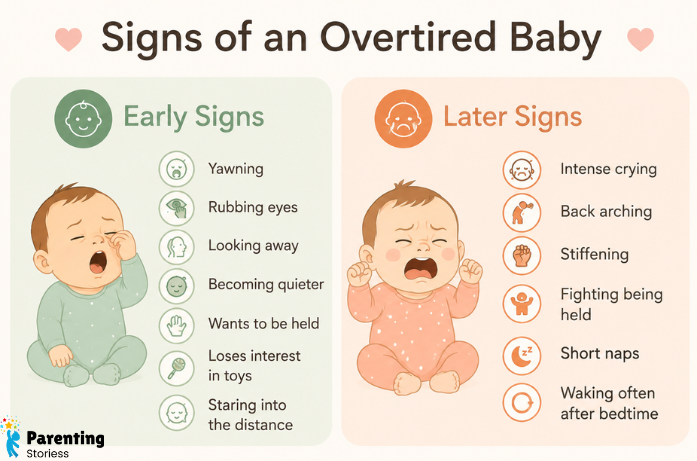
Early signs can be easy to miss. Your baby may:
- Yawn
- Rub their eyes or face
- Look away during play
- Become quieter
- Lose interest in toys
- Stare into the distance
- Want to be held more
These are often good clues that it is time to slow things down.
Later Signs of Overtiredness
If your baby stays awake longer, you may notice stronger signs such as intense crying, back arching, stiffening, clinginess, or fighting being held.
Some babies become suddenly energetic even though they looked sleepy just a few minutes earlier. Short naps and repeated waking after bedtime can also happen.
Every baby is different, so learning your baby’s own tired pattern is often more useful than following a long checklist.
Overtired or Under tired Baby?
A baby who is not tired enough can also refuse sleep, which makes things confusing.
An undertired baby may be happy in the crib, babbling, rolling, kicking, or looking around the room.
An overtired baby is more likely to seem distressed. They may cry, become clingy, resist soothing, or appear desperate for sleep while still fighting it.
It is not a perfect rule, but mood can give you a helpful clue.
How to Break the Cycle of an Overtired Baby
When naps have been difficult for a day or two, you do not need to completely change your baby’s schedule.
When learning how to break the cycle of an overtired baby, the main goal is to stop tiredness from building throughout the day.
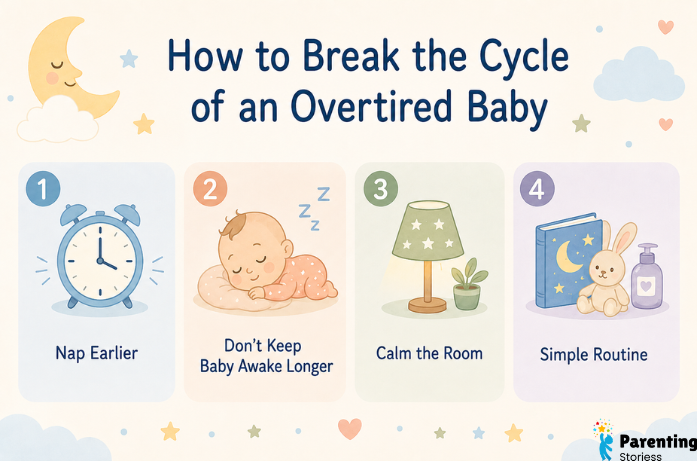
1. Offer the Next Nap Earlier
After a short or missed nap, your baby may not comfortably stay awake as long as usual.
Watch for tired signals sooner and begin the sleep routine when you notice them.
Even moving the next nap a little earlier can sometimes prevent the day from becoming more difficult.
2. Do Not Keep Baby Awake to Make Them More Tired
It sounds logical to think that keeping your baby awake longer will make them sleep better at night.
Unfortunately, an extremely tired baby may actually have a harder time settling.
If naps have been poor, an earlier sleep opportunity can sometimes work better than stretching the day.
3. Reduce Stimulation Before Sleep
An already tired baby may find it difficult to relax in a bright, noisy, or busy environment.
Dim the room, turn down the television, put noisy toys away, and keep your voice calm. You do not need complete silence. The goal is simply to make the environment feel less exciting.
Cleveland Clinic also recommends calming a baby’s senses before sleep with simple methods such as dimming the lights, using gentle movement, and reducing stimulation. Cleveland Clinic baby sleep tips.
4. Keep the Routine Simple
A predictable routine can help your baby recognize that sleep is coming.
For naps, your routine may be a diaper change, closed curtains, a sleep sack, a cuddle, and a short song.
At bedtime, you may add pajamas, feeding, or a short book.
The routine does not need to be long. Consistency matters more than perfection.
How to Calm an Overtired Baby
If your baby is already crying hard, focus on calming them before worrying about sleep.
When thinking about how to calm an overtired baby, start by reducing stimulation.
Move somewhere quiet and hold your baby close if they enjoy being held. Try slow rocking, gentle swaying, soft humming, or another soothing method they already know.
Some babies settle with a pacifier if they normally use one. Others prefer being held quietly.
Try not to change strategies every few seconds. Constantly moving from rocking to toys to singing can add even more stimulation.
Choose one gentle method and give your baby time to respond.
How to Get an Overtired Baby to Sleep Tonight
When everyone is exhausted, complicated advice is the last thing you need.
Here is a simple approach for how to get an overtired baby to sleep tonight.
Check Basic Needs
Make sure your baby is not hungry, uncomfortable, too warm, too cold, or in need of a diaper change.
If something feels unusual or your baby seems unwell, do not assume tiredness is the only cause.
Move Somewhere Calm
Take your baby away from bright lights, television, loud conversation, or active play.
A quieter environment may help them settle.
Soothe Before Putting Them Down
If your baby is extremely upset, spend a few minutes calming them first.
Hold, rock, cuddle, or gently sway them. Once they seem calmer, offer sleep again.
Keep Night Wakings Quiet
If your baby wakes later, keep the lights low and interactions gentle.
Avoid turning nighttime into playtime so the environment continues to feel calm and restful.
Try a Gentle Reset Day
After a terrible night or several poor naps, a quieter day can sometimes help.
If possible, reduce unnecessary errands or long outings. Watch tired cues carefully and give your baby more chances to rest.
You may also consider an earlier bedtime if the whole day has been difficult.
Think of it as a temporary reset, not a strict new routine.
What If My Baby Keeps Taking Short Naps?
A twenty- or thirty-minute nap can feel frustrating, especially when your baby wakes looking tired.
But one short nap does not automatically mean something is wrong.
Look at your baby’s mood after waking. If they are cheerful and alert, they may be ready to continue with the day.
If they wake crying, rubbing their eyes, or clearly exhausted, try offering the next sleep opportunity sooner.
The whole day’s pattern matters more than one nap.
Helping an Overtired Newborn
An overtired newborn can be especially challenging because newborn sleep is often unpredictable.
During the early weeks, babies feed frequently and sleep in short stretches throughout the day and night. Trying to follow a perfect nap schedule may create more stress.
Instead, watch closely for early tired signs.
Your newborn may become quiet, look away, yawn, stare into the distance, or become mildly fussy before they start crying.
Newborns can move from calm to overtired quickly, so beginning the soothing routine early can sometimes help.
And try not to compare your newborn’s routine with another baby’s. Sleep can look very different from one newborn to another.
Common Mistakes That Can Make Overtiredness Worse
Pushing Bedtime Too Late
After a poor nap day, keeping your baby awake until the normal bedtime can sometimes make settling harder.
An earlier bedtime may work better if your baby looks exhausted.
Adding Too Much Stimulation
When sleep is not happening, parents naturally start trying everything.
But more toys, songs, movement, and activity can make an already tired baby more alert.
Keep things simple and calm.
Following the Clock Too Strictly
Schedules can be useful, but your baby’s behavior matters too.
After a rough night or short nap, your baby may need sleep sooner than usual.
Changing Everything at Once
A few difficult nights do not mean you need to change the entire routine.
Try one or two adjustments first and see how your baby responds.
Safe Sleep Still Comes First
No matter how tired everyone becomes, safe sleep remains important.
Place your baby on their back on a firm, flat sleep surface designed for infant sleep. Keep pillows, loose blankets, stuffed toys, and other soft items out of the sleep area.
Be especially careful if you feel so tired that you may fall asleep while holding or feeding your baby. If you have questions about safe sleep for your baby’s age, talk with your pediatrician.
For more age-appropriate sleep guidance, American Academy of Pediatrics also offers helpful advice on getting babies to sleep and developing healthy sleep habits.
When Sleep Trouble May Be More Than Overtiredness
Not every difficult bedtime is caused by overtiredness.
Babies may struggle to sleep because they are hungry, uncomfortable, unwell, or going through developmental changes.
Contact your pediatrician if sleep problems come with trouble breathing, fever, poor feeding, repeated vomiting, unusual sleepiness, fewer wet diapers, or crying that feels very different from normal.
It is also reasonable to ask for advice if sleep difficulties continue and you are worried.
How Long Does It Take to Break the Overtired Cycle?
There is no exact timeline.
Some babies seem calmer after one good nap and an earlier bedtime. Others may need a few days of more consistent sleep opportunities.
Look for small improvements rather than expecting everything to change overnight.
Your baby may begin settling more easily, showing clearer sleepy cues, or reaching bedtime without becoming as upset.
How to Prevent Overtiredness
You cannot prevent every missed nap or late bedtime, and you do not need to.
A few habits can help:
- Watch for your baby’s early sleepy cues.
- Start the wind-down routine before crying begins.
- Keep naps and bedtime predictable.
- Offer sleep earlier after a poor nap.
- Keep evenings calm.
- Use schedules as guides, not strict rules.
Your baby’s sleep needs will change as they grow, so some flexibility is always helpful.
Frequently Asked Questions
Final Thoughts
Learning how to break the cycle of an overtired baby can take a little time, and that is completely normal. Some days your baby may nap well and settle easily, while other days everything feels off. Baby sleep can change quickly, so try not to judge your whole routine by one difficult day.
What helped me most was paying attention to the small tired signs and slowing things down before my baby became too upset. A calmer room, an earlier nap, or a shorter bedtime routine can sometimes make a big difference without changing everything at once.
Most importantly, give yourself some patience too. You are learning your baby’s rhythm as they grow, and no parent gets every nap perfectly right. Keep things simple, stay flexible, and focus on helping your little one feel safe, calm, and ready for rest.
Explore more real-mom tips and gentle baby care advice on Parenting Stories.
Disclaimer
This article is for general informational purposes only and is based on personal parenting experience. It is not a substitute for professional medical advice, diagnosis, or treatment. Every baby is different, so always speak with your pediatrician if you have concerns about your baby’s sleep, feeding, health, or development.
About the Author
Geeta Yogi is a parenting writer who shares gentle, practical guidance about baby sleep, soothing routines, newborn care, and everyday parenting challenges. Her writing focuses on realistic ways parents can understand their baby’s cues, create calmer routines, and navigate changing sleep patterns with more confidence.