

Written with love by a caring mom at Parenting Stories
As parents, we’re often asked a simple yet powerful question: what are your child’s strengths? It may come up during school meetings, casual conversations, or even when filling out forms. But when we pause to answer, many of us feel unsure.
Is it about academic success? Good behaviour? Talents?
The truth is, your child’s strengths go far beyond report cards and achievements. They live in everyday moments the way your child thinks, feels, interacts, and grows. This guide will help you clearly understand, identify, and nurture those strengths in a meaningful, practical, and loving way.
Let’s explore this together.
What Are Your Child’s Strengths? A Clear and Practical Understanding
When someone asks, what are your child’s strengths, they’re not looking for perfect answers they are looking for insight into who your child truly is.
A strength is anything your child naturally does well or shows potential in. It can include:
- Personality traits (kindness, patience, confidence)
- Skills (reading, drawing, problem-solving)
- Behaviors (helpfulness, persistence, curiosity)
- Social abilities (communication, teamwork)
It’s important to remember: strengths are not limited to what schools measure.
For example:
A child who comforts a crying friend shows emotional strength.
A child who builds creative stories shows imagination and thinking skills.
These child strengths matter just as much as academic success.
Why Knowing Your Child’s Strengths Is So Important
Understanding your child’s strengths isn’t just helpful it shapes their future in powerful ways.
Builds Strong Self-Confidence
When children are recognized for what they do well, they feel valued. This boosts their self-esteem naturally.
Improves Learning and School Performance
When you understand what are your child’s strengths in school, you can support them in ways that match how they learn best.
Strengthens Parent-Child Connection
You begin to see your child beyond behavior and truly understand their personality.
Reduces Stress for Both Parent and Child
Instead of focusing only on weaknesses, you guide your child through encouragement and positivity.
In simple words: focusing on strengths helps children grow happier, more confident, and more secure.
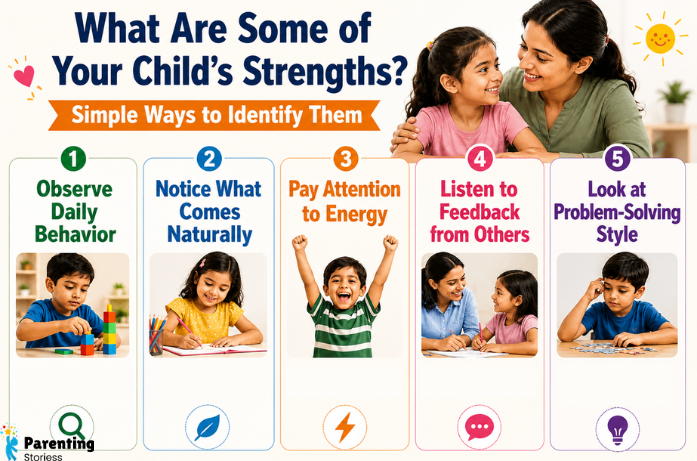
What Are Some of Your Child’s Strengths? Simple Ways to Identify Them
If you’re wondering what are some of your child’s strengths, the answer is often already around you you just need to notice it.
Here are practical ways to identify them:
1. Observe Daily Behavior
Watch how your child spends their free time. Do they draw, build, talk, explore, or organize?
2. Notice What Comes Naturally
What does your child do without being told? Natural habits often reveal strengths.
3. Pay Attention to Energy
Children feel energized when they use their strengths. If your child gets excited about something, it matters.
4. Listen to Feedback from Others
Teachers and caregivers can give helpful insights, especially about what are your child’s strengths in school.
5. Look at Problem-Solving Style
Does your child think creatively? Stay calm? Ask questions? These are all strengths.
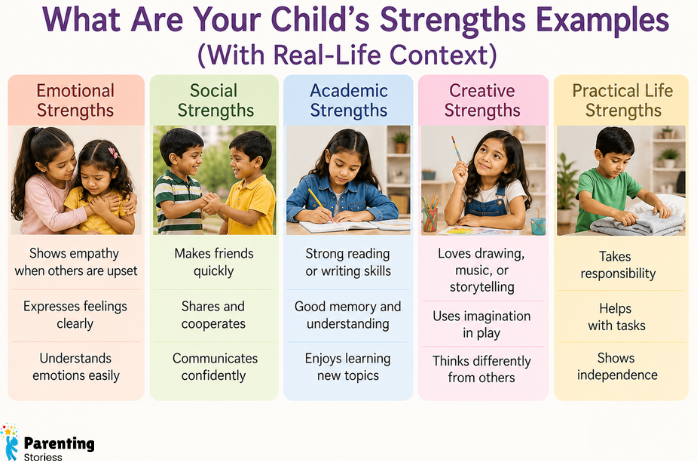
What Are Your Child’s Strengths Examples (With Real-Life Context)
To make things easier, here are some clear what are your child’s strengths examples you can relate to:
Emotional Strengths
- Shows empathy when others are upset
- Expresses feelings clearly
- Understands emotions easily
Social Strengths
- Makes friends quickly
- Shares and cooperates
- Communicates confidently
Academic Strengths
- Strong reading or writing skills
- Good memory and understanding
- Enjoys learning new topics
Creative Strengths
- Loves drawing, music, or storytelling
- Uses imagination in play
- Thinks differently from others
Practical Life Strengths
- Takes responsibility
- Helps with tasks
- Shows independence
Every child is unique. Some strengths are visible early, while others grow slowly over time.
What Are Your Child’s Strengths in School? A Parent’s Guide
School often focuses on marks, but strengths in school go beyond academics.
When thinking about what are your child’s strengths in school, consider:
Learning Strengths
- Understands concepts quickly
- Learns better through visuals or hands-on activities
- Pays attention and follows instructions
Social Strengths in School
- Works well in teams
- Supports classmates
- Shows leadership qualities
Behavioral Strengths
- Stays organized
- Completes tasks on time
- Shows discipline
Creative and Critical Thinking
- Asks thoughtful questions
- Solves problems differently
- Participates in discussions
Even if your child struggles in one subject, they may shine in other important areas.
What Are Your Child’s Strengths Example Answers (Helpful for Parents)
Sometimes, you may need to give clear answers for school forms or meetings. Here are some simple what are your child’s strengths example answers:
- “My child is very curious and loves asking questions.”
- “She is kind and always helps her friends.”
- “He is creative and enjoys building and drawing.”
- “She is responsible and completes her work on time.”
- “He is confident when speaking in front of others.”
These answers are honest, simple, and meaningful exactly what teachers and professionals look for.
How to Nurture Your Child’s Strengths Effectively
Once you understand what are your child’s strengths, the next step is helping them grow.
Encourage Without Pressure
Support their interests, but don’t force them into perfection.
Give the Right Opportunities
Provide tools and activities that match their strengths.
Appreciate Effort, Not Just Results
Praise hard work and improvement, not only success.
Create a Safe Environment
Let your child explore without fear of failure.
Balance Growth
Support strengths while gently improving weaker areas.
Remember: growth happens best in a positive and supportive environment.
Mistakes Parents Should Avoid
Even with good intentions, parents sometimes make small mistakes:
Comparing with Other Children
Every child grows differently. Comparison can harm confidence.
Focusing Only on Weaknesses
Children need encouragement more than correction.
Ignoring Non-Academic Strengths
Life skills, kindness, and creativity are equally important.
Expecting Immediate Results
Strengths take time to develop fully.
If you’ve made these mistakes, don’t worry. Parenting is a learning journey.
When You Feel Confused or Overwhelmed
It’s completely normal to feel unsure about what are your child’s strengths. You don’t need perfect answers.
Instead, focus on:
- Observing your child daily
- Listening without judgment
- Supporting their natural interests
Sometimes, strengths are quiet and take time to appear. Trust the process.
Final Thoughts: Your Child Is Already Enough
Understanding what are your child’s strengths is not about finding perfect answers it’s about learning to see your child with more clarity, patience, and love. Throughout this guide, we explored how strengths go beyond academics and include emotional, social, and creative qualities that shape your child’s confidence and growth.
As a parent, your role is simply to notice, support, and nurture these strengths in everyday moments. When you do this consistently, you help your child feel valued and capable laying the foundation for a happy, confident future.
If you found this helpful, subscribe to Parenting Stories for more simple, real-life parenting tips, heartfelt guidance, and everyday support for moms like you.
FAQs
1. How do I know what my child’s strengths are?
Start by observing your child’s daily behavior, interests, and what they enjoy doing naturally. Their strengths often show in simple, everyday moments.
2. Are strengths only related to academics?
No, strengths include emotional, social, creative, and practical skills not just school performance.
3. Can a child have more than one strength?
Yes, every child has multiple strengths that may develop at different stages of life.
4. What if I can’t clearly identify my child’s strengths?
That’s completely normal. Keep observing patiently and talk to teachers or caregivers for additional insights.
5. How can I support my child’s strengths?
Encourage their interests, appreciate their efforts, and provide opportunities for them to grow without pressure.