

Written with care by a loving mom at Parenting Stories
If you are asking yourself why do babies fight sleep, you are not alone. Many parents deal with this every day. Your baby looks tired, rubs their eyes, cries, and still refuses to sleep. It can feel frustrating and exhausting, especially at night.
The good news is that baby fighting sleep is very common. Most babies fight sleep because something is bothering them or their body is still learning healthy sleep habits. Once you understand the reason, bedtime becomes easier for both you and your baby.
In this article, you’ll learn the common causes of sleep struggles and simple solutions that really help.
Why Do Babies Fight Sleep?
Babies fight sleep for many normal reasons. They may be overtired, hungry, uncomfortable, overstimulated, or going through a sleep regression.
Unlike adults, babies do not always fall asleep easily when tired. Sometimes being too tired actually makes them cry more and resist sleep even harder.
A baby fighting sleep may:
- Cry at bedtime
- Wake up often
- Refuse naps
- Want to be held constantly
- Seem tired but stay awake
Understanding the cause can help you fix the problem faster. According to the American Academy of Pediatrics sleep guide, baby sleep problems are very common during the early months and usually improve with healthy sleep routines.
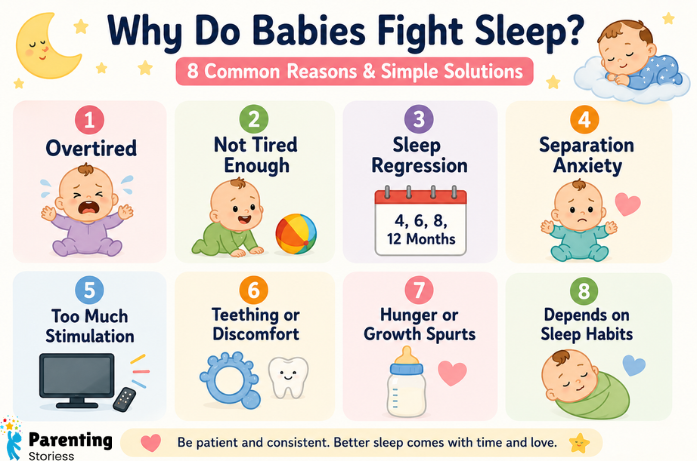
1. Your Baby Is Overtired
This is one of the biggest reasons babies fight sleep. When babies stay awake too long, their bodies become stressed and they find it harder to relax.
An overtired baby may cry more, rub their eyes, yawn, arch their back, or struggle to settle down.
Try putting your baby to bed a little earlier. A simple bedtime routine like dim lights, feeding, and quiet cuddles can help your baby feel calm and ready for sleep.
2. Your Baby Is Not Tired Enough
Sometimes babies fight sleep because they still have energy left. This can happen if naps were too long or bedtime is too early.
Your baby may seem playful or active instead of sleepy.
Try adjusting bedtime slowly and make sure your baby gets enough playtime and movement during the day.
3. Sleep Regression Is Happening
Sleep regressions are normal and often happen during growth and development stages.
They usually happen around 4 months, 6 months, 8 months, and 12 months. During this time, babies may wake more often or suddenly resist sleep.
Stay consistent with bedtime routines. Most sleep regressions improve within a few weeks.
4. Separation Anxiety
As babies grow, they become more attached to their parents. Many babies fight sleep because they do not want to be away from you.
Your baby may cry when you leave the room or wake often looking for comfort.
Extra cuddles, soft talking, and staying near the crib for a few minutes can help your baby feel safe and secure.
5. Too Much Stimulation Before Bed
Bright lights, loud sounds, screens, or exciting activities before bedtime can make it hard for babies to calm down.
An overstimulated baby may seem restless and resist sleep even when tired.
Keep evenings quiet and peaceful by lowering lights, turning off screens, and avoiding loud play before bed.
6. Teething or Discomfort
Teething pain, gas, reflux, or even uncomfortable clothing can make babies fight sleep.
Your baby may drool a lot, chew on hands, pull ears, or cry when lying down.
Teething toys, burping after feeds, soft pajamas, and a comfortable room temperature may help your baby sleep better.
7. Hunger or Growth Spurts
Babies grow quickly, and growth spurts can make them wake more often or want extra feeding.
During this time, your baby may suddenly start fighting sleep or waking more at night.
Feed your baby when hungry and offer extra comfort. This phase is temporary and usually passes in a few days.
8. Your Baby Depends on Certain Sleep Habits
Some babies get used to falling asleep while rocking, feeding, or being held. When they wake during the night, they may need the same help again.
This can make bedtime and night sleep more difficult.
Try slowly teaching your baby to fall asleep in other ways, like gentle patting or putting them down sleepy but awake. Go slowly and choose what feels right for your family.
Research published by the National Institutes of Health (NIH) explains that sleep changes are linked to brain development and growth during infancy.
Best Tips for a Baby Fighting Sleep
Simple daily habits can improve sleep a lot.
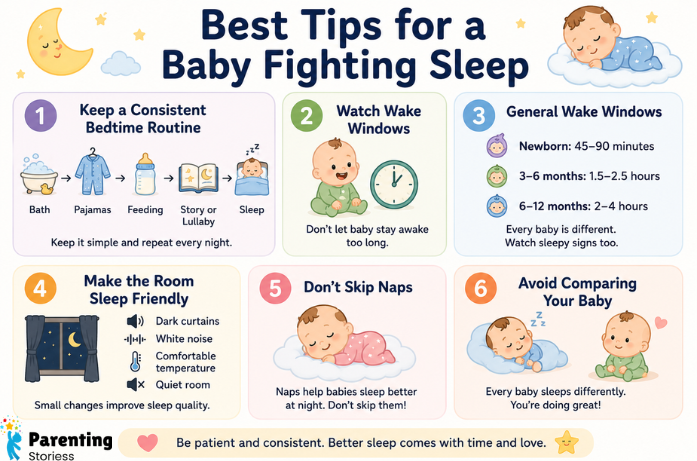
1. Keep a Consistent Bedtime Routine
Babies love routines because they feel safe and predictable.
A good bedtime routine can include:
- Bath
- Pajamas
- Feeding
- Story or lullaby
- Sleep
Keep the routine simple and repeat it every night.
2. Watch Wake Windows
Wake windows are the amount of time your baby stays awake between naps.
If babies stay awake too long, they become overtired.
3. General Wake Windows
- Newborn: 45–90 minutes
- 3–6 months: 1.5–2.5 hours
- 6–12 months: 2–4 hours
Every baby is different, so watch your baby’s sleepy signs too.
4. Make the Room Sleep Friendly
A calm sleep space helps babies relax faster.
Try:
- Dark curtains
- White noise
- Comfortable temperature
- Quiet room
Small changes can improve sleep quality.
5. Don’t Skip Naps
Some parents think skipping naps will help babies sleep better at night. Usually, the opposite happens.
Tired babies often fight sleep more.
Protect daytime naps as much as possible.
6. Avoid Comparing Your Baby
Every baby sleeps differently.
Some babies sleep through the night early. Others wake often for many months.
This does not mean you are doing anything wrong. The Sleep Foundation baby sleep guide recommends consistent bedtime routines and healthy sleep habits to help babies sleep better over time.
When Should Parents Worry?
Most sleep problems are normal. But talk to your doctor if:
- Baby has trouble breathing
- Baby seems in pain often
- Sleep suddenly changes badly
- Feeding becomes difficult
- Baby is not gaining weight well
Trust your instincts as a parent.
How to Stay Calm During Sleep Struggles
Baby sleep problems can make parents feel tired and emotional.
It’s okay to feel frustrated sometimes. Lack of sleep is hard.
Here are a few reminders:
- Take breaks when possible
- Ask for help from family
- Sleep when baby sleeps if you can
- Remember this phase will not last forever
You are doing better than you think.
Conclusion
If you keep wondering why does my baby fight sleep, remember that this is very common. Most babies fight sleep because they are overtired, uncomfortable, overstimulated, or going through normal development changes.
The best thing you can do is stay patient, keep a simple bedtime routine, and give your baby comfort and consistency.
Baby sleep takes time to improve. Some nights will be hard, but things do get better slowly.
Most importantly, remember this, your baby is not trying to make things difficult. They are still learning how to sleep, and your love and support help more than you realize.
For more simple parenting tips and baby sleep advice, visit Parenting Stories.
FAQs
1. Why do babies fight sleep even when tired?
Babies often fight sleep because they are overtired, overstimulated, hungry, or going through a sleep regression.
2. Is it normal for babies to cry before sleep?
Yes, many babies cry before sleep as they learn to settle down and adjust to bedtime routines.
3. How can I calm a baby fighting sleep?
Keep the room quiet, dim the lights, cuddle your baby, and follow a simple bedtime routine every night.
4. Do sleep regressions affect baby sleep?
Yes, sleep regressions can temporarily cause babies to wake more often and resist naps or bedtime.
5. When should I worry about my baby’s sleep problems?
Talk to your doctor if your baby seems in pain, has trouble breathing, or sleep problems become severe or sudden.