By a Caring Mom at Parenting Stories
If your two-year-old suddenly cries when you leave, clings tightly at daycare, or wants only you at bedtime, you may be seeing separation anxiety in toddlers age 2. It is a common stage when toddlers become more aware of your absence but are still learning that you will always come back.
At this age, children wish to be independent yet still require much reassurance and comfort. That is why your toddler might be able to play in peace one moment and become distressed the next moment when you go away.
This could be very emotional and confusing for parents, but thankfully it is mostly a normal part of growing up. With gentle goodbyes, uncomplicated rituals, and lots of reassurance, one may slowly prepare a toddler for separation.
What Is Separation Anxiety in Toddlers Age 2?
Separation anxiety refers to the distress or worry that toddlers experience when their parent or any trusted caregiver is away from them. At ages of two years, the children become more aware of the daily routine activities and thus notice when their caregiver is getting ready to leave.
However, this is complicated by the fact that toddlers do not understand the concept of time yet. For instance, the phrase “I will be back in a few hours” may not actually help them feel better because this distance is still beyond their sense of time.
According to Cleveland Clinic, separation anxiety is a normal developmental stage that commonly happens in babies and toddlers. So while the crying or clinginess can feel upsetting, it is often part of your child learning to feel secure even when you are not right beside them.
Common Signs of Separation Anxiety in a 2-Year-Old
Separation anxiety can look different in every toddler.
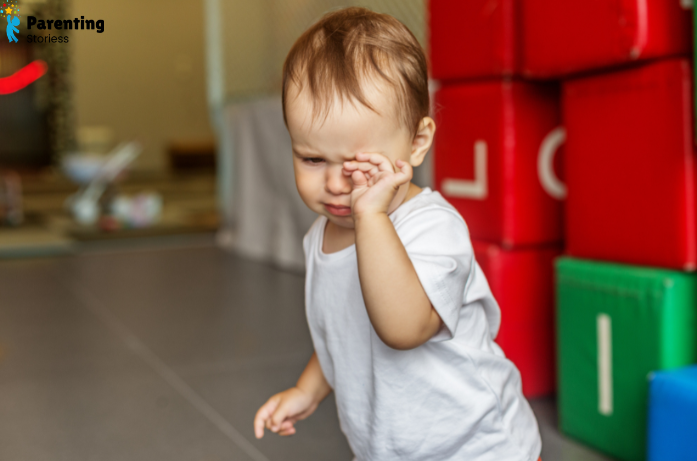
Some children cry loudly at daycare drop-off, while others become quiet, clingy, or upset before you even leave.
Common signs may include:
- crying or screaming when you leave
- holding onto your legs or asking to be carried
- following you from room to room
- difficult daycare or preschool drop-offs
- refusing comfort from anyone except one parent
- becoming upset when you are out of sight
- waking at night and calling for you
- refusing to sleep unless you stay nearby
- becoming clingier after illness, travel, or a major change
UNICEF also explains that children with separation anxiety may become clingy, have sleep difficulties, or become upset in unfamiliar situations.
You may notice only one or two of these behaviors.
Why Is My 2-Year-Old Suddenly So Clingy?
Toddlers can suddenly become clingy even if they were comfortable separating before. This usually happens because they are becoming more aware of routines, changes, and your absence.
Their Awareness Is Growing
At age two, your toddler may recognize that your shoes, bag, or car keys mean you are about to leave. Knowing a goodbye is coming can make them more anxious.
They Want Independence and Comfort
Two-year-olds often want to do things alone but still need lots of reassurance. One minute they say, “I do it,” and the next they want to be held.
They Do Not Understand Time Yet
Toddlers do not fully understand phrases like “I’ll be back in two hours.” Try saying, “I’ll come back after your nap” or “Daddy will pick you up after snack.”
Healthy Children recommends using familiar routines to help children understand when a parent will return.
They May Be Tired or Unwell
Separation can feel harder when your toddler is tired, hungry, sick, or overstimulated. A little extra rest and comfort may make goodbyes easier.
Why Does Separation Anxiety Sometimes Come Back?
Many parents worry when a toddler who was doing well suddenly becomes clingy again.
But toddler development doesn’t move in a perfect straight line.
Separation anxiety can return after:
- starting daycare
- changing classrooms
- moving home
- traveling
- illness
- welcoming a new sibling
- changing caregivers
- a parent returning to work
Even positive changes can feel very big to a two-year-old.
Instead of thinking, “We’re going backward,” try thinking, “My child needs a little more reassurance right now.”
Separation Anxiety at Daycare
The day your child starts daycare can be particularly hard for both parents and kids. The fact that a two-year-old has to deal with separation from their parent while also being rushed through the process of adapting to new surroundings, new activities, and new people can be confusing to your little one. It’s common to see a toddler crying and trying to hold onto their parent during daycare drop offs despite the fact that they may be perfectly happy at daycare once they calm down.
To help the kid cope, make goodbye routines short and predictable. Just getting the child’s bag and saying “mommy is going to work. You are safe here and I’ll be back after you wake up” can ease their anxiety and give them some sense of predictability.
You might also want to talk to your child’s daycare staff to get some feedback about how your child behaves at drop off. Some kids may cry when their parents are leaving but seem to be settled shortly afterward. Thus, you should also pay attention to the things that could adversely affect daycare drop-offs.
What If My 2-Year-Old Only Wants Mom?
It is common for a two-year-old to suddenly prefer one parent, especially during a clingy phase. Your toddler may refuse help from Dad, Grandma, or another caregiver and insist that only Mom can do everything.
Try to gently encourage other trusted adults to build their own routines with your child. Dad might handle bath time, Grandma could read a favorite book, or your partner could take over breakfast. Your toddler may protest at first, but these small routines can help them feel safe and comfortable with other caregivers too.
Separation Anxiety at Bedtime
Bedtime can be another difficult moment because it means a longer separation from you. Your toddler may ask for another hug, another story, or call for you after the lights are out.
A simple and predictable routine can make bedtime feel safer. Try keeping the same order each night, such as bath, pajamas, story, cuddle, and goodnight.
Use calm, reassuring words like, “You’re safe. Mommy is nearby. I’ll see you in the morning.” If your toddler calls for you again, keep your response brief and comforting so bedtime does not turn into a long period of play or conversation.
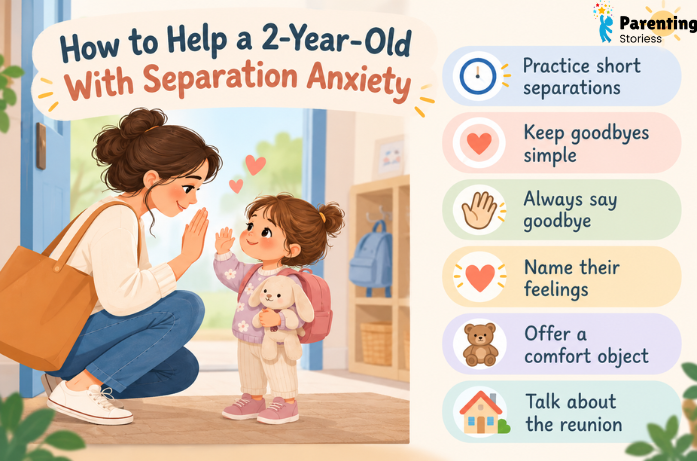
How to Help a 2-Year-Old With Separation Anxiety
You do not need to stop every tear. The goal is to help your toddler feel safe, supported, and confident that you will come back.
Practice Short Separations
Start with small moments at home. Tell your toddler, “I’m going to the kitchen. I’ll be back soon,” and then return as promised. These short separations help build trust.
Create a Simple Goodbye Routine
Keep goodbyes short and predictable. One hug, one kiss, and a wave can be enough. Repeating the same routine helps your toddler know what to expect.
Avoid Sneaking Away
Leaving without saying goodbye may make your child more anxious the next time. Even if they cry, calmly say goodbye so they learn that you leave and return.
Acknowledge Their Feelings
Instead of saying, “Don’t cry,” try, “You’re sad because you want Mommy to stay.” Then reassure them, “You’re safe with Grandma, and I’ll come back after lunch.”
Offer a Comfort Object
A favorite stuffed toy, blanket, or family photo may help your toddler feel connected to home. UNICEF also suggests familiar comfort items and gradual separation practice for young children.
Remind Them About the Reunion
Talk about what will happen when you return. You might say, “After daycare, we’ll have dinner together.” This helps your toddler understand that goodbye is temporary.
Try Connection Before Separation
Busy mornings can make separation harder for toddlers. When the day starts with rushing through breakfast, shoes, bags, and daycare, your child may already feel tired or unsettled before it is time to say goodbye.
If possible, spend a few calm minutes together before leaving. A short cuddle, one small book, or even singing together in the car can help your toddler feel more connected and secure.
That little bit of focused attention may make the transition easier and help your child feel more confident when it is time to separate.
What Not to Do
Most parents are only trying to comfort their child, but a few habits can make separation harder over time.
Try to avoid:
- shaming your toddler for crying
- comparing them with other children
- threatening to leave when they misbehave
- coming back repeatedly after saying goodbye
- making goodbyes too long
- avoiding separation completely
Your toddler needs comfort, but they also need safe chances to learn that they can be away from you and still be okay.
The goal is not to stop every tear. It is to help your child understand that feeling sad is okay, another trusted adult can comfort them, and you will come back.
Normal Separation Anxiety or Separation Anxiety Disorder?
Normal separation anxiety is common in toddlers, especially around daycare, bedtime, or changes in routine.
Separation anxiety disorder is different. It involves fear that is much stronger than expected for a child’s age and begins to seriously affect everyday life.
CHOC Children’s guidance notes that more concerning signs can include intense worry about something happening to a caregiver, repeated nightmares, strong refusal to separate, or avoiding normal activities because of that fear.
For a two-year-old, crying at daycare or wanting Mom does not automatically mean there is a disorder. It is more helpful to look at how intense the anxiety is, how long it lasts, and whether it is interfering with daily life.
When Should You Talk to a Pediatrician?
Talk with your child’s pediatrician if the anxiety seems unusually intense, keeps becoming worse, seriously affects sleep or daily activities, or your child cannot settle with any trusted caregiver.
You may also want advice if there is a sudden major behavior change that worries you.
It is always okay to ask for help.
Your pediatrician can help you understand whether the behavior fits normal toddler development or needs closer attention.
A Simple One-Week Separation Plan
If goodbyes have become stressful, you do not need to fix everything at once. For one week, focus on a few simple routines that help your toddler know what to expect.
- Use the same goodbye words each day. A familiar phrase such as, “Mommy is going now, and I’ll come back after your nap,” can make the routine feel more predictable.
- Keep the goodbye short and calm. Give a hug, say your phrase, and leave without stretching the moment too long.
- Explain your return in toddler-friendly language. Use familiar events such as snack time, nap time, or outdoor play instead of clock times.
- Let the caregiver take over. Once you leave, allow the trusted adult to comfort, distract, or involve your toddler in an activity.
- Remind them when you return. You can say, “Mommy came back, just like I said,” to help reinforce the pattern of leaving and returning.
Do not expect every tear to disappear in one week. Progress may look smaller: your toddler settles faster, reaches for the teacher instead of clinging to you, or waves goodbye even while feeling a little sad. Those small changes are signs that confidence is growing.
Frequently Asked Questions
1. Is separation anxiety normal for a 2-year-old?
Yes. Separation anxiety is common during early childhood, including around age two. Some toddlers become clingy, cry during daycare drop-offs, or struggle more at bedtime.
2. How long does separation anxiety last?
There is no exact timeline. For some toddlers it improves quickly, while others experience phases that come and go, especially after illness, travel, daycare changes, or other big transitions.
3. Why does my toddler cry when I leave but calm down quickly?
Sometimes the goodbye is the hardest part. Once you leave and your toddler becomes involved with another caregiver or activity, they may settle surprisingly fast.
4. Does separation anxiety mean my toddler is too attached to me?
No. Strong attachment does not mean your child will become overly dependent. Feeling secure with you can actually help them become more confident as they grow.
Final Thoughts
Separation anxiety in toddlers age 2 can be tiring, but for many children it is a normal part of learning to feel safe when a parent is away.
Keep goodbyes calm, routines predictable, and reassurance simple. With time and patience, your toddler can become more confident with separation.
This clingy stage will not last forever. One day, those tearful goodbyes may become a quick wave as your child happily goes off to play.
Looking for more gentle, practical parenting advice? Explore more helpful toddler and parenting guides on Parenting Stories to feel more confident through every stage.
Disclaimer
This article is for general informational purposes only and is not a substitute for professional medical or developmental advice. If you are concerned about your child’s behavior, anxiety, sleep, or development, please speak with your pediatrician or another qualified healthcare professional.