Written by a caring mom at Parenting Stories
Bedtime should be a peaceful part of the day, but for many parents, it becomes a daily struggle. Your child wants one more cartoon, refuses to put away the tablet, or suddenly isn’t ready for bed. And after a long, tiring day, handling these little battles isn’t always easy.
As a mom, I understand how tempting it can be to allow a little extra screen time just to keep things quiet. But screens before bed can make it harder for children to relax and fall asleep. A screen-free bedtime routine with simple activities like reading, coloring, or listening to soft music can help children wind down naturally.
The good news is that you don’t need a strict schedule or expensive activities. A few small changes can make evenings calmer and bedtime less stressful for everyone. Let’s explore some easy, practical ways to create a peaceful bedtime routine your child will enjoy.
Why Is a Screen-Free Bedtime Routine Important for Kids?
After a busy day of playing, learning, and exploring, children need some quiet time to relax before bed. But when they’re watching cartoons or playing games, their minds may stay active even when their bodies are tired.
Bright screens can affect the body’s natural sleep signals, while exciting videos may make it harder for kids to settle down. Screen time can also push bedtime later, especially when one cartoon turns into another.
The American Academy of Pediatrics recommends turning off screens at least one hour before bedtime.
A screen free bedtime routine gives children time to slow down naturally. Simple activities like reading, cuddling, or talking about their day can help make bedtime calmer while giving parents a little extra time to connect with their kids.
How to Create a Screen Free Bedtime Routine That Works
Every child’s bedtime habits are different. Some kids get cranky after dinner, while others become more active before sleep. Understanding your child’s needs can help you create a simple, relaxing routine.
1. Set a Consistent Screen-Off Time
Try turning off the TV, tablet, and phone at least one hour before bedtime. For example, if your child sleeps at 8:30 p.m., stop screen time by 7:30 p.m.
Give a gentle reminder, like, “After this cartoon, we’ll read a bedtime story.” If your child is used to screens before bed, gradually reduce screen time to make the change easier.
2. Follow a Simple Evening Routine
Kids feel more comfortable when they know what comes next. A regular screen free evening routine can help them prepare for sleep.
Try following this order:
Dinner → Quiet Play → Bath → Pajamas → Brush Teeth → Bedtime Story → Sleep
You don’t need a strict schedule. Just try to follow the same steps each evening.
3. Make the Bedroom Calm and Comfortable
A peaceful bedroom can help your child relax. Dim the lights, reduce noise, and keep the room comfortably cool.
Put away noisy toys and avoid exciting games before bed. Older children may enjoy sleeping with a favorite stuffed animal or blanket, but babies under 12 months should have a clear sleep space without pillows, loose blankets, or soft toys.
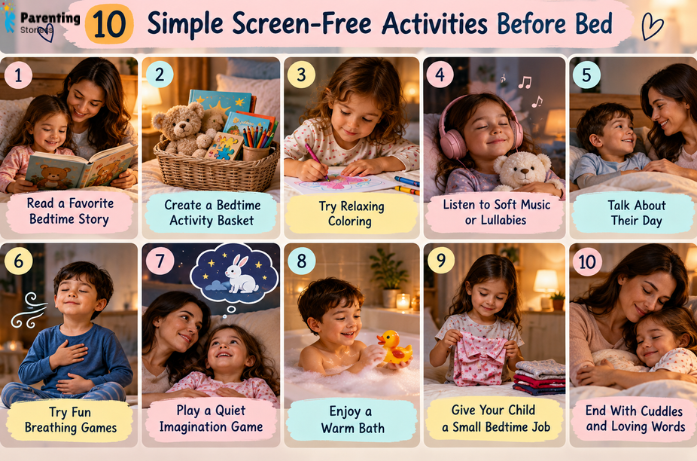
10 Simple Screen-Free Activities Before Bed
You don’t need expensive toys or special activities to help your child relax before bedtime. Simple things like reading, drawing, or spending quiet time together can make evenings more peaceful.
Here are 10 easy screen free activities before bed that you can try with your kids.
1. Read a Favorite Bedtime Story
Reading together is a lovely way to help children wind down. Let your child choose a favorite book and sit somewhere comfortable.
Toddlers may enjoy colorful picture books, while older kids might prefer short stories. Even reading the same book every night can feel comforting and familiar.
2. Create a Bedtime Activity Basket
Keep a small basket filled with quiet activities like picture books, crayons, simple puzzles, or age-appropriate toys.
When screen time ends, let your child pick something from the basket. This gives them something fun to look forward to instead of asking for another cartoon.
3. Try Relaxing Coloring
Coloring is a simple way to keep little hands busy without too much excitement.
Give your child paper and crayons, and let them draw stars, flowers, animals, or their favorite part of the day. Don’t worry about making perfect pictures. Just let them enjoy it.
4. Listen to Soft Music or Lullabies
Gentle music can create a peaceful bedtime atmosphere. Play soft lullabies, quiet instrumental music, or sing your child’s favorite bedtime song.
Keep the volume low and avoid energetic songs. Sometimes, hearing a parent’s familiar voice is enough to help a child feel relaxed.
5. Talk About Their Day
Bedtime is a wonderful opportunity to connect with your child. Ask simple questions like:
- “What made you happy today?”
- “What was your favorite part of the day?”
- “Is there anything you want to tell me?”
Listen patiently, even if they share something small. These conversations help children feel loved, heard, and emotionally supported.
6. Try Fun Breathing Games
Simple breathing games can help preschoolers and older kids slow down before sleep.
Ask your child to pretend they’re smelling a flower by breathing in gently through their nose. Then, slowly breathe out as if blowing out a birthday candle.
Repeat three or four times if they enjoy it. Keep the activity playful rather than forcing them to relax.
7. Play a Quiet Imagination Game
Use your imagination to create a little bedtime story together.
You might ask, “Where do you think a sleepy bunny goes at night?” Let your child add their own ideas as you build the story.
Choose gentle, happy stories rather than exciting adventures that might keep them awake.
8. Enjoy a Warm Bath
A warm bath can help some children feel comfortable and ready for bed.
Let your child enjoy a little quiet bath time before changing into pajamas. If splashing makes them more energetic, try bathing earlier in the evening.
Remember to supervise young children closely around water.
9. Give Your Child a Small Bedtime Job
Kids often love helping with little tasks. Ask your child to choose their pajamas, pick a bedtime book, or place tomorrow’s clothes on a chair.
These small responsibilities help children feel involved and make the bedtime routine more predictable.
Keep tasks easy so they don’t become another reason to delay sleep.
10. End With Cuddles and Loving Words
Sometimes, your child doesn’t need another activity. They simply need a little extra attention from you.
Spend a few minutes cuddling, giving a gentle back rub, or talking quietly.
You can say, “I loved spending time with you today,” or “Good night, sweetheart. I love you.”
These little moments of affection can help your child feel safe, loved, and ready to rest.
Screen-Free Bedtime Routine by Age
A toddler and a school-age child won’t enjoy exactly the same activities.
Choose a bedtime routine without screens that matches your child’s age and interests.
| Age | Best activities |
| 1–2 years | Board books, lullabies, cuddles |
| 3–5 years | Coloring, picture books, pretend stories |
| 6–8 years | Reading, drawing, simple puzzles |
| 9–12 years | Journaling, reading, quiet hobbies |
Younger children usually benefit from shorter, predictable routines.
Older children may enjoy choosing their own quiet activities before bed.
A Simple 60-Minute Screen-Free Bedtime Schedule
If you’re wondering how to organize your evening, here’s an easy example for a child who sleeps at 8:30 p.m.
| Time | Activity |
| 7:30 p.m. | Turn off screens and begin quiet play |
| 7:40 p.m. | Bath or wash up |
| 7:55 p.m. | Pajamas and brush teeth |
| 8:05 p.m. | Read a bedtime story |
| 8:20 p.m. | Cuddles or soft lullabies |
| 8:30 p.m. | Lights out |
Adjust the schedule according to your child’s age, sleep needs, and family routine.
According to the CDC, children aged 3–5 generally need 10–13 hours of sleep per day, including naps, while children aged 6–12 need 9–12 hours.
What If You Only Have 15 Minutes Before Bed?
Let’s be realistic. Some evenings are simply too busy.
Maybe dinner ran late, you returned home from a family gathering, or you’re completely exhausted.
On those nights, try this shorter routine:
- 5 minutes: Brush teeth, use the toilet, and change into pajamas.
- 5 minutes: Read one short story or sing a lullaby.
- 5 minutes: Cuddle, say goodnight, and settle into bed.
You may not manage a full screen-free hour every night, and that’s okay.
What matters is returning to your usual routine when possible.
How to Stop Bedtime Screen Time Without Meltdowns
If your child is used to watching cartoons every evening, they may resist the change.
That’s understandable. They’re giving up something they enjoy.
Instead of expecting instant cooperation, make the transition gradual.
Try a Gentle 7-Day Transition
| Days | What to try |
| Days 1–2 | Turn screens off 15 minutes earlier |
| Days 3–4 | Increase screen-free time to 30 minutes |
| Days 5–6 | Aim for 45 minutes and add a bedtime activity |
| Day 7 | Try a full screen-free hour |
This is a flexible plan, not a strict rule. Some children may need more time.
Offer Simple Choices
Instead of asking whether your child wants to stop watching television, offer two screen-free options.
“Would you like to read a book or color together?”
This gives your child some control while keeping the bedtime boundary clear.
Stay Calm When They Get Upset
Your child may cry or ask for another episode.
Acknowledge their feelings:
“I know you want to watch more. It’s hard to stop something fun. We can watch again tomorrow.”
Stay consistent, but offer comfort.
Avoid using screen time as a punishment or reward for sleeping.
What If Your Child Still Struggles to Fall Asleep?
Turning off screens is not guaranteed to result in better sleep straight away.
It may take some time for your child to fall asleep successfully, depending on whether he is overtired and took a late nap or feels the need for extra comfort.
It is advisable to keep consistent waking up and going to bed regimens.
Also, check whether your child looks sleepy at bedtime.
If such trouble persists, or your child snores often, has issues while sleeping or seems tired during the day, consult with a pediatrician as you might need professional help with sleep.
Frequently Asked Questions
1. How long before bed should kids stop using screens?
Ideally, turn off screens at least one hour before bedtime to help children settle down.
2. What are the best screen-free activities before bed?
Reading, coloring, gentle music, quiet puzzles, and cuddling are simple options.
3. Can kids listen to music before bedtime?
Yes. Soft music or lullabies can be part of a calming bedtime routine.
4. How do I start a screen-free bedtime routine for kids?
Begin by moving screen time earlier and replacing it with one or two familiar, relaxing activities.
5. What if my child refuses to turn off the TV?
Give advance reminders, offer simple choices, acknowledge their feelings, and keep boundaries consistent.
Final Thoughts
Establishing a peaceful bedtime for your child is achievable. An effective strategy is to create a bedtime routine without screens and utilize simple activities like reading, coloring, listening to soothing music, or cuddling to help your kid relax.
However, remember that each child is unique. Some children may need only a short time to adapt while others take longer. Start off slow by doing small things and slowly making the necessary adaptations. The activities should be ones your child enjoys.
Good to remember that in case things are getting out of your control every evening, it is still okay. What matters is taking small steps towards acquiring the correct sleeping habits for your child.
At Parenting Stories, we believe children don’t need perfect evenings. They need patience, love, and the reassurance that we are there for them.
Disclaimer: This article is for general parenting information only and is not a substitute for professional medical advice. Every child’s sleep needs are different. If your child has ongoing sleep difficulties or other sleep-related concerns, consult your pediatrician.