Written by a caring mom at Parenting stories
When you are on one day, your toddler eating their meal normally and on the next day your toddler eats only a few bites of food, don’t lose heart. Children are famous for being unpredictable in eating and the reason for this could be that they become more independent, acquire a liking for certain food and experience changes in growth and appetite.
As parents, we often panic when our child, out of the blue, refuses to eat vegetables, asks for food multiple times or eats much less than he/she is expected to. However, such changes are anticipated in toddler age and we shouldn’t worry if our child sometimes skips important food in his/her menu.
Rather than being too strict about cleaning the plate, it is wise to concentrate on establishing healthy eating routines with regular meals, nutritious snacks, and mild introduction of new flavors and tastes. In this guide I intend to provide you with examples of interesting toddler meals, tips on healthy eating habits, tricks on how to deal with a picky eater, and suggestions on how to make meals enjoyable for you and your toddler.
Why Toddler Eating Can Feel So Unpredictable
Toddlers are growing, learning, and becoming more independent every day.
Food is one area where they quickly realize they have some control. They can close their mouth, turn away, push the plate, or simply say “no.”
Their growth also slows compared with infancy, so their appetite may become less predictable.
According to Johns Hopkins Medicine, slower growth and increasing independence can both influence how toddlers behave around food.
This is why one meal does not tell you much about your child’s overall nutrition.
Some days they will eat a lot.
Other days they may barely touch dinner.
Try to look at what they eat over several days instead of focusing on one difficult meal.
Understanding Toddler Eating Habits
Many toddler eating habits look strange to adults but are completely common.
Your child may:
- suddenly refuse a food they loved last week
- ask for the same food every day
- dislike foods touching each other
- eat more at breakfast than dinner
- become distracted halfway through meals
- prefer plain foods
- want to feed themselves
- say they are hungry and then eat only a few bites
The CDC explains that young children may need repeated exposure to a food before they are willing to try it.
That means a rejected food is not always a permanently disliked food.
Sometimes “I don’t want this” simply means “I am not ready for it today.”
What Do Toddlers Like to Eat?
Every toddler is different, but many enjoy foods that are soft, familiar, mild in flavor, and easy to pick up.
Good everyday options may include:
- banana, berries, pear, melon, or peach
- avocado
- yogurt
- scrambled or boiled egg
- oatmeal
- whole-grain toast
- rice
- pasta
- cooked vegetables
- lentils and beans
- shredded chicken
- fish
- cheese
- tofu
- nut or seed butter served safely
- homemade pancakes
- soft soups and stews
The CDC Infant and Toddler Nutrition guidance recommends offering a variety of fruits, vegetables, proteins, whole grains, healthy fats, and suitable dairy foods.
You do not need to fit every food group into every single meal.
Balance across the whole day matters more.
What Toddlers Eat in a Normal Day
If you are wondering what toddlers eat in a typical day, there is no one perfect menu.
Every child has different energy needs, preferences, routines, and cultural foods.
A simple day might look like this:
Breakfast
Scrambled egg, toast, and banana.
Or oatmeal with yogurt and berries.
Morning Snack
Fruit with cheese or yogurt.
Lunch
Rice, lentils, and soft vegetables.
Or pasta with chicken and vegetables.
Afternoon Snack
Toast with thinly spread nut butter and fruit.
Dinner
A small portion of the family meal, prepared in a safe texture for your toddler.
American Academy of Pediatrics, notes that many toddlers do well with three meals and one or two snacks each day.
The exact amount your child eats will vary.
A Simple Way to Build a Toddler Plate
One thing that can make feeding feel easier is keeping meals simple.
I like to think of the plate in three parts.
1. A Familiar Food
Add one food your toddler already knows and usually accepts.
It might be rice, bread, yogurt, fruit, pasta, or potato.
2. A Nourishing Food
Include something that adds useful nutrition, such as egg, lentils, beans, fish, chicken, yogurt, avocado, or vegetables.
3. A Learning Food
Add a tiny amount of a food your child is still getting used to.
Maybe broccoli.
Maybe beans.
Maybe a new fruit.
I like calling it a “learning food” because there is no pressure to eat it.
Seeing, touching, smelling, or tasting it is already part of learning.
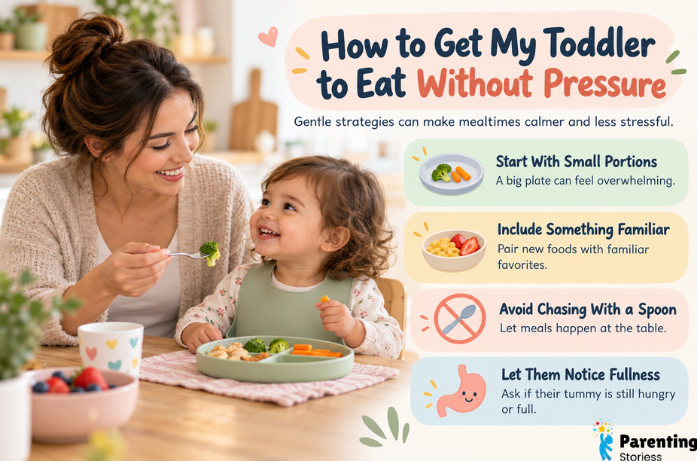
How to Get My Toddler to Eat Without Pressure
When toddlers refuse food, many of us start bargaining.
“One more bite.”
“Eat this and you can have dessert.”
“Just finish three spoonfuls.”
But too much pressure can make mealtimes stressful.
Nemours Kids Health advises parents to offer nutritious foods while allowing children to decide whether and how much they want to eat.
Here are a few gentler ways to help.
Start With Small Portions
A big plate can feel overwhelming.
Serve a little first and offer more if your child wants it.
Include Something Familiar
When introducing a new food, pair it with something your toddler recognizes.
This makes the plate feel less intimidating.
Avoid Chasing With a Spoon
If your toddler is finished, try not to follow them around with food.
Regular meals and snacks help children learn that eating happens at predictable times.
Let Them Notice Fullness
Instead of saying, “Three more bites,” try asking:
“Is your tummy still hungry or is it full?”
This helps children pay attention to their body’s signals.
What If My Toddler Refuses Dinner?
Dinner refusal can be frustrating, especially when you have taken time to prepare a meal and your toddler will not even taste it. Try not to turn the moment into a battle or rush to cook something completely different.
A calm response usually works best. You might say, “This is dinner tonight. You can eat if you are hungry.” Including one familiar food on the plate can also help your toddler feel more comfortable while still giving them a chance to see and explore other foods.
If your child chooses not to eat, simply end the meal without pressure and continue with the usual meal and snack routine. Staying consistent can help prevent dinner from becoming a daily negotiation and may make mealtimes feel more relaxed for everyone.
Try a “Food Bridge”
If your toddler loves one food, introduce something similar rather than something completely different.
For example:
If they love plain pasta, try another pasta shape.
Then try pasta with a tiny amount of sauce.
If they love banana, serve banana beside soft pear.
If they love toast, try another type of bread.
I think of this as building a little food bridge.
The new food feels less scary because it is connected to something familiar.
Let Your Toddler Help
Toddlers love feeling involved.
Even very small kitchen jobs can make them more curious about food.
Your child can:
- wash fruit
- place berries in a bowl
- stir yogurt
- sprinkle cheese
- carry napkins
- choose between two vegetables
Do not expect them to suddenly eat everything just because they helped.
The real goal is making food feel familiar and interesting.
Healthy Snack Ideas for Toddlers
Toddlers have small stomachs, so snacks can help between meals.
Try to think of snacks as mini meals rather than constant grazing.
Simple ideas include:
- yogurt and fruit
- banana with thinly spread nut butter
- cheese and soft fruit
- toast with avocado
- boiled egg
- oatmeal
- hummus with soft vegetables
- homemade muffins with little added sugar
Water is a good everyday drink between meals.
Too many sweet drinks, juice, or large amounts of milk may reduce hunger for solid foods.
Keep Food Safe
Toddlers may seem very independent, but choking is still an important concern.
Be especially careful with foods such as:
- whole grapes
- whole nuts
- popcorn
- hard raw vegetables
- large meat or cheese pieces
- thick spoonfuls of nut butter
- round pieces of sausage or hot dog
Always supervise meals and snacks.
Have your toddler sit while eating instead of walking or running with food.
When Picky Eating May Need More Help
Most picky eating is part of normal development, but sometimes feeding difficulties need professional advice.
Talk with your child’s pediatrician if you notice:
- weight loss or poor growth
- frequent coughing or choking while eating
- difficulty chewing or swallowing
- very strong distress around food
- refusal of most textures
- a food list that keeps getting smaller
- vomiting or pain during meals
- possible food allergy symptoms
You can also ask for help if mealtimes have become extremely stressful for the whole family.
It is always okay to discuss feeding concerns early.
Frequently Asked Questions About Toddler Eating
1. How often should toddlers eat?
Many toddlers do well with three meals and two or three planned snacks during the day.
2. Is it normal for toddlers to skip meals?
Yes, sometimes. Their appetite may change from one meal or one day to the next.
3. What do toddlers like to eat most?
Many toddlers prefer simple, soft, familiar foods such as fruit, yogurt, eggs, rice, pasta, bread, cheese, avocado, and mild proteins.
4. How can I get my toddler to eat vegetables?
Serve very small amounts, eat vegetables yourself, try different cooking methods, and keep offering them without pressure.
5. Should I cook another meal if my toddler refuses dinner?
Usually you do not need to. Try including one familiar food with the family meal so your child has something comfortable on the plate.
6. Why did my toddler suddenly stop eating a favorite food?
This is a common part of changing toddler eating habits. Keep offering the food occasionally without pressure.
Final Thoughts
Toddler eating is rarely perfectly predictable, and that is okay. Some days your child may happily eat a balanced meal, while other days they may only nibble on a few familiar foods. What matters most is the overall pattern, not one plate or one difficult dinner.
Keep offering a variety of nourishing foods, include familiar options, introduce new tastes without pressure, and give your toddler time to learn their own hunger and fullness signals. Small, calm mealtime habits can make a big difference over time.
A healthy relationship with food develops slowly. Your toddler does not need to eat perfectly at every meal. With patience, consistency, and gentle encouragement, you are helping them build confidence around food and healthy eating habits that can grow with them.
For more simple, practical parenting tips and real-life guidance, explore more helpful articles on Parenting Stories.
Disclaimer
This article is for general informational purposes only and is not a substitute for professional medical or nutritional advice. If you have concerns about your toddler’s growth, eating habits, allergies, or feeding difficulties, speak with your child’s pediatrician or a qualified healthcare professional.