
Written by a Caring Mom at Parenting Stories
Pregnancy can make even simple food choices feel confusing. If you are wondering is orange juice good for pregnancy, the good news is that pasteurized orange juice can be a healthy choice for many moms when enjoyed in moderation.
It provides vitamin C, folate, potassium, and fluids, while some varieties also contain added calcium and vitamin D. Still, the type of juice matters, especially when it comes to pasteurization, added sugar, and portion size.
I remember checking juice labels much more carefully during pregnancy than I ever had before. If you are doing the same, this guide will help you understand which orange juice is best, how much to drink, and when it may be better to choose a whole orange instead.
Is Orange Juice Good for Pregnancy?
Yes, orange juice can be a healthy choice during pregnancy, especially when you choose a pasteurized, 100% orange juice and enjoy it in moderation. It can provide vitamin C, folate, potassium, and fluids, while some fortified varieties also offer calcium and vitamin D.
Vitamin C is especially useful because it helps your body absorb iron from plant-based foods, while folate supports healthy cell growth during pregnancy. That makes a small glass of orange juice a helpful addition to meals such as breakfast with fortified cereal, eggs, or whole-grain toast.
At the same time, orange juice contains less fiber than a whole orange and its natural sugars are easier to consume quickly. For that reason, it is best to treat orange juice as part of a balanced diet rather than your main source of fruit or hydration, and continue choosing whole fruits and water throughout the day.
Orange juice is only one small part of pregnancy nutrition, so you may also find our safe and healthy pregnancy journey guide helpful for balanced nutrition, hydration, prenatal care, exercise, and everyday wellness.
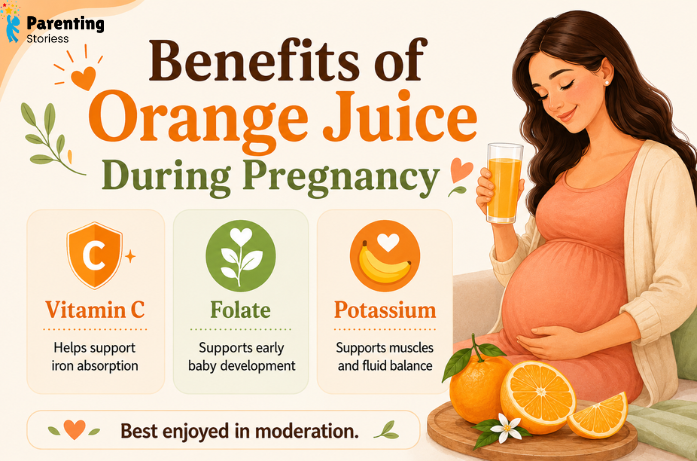
Benefits of Orange Juice During Pregnancy
Vitamin C
Orange juice is naturally rich in vitamin C, which supports normal immune function and helps your body absorb iron from plant foods such as beans, lentils, spinach, and fortified cereals.
Having a small glass alongside an iron-rich breakfast can be an easy way to pair these nutrients.
Folate
Folate is especially important during early pregnancy because it supports normal cell growth and fetal development.
Orange juice naturally contains some folate, and certain brands may be fortified with more. Still, it should not replace the prenatal vitamin recommended by your healthcare provider.
Mayo Clinic explains that folate is especially important during pregnancy and notes that citrus fruits are natural sources of folate, while fortified juices can also provide nutrients such as calcium and vitamin D.
Potassium
Orange juice also provides potassium, which supports normal muscle, nerve, and fluid balance in the body.
You can also find potassium in foods such as bananas, potatoes, beans, yogurt, and avocado.
Is OJ Good for Pregnancy Every Day?
If you’re wondering is OJ good for pregnancy as a daily drink, a small amount can fit into a balanced diet for many women.
Try not to replace water or whole fruit with several glasses of juice. Whole oranges contain more fiber and can help you feel fuller for longer.
A small glass with breakfast is usually a more balanced approach than sipping juice throughout the day.
How Much Orange Juice Can You Drink While Pregnant?
Around 4 to 8 ounces at a time can be a practical serving for many moms.
You don’t need a huge glass to enjoy the taste or nutrients. If you’re thirsty afterward, choose water rather than pouring another large serving.
Your individual needs may be different, especially if you are managing blood sugar, so follow your healthcare provider’s advice.
Orange Juice vs. Whole Oranges
| Orange Juice | Whole Orange |
| Provides vitamin C, folate, and potassium | Provides vitamin C, folate, potassium, and more fiber |
| Contains less fiber | Naturally higher in fiber |
| Easy to drink quickly | Takes longer to eat |
| Natural sugar is consumed faster | Fiber helps slow digestion |
| May be less filling | Usually keeps you full for longer |
| Convenient with breakfast or meals | Great as a snack during the day |
| Best enjoyed in a small portion | Can be chosen more often during pregnancy |
| Choose pasteurized 100% juice | Wash well before peeling or cutting |
Whole oranges are usually the better everyday choice because they provide more fiber and can help you stay full for longer. This can be especially helpful during pregnancy when constipation is common.
Orange juice can still be a refreshing option. A small glass of pasteurized 100% orange juice with a meal can fit nicely into a balanced pregnancy diet.
If you are looking for more refreshing options, our guide to fruits for pregnancy in the summer includes oranges, berries, watermelon, mango, and other nourishing choices for moms-to-be.
Choose Pasteurized Orange Juice
One of the most important pregnancy safety tips is to choose pasteurized juice.
Unpasteurized or untreated juice may contain harmful bacteria, so check the label before buying. The U.S. Food and Drug Administration (FDA) advises moms-to-be to choose pasteurized or otherwise treated juices and to be cautious with fresh-squeezed juice that may be sold untreated.
Take extra care with freshly squeezed juice from juice bars, farmers markets, restaurants, or roadside stands. If you are unsure whether it has been pasteurized, ask before drinking it.
Food safety goes beyond juice too. Our guide to dos and don’ts in pregnancy covers other everyday foods, habits, and precautions moms may want to keep in mind.
What About Homemade Orange Juice?
If you make fresh orange juice at home, wash the oranges thoroughly under running water before cutting them.
Use clean hands, knives, cutting boards, and juicing equipment. Avoid using fruit that looks spoiled or badly damaged.
Good hygiene matters because bacteria on the outside of fruit can sometimes be transferred during cutting or preparation.
What Is the Best Orange Juice for Pregnancy?
When shopping, keep it simple. Look for:
- Pasteurized orange juice
- 100% orange juice
- Little or no added sugar
- A simple ingredient list
- Calcium or vitamin D fortification if useful for your diet
Be more careful with products labeled orange “drink,” “cocktail,” or “beverage,” as these may contain added sweeteners and less actual juice.
Can Orange Juice Help With Morning Sickness?
For some moms, cold citrus juice feels refreshing during pregnancy nausea. For others, the acidity can make nausea worse.
If it feels too strong, try diluting a little orange juice with cold water or having it after a small meal instead of on an empty stomach.
If your stomach doesn’t like it, skip it. There are plenty of other ways to get vitamin C.
Can Orange Juice Cause Pregnancy Heartburn?
Orange juice is acidic, so it may worsen heartburn or acid reflux in some pregnant women.
If you notice discomfort after drinking it, try a smaller portion with food and avoid having it close to bedtime.
Listen to your body. Pregnancy changes digestion, and something you normally love may temporarily stop agreeing with you.
Orange Juice and Gestational Diabetes
Orange juice contains natural sugar and much less fiber than a whole orange, so it can affect blood sugar more quickly.
A study indexed in PubMed that followed 2,987 pregnant women found an association between higher fruit-juice intake during mid-pregnancy and a greater incidence of gestational diabetes. Because this was an observational study, it does not prove that juice causes gestational diabetes, but it does support being mindful of portion size, especially if you are already watching your blood sugar.
If you have gestational diabetes, your doctor or dietitian may recommend smaller portions or whole fruit instead.
Don’t feel guilty if you drank juice before your diagnosis. What matters is following the nutrition plan your healthcare team recommends now.
Can You Take Your Prenatal Vitamin With Orange Juice?
For many women, orange juice and prenatal vitamins can be taken around the same time. Vitamin C can also help with the absorption of non-heme iron.
However, prenatal supplements and medications vary, so always follow the instructions on your product or ask your healthcare provider if you’re unsure.
If orange juice makes your prenatal-related nausea worse, water may simply feel better.
Why Am I Craving Orange Juice During Pregnancy?
Pregnancy cravings can be wonderfully random.
You may suddenly want something cold, sweet, tart, or refreshing, and orange juice checks all those boxes.
A craving does not necessarily mean you are deficient in vitamin C or another nutrient. If a reasonable serving fits your diet, you can simply enjoy it.
If sweet cravings have become a regular part of your pregnancy too, our guide to craving sweet food during pregnancy shares more balanced ideas for satisfying them.
Does Orange Juice Make Baby Move?
Some moms notice more movement after eating or drinking something, including orange juice.
However, orange juice should not be used as a medical test to check whether your baby is okay.
If you notice decreased fetal movement, follow the advice given by your maternity healthcare team and contact them if you are concerned.
Is Orange Juice Good for Pregnant Moms in the First Trimester?
Yes, pasteurized orange juice can be included during the first trimester.
Its vitamin C and folate contribute to your diet, although prenatal folic acid remains especially important during early pregnancy.
If first-trimester nausea makes orange juice too acidic or unpleasant, don’t force yourself to drink it. Whole fruit and other vitamin C-rich foods are perfectly good alternatives.
Other Vitamin C Foods During Pregnancy
If orange juice isn’t your favorite, try:
- Strawberries
- Kiwi
- Bell peppers
- Broccoli
- Tomatoes
- Tangerines
- Other citrus fruits
Eating a variety of fruits and vegetables gives you more nutrients than depending on one food alone.
A Simple Mom-Friendly Rule
When you’re wondering whether that glass of OJ is okay, remember:
Pasteurized + 100% juice + moderate portion + balanced diet.
Choose whole fruit regularly, drink plenty of water, and pay attention to how orange juice affects your stomach and blood sugar.
Pregnancy nutrition doesn’t need to feel complicated.
Frequently Asked Questions
1. Is orange juice safe during pregnancy?
Yes, pasteurized orange juice is generally considered safe during pregnancy. Avoid untreated or unpasteurized juice because of the risk of harmful bacteria.
2. Is orange juice good for pregnant women?
Yes. It can provide vitamin C, folate, potassium, and fluids when enjoyed as part of a balanced diet.
3. Can I drink orange juice every day while pregnant?
Many moms can enjoy a small serving daily, but water and whole fruits should still be important parts of your diet.
4. Is eating an orange better than drinking orange juice?
Whole oranges generally provide more fiber and are more filling. You don’t have to choose only one, though both can fit into a healthy pregnancy diet.
5. Is calcium-fortified orange juice good during pregnancy?
It can help contribute to calcium intake, particularly if you don’t consume much dairy. Check the nutrition label because fortification varies between brands.
Final Thoughts
So, is orange juice good for pregnancy? For most moms, yes. A small glass of pasteurized, 100% orange juice can provide useful nutrients while adding something fresh and refreshing to your day.
You don’t need to drink it every day, and whole oranges are a wonderful option too.
Pregnancy already comes with enough things to think about. Keep food simple: choose safe options, aim for balance, listen to your body, and follow your healthcare provider’s advice when your pregnancy needs something more specific.
You don’t need a perfect pregnancy diet. Small, thoughtful choices each day are more than enough.
Want more simple, mom-friendly pregnancy tips? Explore more guides on Parenting Stories to feel informed, supported, and confident through every stage of pregnancy.
Disclaimer
This article is for general informational purposes only and is not a substitute for medical advice. Every pregnancy is different, so always speak with your doctor or healthcare provider about your diet, symptoms, or any pregnancy-related concerns.