Written with care by a loving mom at Parenting Stories
Getting a parent comes with endless beautiful moments, but it also brings numerous worries especially during those quiet night hours when your baby is sleeping peacefully beside you. One concern numerous parents have is newborn breathing rapidly while sleeping. You may suddenly notice your baby breathing briskly than anticipated and wonder if it’s normal or a sign of commodity serious.
The good news is that newborn breathing is very different from adult breathing. In most cases, fast breathing during sleep is completely normal because a baby’s lungs and breathing patterns are still developing. However, there are also certain signs parents should never ignore.
Understanding what’s normal can help ease anxiety and allow you to watch for your baby with further confidence.
Understanding Normal Newborn Breathing Patterns
Newborn babies do not breathe in a impeccably steady meter like adult. Their respiratory systems are still immature, which means their breathing may change speed frequently during sleep.
Healthy newborns usually take:
- 30 to 60 breaths per minute while resting
- Slightly faster breaths during active sleep
- Short pauses lasting a many seconds
These irregular measures are known as newborn breathing patterns, and they’re veritably common during the first many months of life.
You may notice:
- Fast breathing for a few seconds
- Light murmuring noises
- Uneven casket movement
- Small pauses between breaths
- Faster breathing during dreams or movement
- For utmost healthy babies, these changes are inoffensive and part of normal development.
Is Newborn Breathing Rapidly While Sleeping Normal?
Yes, in many situations, newborn breathing rapidly while sleeping is completely normal.
Babies spend a large quantum of time in REM sleep, also called active sleep. During this stage, their breathing naturally becomes quicker and less regular. Their bitsy bodies are still learning how to regulate breathing outside the womb.
Numerous parents come upset because newborn breathing can suddenly change from slow to gormandize within seconds. still, if your baby
- Looks comfortable
- Has pink lips and skin
- Feeds well
- Sleeps peacefully
Also occasional rapid-fire breathing is generally not dangerous.
Utmost pediatricians consider it normal if breathing briefly pets over and also returns to normal again.
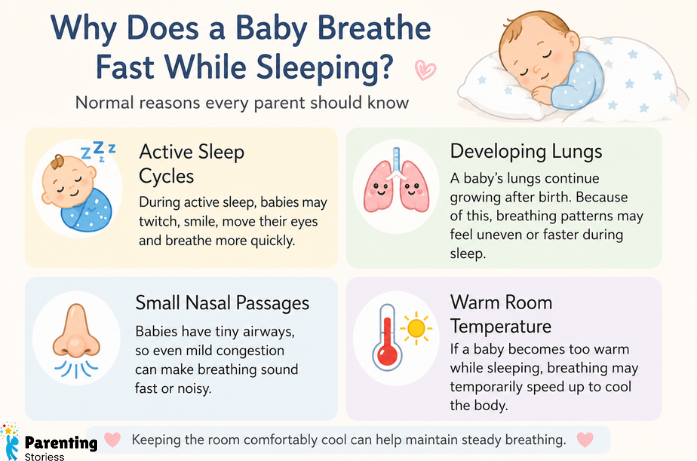
Why Does a Baby Breathe Fast While Sleeping?
There are several normal reasons for baby breathing fast while sleeping.
Active Sleep Cycles
During active sleep, babies may:
- Twitch
- Smile
- Move their eyes
- Breathe more quickly
This stage is important for brain development and happens constantly in newborns.
Developing Lungs
A infant’s lungs continue growing after birth. Because of this, breathing patterns may feel uneven or faster during sleep.
Small Nasal Passages
Babies have tiny airways, so indeed mild traffic can make breathing sound fast or noisy.
Warm Room Temperature
Still, breathing may temporarily speed up to cool the body, If a baby becomes too warm while sleeping.
Keeping the room comfortably cool can help maintain steady breathing.
When Newborn Fast Breathing During Sleep Is Usually Harmless
Parents frequently horrify after noticing newborn fast breathing during sleep, but certain signs can assure you that everything is okay.
Fast breathing is usually normal if:
- Breathing stays under 60 breaths per minute
- Your baby is sleeping comfortably
- There is no gasping or severe coughing
- Skin color stays healthy and pink
- Baby wakes and feeds normally
Some babe may breathe fleetly for 10 – 15 seconds and also decelerate down naturally. This pattern is common during the early weeks.
Many moms quietly watch their newborn’s chest rise and fall throughout the night. That worry is natural, especially for first-time parents.
Warning Signs Parents Should Never Ignore
Although utmost cases of newborn breathing fleetly while sleeping are inoffensive, there are situations where medical attention is important.
Call your doctor immediately if your baby has:
Persistent Rapid Breathing
Breathing consistently faster than 60 breaths per minute while resting may indicate a problem.
Chest Retractions
If the skin pulls inward around the ribs or neck during breathing, your baby may be struggling to get enough air.
Blue Lips or Face
Bluish skin color can signal low oxygen levels and needs urgent medical care.
Grunting With Every Breath
Occasional newborn sounds are normal, but repeated murmuring may be a sign of respiratory torture.
Difficulty Feeding
Still, breathing problems may be affecting energy situations, If your baby becomes too tired to feed duly.
Fever in a Newborn
Any fever in babies under three months old should be checked by a doctor immediately.
Trusting your instincts matters. If something feels unusual, it’s always okay to seek professional advice.
Medical Conditions That Can Cause Rapid Breathing
Sometimes rapid breathing newborn sleep patterns may be linked to underlying conditions.
Mild Congestion
Blocked nasal passages are one of the most common reasons babies sound like they are breathing heavily.
Respiratory Infections
Colds, RSV, or pneumonia can cause:
- Fast breathing
- Wheezing
- Fever
- Poor feeding
Transient Tachypnea of the Newborn (TTN)
This temporary condition happens when fluid remains in the lungs after birth. It usually improves within a few days.
Acid Reflux
Some babies breathe faster after feeding because reflux causes discomfort.
Rare Heart or Lung Conditions
Persistent breathing problems may occasionally be related to congenital conditions that require medical evaluation.
Thankfully, serious causes are much less common than normal newborn breathing changes.
How to Check Your Baby’s Breathing Correctly
If you feel worried, checking your baby calmly can help you decide whether the breathing is normal.
Count Breaths Properly
Watch your baby’s chest carefully.
One rise and fall equals one breath.
Count breaths for one full minute while your baby is asleep or resting quietly.
Observe Overall Behavior
A healthy baby usually:
- Feeds regularly
- Sleeps comfortably
- Has good skin color
- Responds normally when awake
Avoid Constant Panic Checking
New parents often lose sleep watching every tiny movement. While monitoring your baby is natural, excessive anxiety can quickly become exhausting.
Learning normal newborn breathing patterns can help you feel more relaxed and confident.
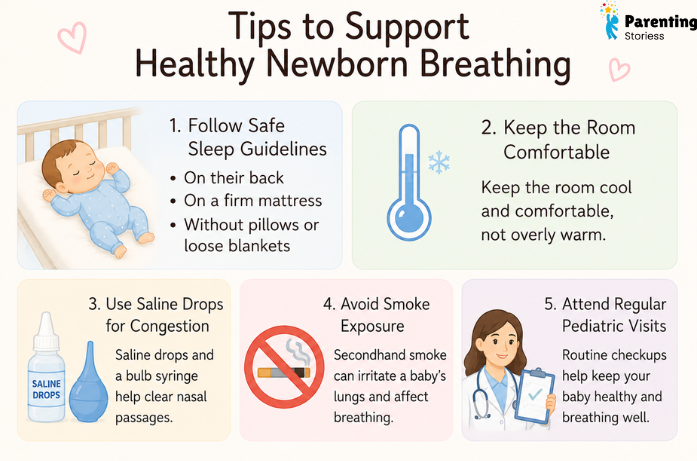
Tips to Support Healthy Newborn Breathing
There are simple ways parents can create a safe sleep environment that supports healthy breathing.
Follow Safe Sleep Guidelines
Always place babies:
- On their back
- On a firm mattress
- Without pillows or loose blankets
Keep the Room Comfortable
The ideal room temperature for babies is slightly cool and comfortable, not overly warm.
Use Saline Drops for Congestion
If your baby sounds stuffy, saline drops and a bulb syringe may help clear nasal passages.
Avoid Smoke Exposure
Secondhand smoke can irritate a baby’s lungs and affect newborn breathing.
Attend Regular Pediatric Visits
Routine checkups help ensure your baby’s lungs and overall development stay healthy.
Why Parents Often Feel Anxious About Baby Breathing
Watching a newborn sleep can feel emotional and overwhelming. Many parents quietly wake up several times a night just to check breathing.
This fear is incredibly common because newborns seem so tiny and fragile.
The important thing to remember is that babies are still adjusting to life outside the womb. Their breathing patterns may look unusual at first, but most changes are completely normal.
As your baby grows, breathing gradually becomes steadier and more predictable.
Conclusion
It’s a frightening experience for new parents to find their newborn breathing quickly during sleep. Nasal breathing in babies is usually a normal and healthy part of their development as they sleep, and is often fast and irregular.
However, watch for other symptoms such as blue lips, chest retraction or feeding difficulties. Trust your instincts, stay informed and know you’re doing a great job of caring for your little one with love and attention each day.
Enjoyed this article? Follow Parenting Stories for more trusted newborn care tips, real parenting advice, and gentle support for every stage of motherhood.
FAQs About Newborn Breathing Rapidly While Sleeping
1. Is it normal for a newborn to breathe rapidly while sleeping?
Yes, most newborns breathe faster and irregularly during sleep, as their breathing is still maturing, their lungs are still developing.
2. How fast should a newborn breathe while sleeping?
A healthy baby at birth typically breathes about 30-60 times a minute while resting or sleeping.
3. When should I worry about my baby breathing fast while sleeping?
If your baby’s lips are blue, chest retractions, grunting, trouble feeding or breathing is under 60 breaths per minute, then get a doctor’s advice.
4. My newborn baby breathes quickly and slows down, why?
This is a common occurrence in the normal breathing of babies and is known as periodic breathing in which babies’ breathing may be faster or slower, depending on their sleep cycles.
5. Can congestion cause newborn fast breathing during sleep?
Newborns have very small nasal passages and yes, the mild nasal congestion can cause the baby to sound like he or she is breathing faster.
Disclaimer: This article is for informational purposes only and is not a substitute for professional medical advice, diagnosis, or treatment. Always consult your pediatrician if you have concerns about your baby’s breathing or health.